
Unlocking the Potential of In-House Financing: A Game-Changer for Small Businesses

In today’s competitive market, small businesses often find it challenging to compete with larger entities and expand their operations. However, implementing consumer financing options can be a transformative strategy for leveling the playing field. In-house financing, a concept growing in popularity, plays a crucial role in this dynamic. The meaning of in-house financing revolves around businesses offering loans to their customers directly, without the intermediary of traditional banks. This method not only simplifies the borrowing process but also makes purchasing more accessible to customers who may not have immediate funds available.
In-house financing is particularly appealing as it caters to individuals who might not have sufficient cash on hand or in their bank accounts. By allowing customers to purchase products or services through credit provided directly by the business, it broadens the accessibility of these offerings. This model is highly beneficial in attracting a diverse customer base, including millennials who often show aversion to credit cards and traditional lending. These younger consumers are increasingly turning to point-of-sale financing options over conventional bank loans.It’s like getting point-of-sale credit on the spot without going elsewhere for a loan. which simplifies the purchase process, helps your business appear more reliable, and creates a mutually beneficial relationship with your customers as they pay you back and return for more, thanks to your simple and efficient experiences. It’s not just about selling a product; it’s about providing your customers a seamless and efficient journey, ensuring their satisfaction and loyalty in the long run.
In this article, we delve into the transformative potential of in-house financing for small businesses and gain a comprehensive understanding of what in-house financing means and how it differentiates from traditional lending methods. We will explore how offering consumer financing options can help small businesses level the playing field against larger competitors by making purchasing more accessible for customers.
We will discuss various models you can use for your in-house financing program, providing insights into the different approaches available to suit your business needs. Additionally, we will cover how to effectively implement in-house financing using commercial loan origination software, highlighting the tools and technologies that can streamline the process and enhance efficiency.
By the end of this article, readers will be well-informed about the strategic advantages of implementing in-house financing programs to boost business growth and market competitiveness.
Several indicators suggest that offering consumer financing is a strategic move for your business:
If your products or services come with a premium price tag, offering consumer financing through in-house credit can be a great fit. Items like cars, furniture, electronics, appliances, and home repairs often fall into this category, making these high-value purchases more attainable for your customers. Additionally, in-house financing provides a convenient and secure way to manage payment plans, ensuring that customers can fulfill their financial commitments comfortably.
Differentiating Through Customer Service: Providing in-house loans sets you apart through exceptional customer service. By offering flexible payment options, you help your customers achieve their aspirations, and they will appreciate the convenience, primarily if your competitors don’t provide such options.
Increasing Service Sales: Offering in-house financing can be a game-changer if you aim to upsell and sell more services. Higher-priced items become easier to market when customers can finance them, increasing your revenue potential. By providing an immediate financing option at the point of sale, the store can attract customers who might otherwise hesitate to make large purchases due to a lack of available funds. Key factors driving this increase include the ability to offer flexible payment plans, which reduces the financial burden on customers and makes high-ticket items more affordable. This approach not only boosts initial sales but also enhances customer satisfaction and loyalty, encouraging repeat business and positive referrals.
Boosting Repeat Business: Existing customers are vital to growing sales and moving inventory. Studies reveal that businesses have a 60 to 70 percent likelihood of selling to an existing customer, compared to as low as 5 percent for new customers. By offering in-house financing, you can encourage repeat purchases. Research shows that 93% of consumers who utilize customer financing for the first time will do it again. This underscores the importance of catering to repeat customers through effective consumer credit programs.
Attracting Younger Customers: To appeal to a younger demographic, offering retail financing for customers is a smart move. Many Millennials and Generation Z individuals are averse to using credit cards as a payment option. By providing customer financing programs, you can capture the attention of these potential customers, making your business more appealing compared to competitors who lack financing options for significant purchases. Incorporating customer financing services into your business strategy can expand your customer base, enhance customer loyalty, increase sales, and make high-value purchases more accessible to a broader audience.
How In-House Financing Works
In an in-house financing program, the retailer acts as the lender, setting the terms for the loan, including interest rates, repayment conditions, and other requirements. This type of financing is common in automotive businesses and for high-ticket purchases in retail. Customers usually complete an application on-site at the business where they make the purchase, but applications can also be submitted online.
Flexible Customer Requirements: In-house financing requirements are often less stringent than those for traditional bank loans. This makes it appealing for customers with subprime credit scores or no credit history. Some sellers offer this option as “bad credit financing,” catering to those who may have trouble qualifying for traditional financing.
Factors Considered: While some sellers may not perform a credit check, they do consider factors such as:
Customer income
Residency status
Down payment size
Higher Interest Rates: Due to the flexible borrower assessment, retailers might charge higher interest rates or require larger down payments to mitigate risk and ensure the customer is capable of repaying the loan. This is why in-house financing is very appealing for those who lack a credit history, have bad credit, or for other reasons, do not meet the requirements of traditional lenders.
Application Process: Customers can apply for in-house financing either online or in person. Once approved, the customer can purchase the item with the loan and then repay it in regular installments with interest until the balance is paid off. This setup makes high-value purchases more accessible and can significantly enhance the buying experience.
Benefits for Businesses and Customers: When done correctly, in-house financing is a win-win scenario. Businesses gain the opportunity to onboard and retain loyal clients, increasing sales and fostering customer loyalty. Customers benefit by being able to purchase high-quality goods and services without being hindered by their credit scores.
Numerous businesses across various industries, from car dealerships to home builders, now offer in-house financing loans. This approach helps customers overcome financial hurdles and enhances their buying experience. With readily available in-house loans, customers can make necessary purchases without worrying about the immediate financial burden, promoting a more positive and constructive shopping experience. This not only strengthens the relationship between businesses and their customers but also boosts overall sales.
Conducting a Cost-Benefit Analysis for In-House Financing
If you’re considering offering financing to your clients, it’s crucial to conduct a cost-benefit analysis to evaluate the potential costs and benefits of implementing in-house financing for your business. Here’s a step-by-step guide on how to do a cost-benefit analysis for consumer financing for small businesses:
Identify Objectives
Clearly define the objectives of implementing in-house financing. Are you looking to increase sales, attract new customers, improve customer loyalty, or achieve other goals?
Clearly define the objectives of implementing in-house financing. Are you looking to increase sales, attract new customers, improve customer loyalty, or achieve other goals?
Determine Costs
Identify all the costs associated with setting up and maintaining in-house financing. These may include:
- Software and technology costs for managing loans and payments.
- Employee training and staffing costs.
- Marketing and advertising expenses to promote financing options.
- Compliance and regulatory expenses.
- Interest or financing costs if you provide interest-free financing to customers.
- Administrative and overhead costs.
Estimate Revenue and Benefits:
Forecast the potential revenue and benefits you expect from offering in-house financing. Consider the following:
- Increased sales due to customers choosing financing.
- Potential interest or fees charged to customers.
- Enhanced customer loyalty, leading to repeat business.
- Competitive advantage in the market.
- Upselling opportunities for higher-priced products or services.
Calculate Net Present Value (NPV)
Discount future cash flows (costs and benefits) using an appropriate discount rate to present value terms. This will help you determine the current value of the investment over time.
Calculate Return on Investment (ROI)
Divide the net benefit (benefits minus costs) by the total costs to calculate the ROI as a percentage. This will show you the potential return on your investment. Compare the calculated ROI and NPV against your company’s minimum acceptable return on investment. If the ROI is higher than your required threshold and the NPV is positive, implementing in-house financing may be financially viable.
Assess Risks
Identify potential risks and uncertainties that could impact the implementation of in-house financing. These could include changes in interest rates, economic conditions, customer default rates, or regulations.
By carrying out a thorough cost-benefit analysis, you can acquire valuable insights to help you determine if providing consumer finance is a prudent decision for your business. It may be worth paying the associated expenses if you can achieve a 20% sales increase.
Understanding the Models for In-House Financing Programs
To effectively implement in-house financing, it’s essential to understand how in-house financing works and the various models available. In-house credit involves the business itself offering loans or credit lines directly to customers, rather than relying on third-party lenders. To do in-house financing successfully, small businesses must establish clear in-house financing requirements, such as credit checks, interest rates, and repayment terms, to manage risk and ensure smooth operations.
To effectively implement in-house financing, it’s essential to understand how in-house financing works and the various models available. In-house credit involves the business itself offering loans or credit lines directly to customers, rather than relying on third-party lenders. To do in-house financing successfully, small businesses must establish clear in-house financing requirements, such as credit checks, interest rates, and repayment terms, to manage risk and ensure smooth operations.
There are several models small businesses can adopt for their consumer financing programs.
Zero-Percent Financing Model: Customers are offered loans with zero interest. The business absorbs the cost of financing as a marketing strategy to attract customers. It’s commonly used to promote sales. In this case, in-house financing becomes the ultimate selling advantage of your business and a marketing tool that helps you generate more customers rather than makes you money directly. But it comes at a cost since you’d need to cover the expenses of maintaining a platform from your other profits.
Lease-to-Own Model: This model allows customers to lease a product with an option to purchase it at the end of the lease term. Payments made during the lease period often count toward the purchase price.
Subscription Model: Some businesses offer subscription-based financing where customers pay a regular subscription fee to access products or services. It’s common in industries like software and streaming services.
Simple Interest Model: This model charges customers interest based on the outstanding loan balance. It’s straightforward and easy to understand. Interest is calculated on the principal amount remaining after each payment.
Fixed Interest Rate Model: In this model, the interest rate remains constant throughout the loan term. Customers have predictable monthly payments, which can make budgeting easier.
How to In-House Finance with Commercial Loan Origination Software
Selecting the right loan software for your in-house financing business is crucial for success. Here are some key factors to consider:
User-Friendly Interface: Choose software that is easy to navigate for both your staff and customers. A user-friendly finance website ensures a smooth application process and efficient loan management.
Customization Options: Look for software that allows customization to fit your specific business needs. This includes setting your own interest rates, repayment terms, and customer requirements.
Integration Capabilities: Ensure the software can seamlessly integrate with your existing systems, such as accounting software, CRM, and payment processing platforms. This helps streamline operations and maintain consistency across all your business functions.
Automation and Back-End Technology: Choose software that emphasizes automation and leverages robust back-end technology. Automation streamlines the loan application process, reducing the need for manual intervention and paperwork. This allows staff members to focus on more value-added tasks, such as customer service or strategy development. Robust back-end technology ensures a secure and reliable infrastructure for digital lending operations.
Cost: Consider the cost of the software, including initial setup fees, subscription costs, and any additional charges. Ensure it fits within your budget while meeting all your requirements.
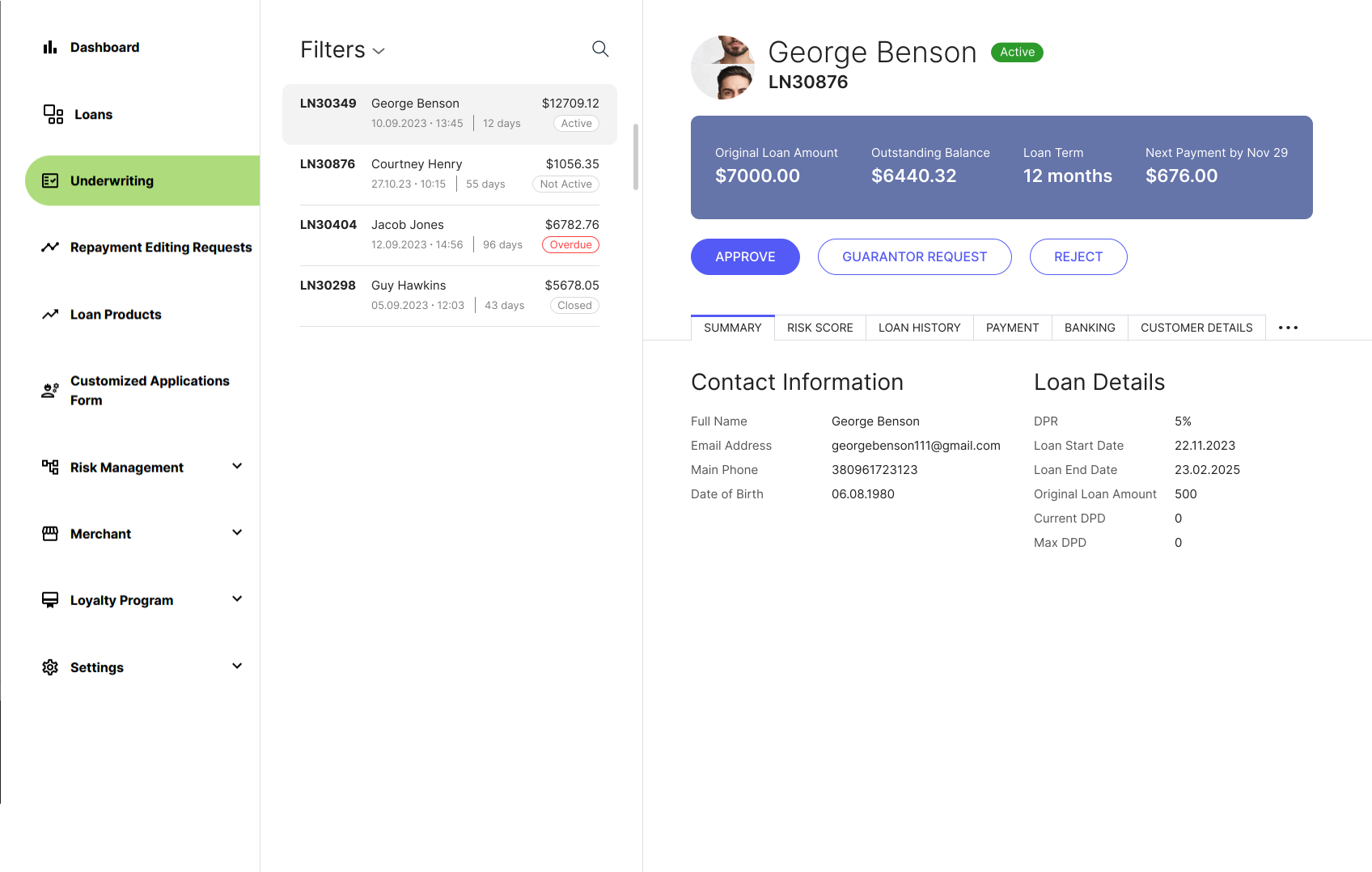
By following these recommendations, you can select digital lending software like CompassWay, which automates all stages of the in-house lending process—from managing loan applications and repayments to tracking overall business performance with regular reports and analytics. This enhances the efficiency, accuracy, and security of your lending processes, ultimately providing a seamless and streamlined experience for both lenders and borrowers. With CompassWay, you can optimize your in-house financing operations and drive business growth. Get started by trying a 15-day free trial period.
Should you offer customer financing?
As a business owner, making the buying process seamless is crucial for retaining customers. To ensure the success of your retail business, it’s essential to find ways to prevent losing potential sales. One effective strategy is to offer customer financing.
Offering in-house financing can significantly benefit your business by increasing sales, boosting customer loyalty, and enhancing overall return on investment. This reliable financing option helps you attract and retain customers by making high-value purchases more accessible.
Whether you’re a new retailer or an established one, providing consumer lending can have a positive impact on your business. It simplifies the purchasing process, encourages repeat business, and sets you apart from competitors who don’t offer such options. In-house financing is a trustworthy solution that supports business growth and customer satisfaction.
About Compassway
CompassWay is an all-in-one lending platform that automates the loan origination process from application to funding, delivering a best-in-class experience for your clients and team – for any loan product. With a wide range of services, Compassway offers technology options that help financial organizations, credit unions, and mortgage originators of any size reduce costs, generate revenue, stay competitive, and maximize return on technology investments.
Book a demo and check a 15-day free trial to see how the loan management platform could benefit your business tomorrow!
Navigation: