
Complete Guide How to Start In–House Financing Business

The financial landscape has evolved significantly, with consumer financing at the forefront, driven by technological advancements, shifts in consumer behavior, and changing economic conditions. Point-of-sale (POS) financing has become increasingly prevalent, allowing consumers to easily access loans directly during the purchasing process. This integration of financing options helps facilitate the acquisition of big-ticket items by embedding loan services within the customer journey.
As a small business owner, offering reasonable prices to customers is essential for staying competitive. However, reducing prices to attract sales can harm profitability, particularly for businesses that sell high-priced products or services. Understanding the array of consumer financing products is crucial for retailers aiming to retain customers and boost sales. In this guide, we’ll provide you with a comprehensive overview of consumer financing. We’ll cover the different types of financing available and discuss the pros and cons of customer financing.
Additionally, we’ll provide you with information on using digital lending software for in-house financing. Finally, we’ll help you determine whether offering customer financing is a good fit for your business. This knowledge can empower retailers to make informed decisions about which financing solutions are best suited for their business model and customer base.
What Does In-House Financing Mean?
In-house financing is a service where businesses provide loans directly to their customers, bypassing traditional financial institutions. This method allows customers to finance their purchases at the point of sale, offering a convenient and accessible way to buy without relying on bank financing or high-interest credit cards.
This financing option is ideal for purchasing high-ticket items such as business equipment, furniture, or vehicles. Customers benefit from direct financing provided by the retailer or vendor, repaying the loan over time with added interest and fees. With in-house financing, there is no need for a third-party lender, and the loan approval process is typically quick and straightforward.
In-house financing is especially popular at car dealerships, where customers can apply and potentially receive car loan approval for a new or used vehicle on the same day. Additionally, many other businesses, including dental offices, electronics stores, home goods retailers, equipment suppliers, and home builders, also offer in-house financing programs, making large purchases more manageable for consumers.
In-house customer financing
Key Features and Responsibilities
When you offer in-house financing to your customers, you control every aspect of the credit process:
- Credit Terms: You can set the loan size, interest rate, and payback period according to your business model and customer needs.
- Credit Assessment: You are responsible for prequalifying customers and conducting credit checks to assess creditworthiness.
- Payment Management: You manage the collection of payments and assume the risk of bad debt, which involves dealing with late payments or defaults.
- Cash Flow: Cash inflow occurs only when customers make their payments, which may lead to cash flow variability.
How Does In-House Financing Work?
To obtain in-house financing, borrowers usually begin by completing an application right at the point of sale, where they intend to make their purchase. This process involves assessing their eligibility based on the retailer’s in-house financing requirements, which may include credit checks and income verification. Once approved, the borrower and the retailer agree on the terms of the loan, including the interest rate and repayment schedule.
The borrower can then proceed to purchase the desired item using the funds from the loan. The repayment of this loan is structured in regular installments over a predetermined period until the total amount, including interest, is fully paid off. This financing method allows customers to manage large purchases more comfortably by spreading the cost over time while businesses benefit from increased sales and customer loyalty.
What are the Requirements for In-House Financing
In-house financing is particularly appealing to customers who might not meet traditional lenders’ stringent credit requirements. For example, customers who just turned 18 and without a credit history or individuals who have experienced financial setbacks like bankruptcy often find it challenging to secure financing through conventional channels. In these cases, in-house financing can provide a viable alternative after being turned down by traditional lenders.
Sellers that offer in-house financing often market this service as “bad credit financing,” aiming to attract customers with subprime credit scores. In some instances, these sellers may advertise that they do not perform credit checks, although they still evaluate other key factors. These include the customer’s income, residency status, and the size of the down payment to assess the likelihood of repayment. in-house financing remains a crucial option for those who find traditional credit avenues inaccessible.
In-House Financing Option for Small Business
In -House Loan
If your business specializes in high-priced goods or services, such as furniture, appliances, electronics, or home improvements and repairs, in-house financing might be an excellent addition to your sales strategy. Customer financing is a program or service offered by businesses to help consumers afford products, goods, or services by paying in installments. This financing method enables customers to spread the cost of their purchases over time, making it more manageable and appealing. Integrating a seamless checkout process that includes all stages of the loan origination not only simplifies the purchasing experience but also broadens your customer base. It attracts clients who might be unable to make large purchases upfront. By offering financing directly, businesses can bypass expensive and complex point-of-sale outsourcing solutions. Many forward-thinking retailers are now embracing technology-assisted in-house financing. This approach is seen as both cost-effective and profitable, providing a simpler, more integrated service than traditional outsourced financing models. As a result, in-house financing is becoming increasingly popular, offering significant benefits for both the retailer and the customer.
Layaway
Layaway is a payment plan whereby a business reserves a product for a customer until the customer pays for the item, typically with partial payments. Unlike other financing options, the customer does not receive the item until it has been paid for in full. The item will be returned to stock if the customer fails to complete payments. The customer’s money may be returned in full, minus a fee, or forfeited, depending on the terms of the agreement. Some businesses may charge a fee for holding the item until the customer completes payment. Although layaway decreased in popularity with the rise of credit cards, it may still be an appealing option for some businesses and consumers. Typically, a layaway agreement allows the customer to avoid interest charges while the item’s price remains fixed. Layaway agreements reduce risks for the seller and can be offered to customers with poor credit.
Third-party Financing
Third-party financing refers to financing where small business owners rely on a third-party financing provider to act as a lender at the point of sale. These third-party financiers allow customers to apply partial payments toward the cost of the purchased items and typically offer interest-free payment terms for a fee. Installment payments are often due on a biweekly or monthly basis. Using third-party consumer financing, retailers will pay a fee for each transaction processed for funding or a flat monthly fee. The benefit of using a third-party financing company is that they do much of the labor on the retailer’s behalf, so you don’t have to worry about completing credit checks or obtaining payments. And drawbacks of offering in-house financing.
How much does customer financing cost businesses?
The cost of incorporating consumer finance into your company strategy is determined by the financing solution you use.
Each third-party customer financing provider has its own unique method for charging merchants, typically involving fees for transaction processing. These fees are often calculated based on both the number of transactions and the percentage of their total value. As a merchant, it’s crucial to have a clear understanding of your business’s transaction metrics to accurately estimate potential costs associated with these services.

We have summarized the pros and cons of consumer financing for small business owners to simplify evaluating its advantages and disadvantages.
Pros and cons of customer financing

Benefits of consumer financing
Boost the overall ROI
Customer financing can drive more sales, increase conversions, and enjoy improved marketing ROI. In-house financing can make your products or services accessible to a broader customer base, including those with varying credit profiles, expanding your market reach. This is further reinforced by customers’ ability to obtain loans relatively quickly. Furthermore, the terms and conditions of in-house financing can be tailored through negotiations between the seller and the buyer, including adjusting interest rates to suit individual needs. Finally, depending on the financing model you choose, you may have the opportunity to earn interest or fees on the financing provided, adding a revenue stream to your business. With Compassway’s consumer lending software, you can confidently boost your retail business’s overall ROI. Your product features will increase your average order value by 58%, increase the purchase frequency by 20% in one month, and increase your sales conversion rate by 44%.
Take control of your sales conversion rate and average order value, and confidently increase your intermediate purchase frequency by 20% in one month. You also get 2-6% of all transaction charges and interests!
This can be a win-win situation for you and your customers, as they get the product they want, and you close sales on full-priced products and services.
Win Repeat Business
Every business’s goal is to close more deals, make profits, and stay ahead of the competition. When you offer customers a flexible sale process, they are more likely to return to you than to another company.
Integrating additional in-house financing options makes the purchasing experience seamless and increases your chances of landing repeat business with existing customers.
Earn Customer Loyalty
When you offer an easy payment option for customers and deliver quality service, you increase your chance of earning their loyalty. Financing can enhance your brand perception by signaling that your business is willing to work with customers to make purchases more affordable, which can positively impact your reputation. This is the best way to get them to buy from you again.
Not only does this mean more sales for your business, but it also means your customers are satisfied and happy with your business and may likely act as references or word-of-mouth referrals advertising your business to their friends and family free of charge!
Improve Customer Experience
Retail financing options reduce barriers to payment and empower your customers to buy more services and products easily. Customer satisfaction is essential to running a successful business.
When customers can pay installments for goods or services purchased, their satisfaction with your quality service delivery increases. Interestingly, having multiple customer financing options improves the overall customer experience and creates room for repeat businesses in the future.
Drawbacks of Consumer Financing
Compliance with Regulations
Compliance and Reporting should be integral parts of your operations. Recognizing the significance of adhering to evolving regulatory policies and maintaining accurate records, you must provide comprehensive and complete financial reports as governing authorities require.
Developing a contingency plan is prudent, considering evolving legislative and regulatory issues. Adaptability is essential in a financial market; therefore, be ready to adjust your company plan if necessary.
Capital and Funding Investments
paramount to establish the necessary working capital to cover the expenses associated with hiring and training personnel to provide exceptional customer service. It is essential that your team understands the loan products and can efficiently assist clients, as this will guarantee sufficient funding to initiate the enterprise and keep it operating efficiently.
Fees and Expenses
Utilizing a third-party financing provider often incurs additional costs, which can impact your business’s profitability. Depending on the provider, you may be required to pay a flat monthly fee or a variable fee based on a percentage of each transaction. These fees can accumulate over time, potentially offsetting some of the financial benefits of increased sales through financing.
Risk of bad debt
While offering financing options can be an effective strategy to attract new customers, it also introduces certain risks, primarily the possibility that customers may fail to make payments as agreed. This risk of non-payment can lead to increased instances of bad debt, which can adversely affect your financial health.
How to In-House Finance with Commercial Loan Origination Software
The only questions remain: how to follow the trends, and what in-house financing software is good enough to improve your bottom line tomorrow?
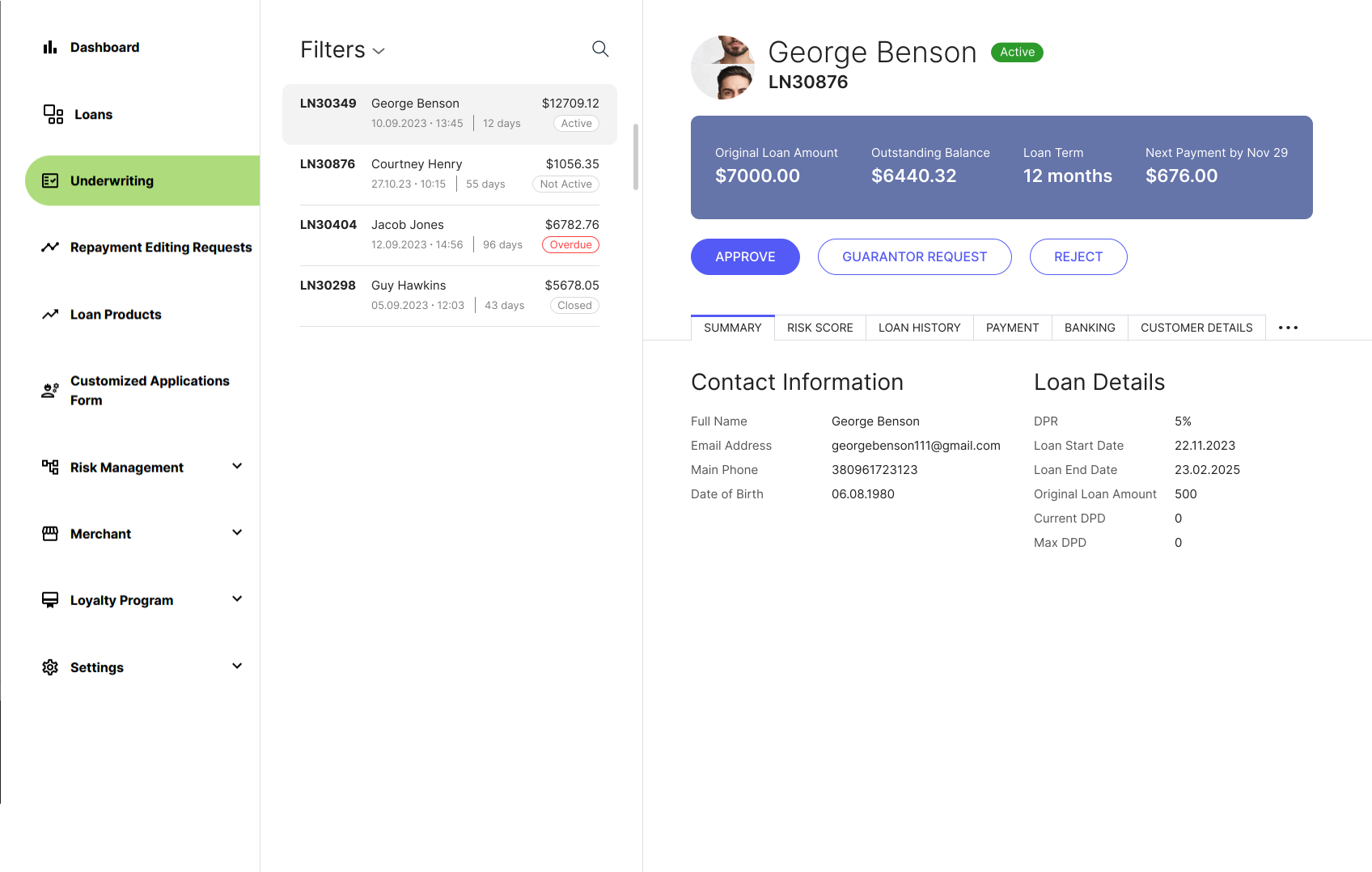
With CompassWay, you can automate all stages of the in-house lending process—from managing loan applications and repayments to tracking overall business performance with regular reports and analytics.
Our all-in-one system provides everything your business needs to offer in-house lending to clients on your terms.
Here’s what you’ll get:
Fully digital processing
The digital lending platform lets you quickly issue a loan with zero paperwork. Faster loan approvals and releases will reduce the “time to yes” from weeks to minutes.
CompassWay is an all-in-one digital lending platform that automates the loan origination process from application to disbursement, delivering a best-in-class experience for your clients and team – for any loan product. With advanced algorithms and analytics, vendors can quickly score clients and automatically make credit decisions anywhere on the globe.
Real-time checks: ID verification, Know Your Customer (KYC), Anti-money laundering (AML), credit history.
Online loan management software is equipped with tools to synchronize data from KYC registries, credit bureaus, banks, etc., to ensure that all uploaded data and documents are authenticated. Decision rules and underwriting algorithms are then used to determine whether the loan application passes the checks and balances of risk.
Increased automation and robust back-end technology enable staff to be redeployed from reviewing loan applications to work that adds more value.
Real-time risk profiling
Risk management is the most critical aspect of a digital lending platform. The capacity to mitigate credit risk will prevent costly losses and preserve credit availability for deserving borrowers who will become or remain active participants in the economy.
The proprietary AI-driven technology of deep neural networks and machine learning allows making decisions about loans within 30 seconds. CompassWay’s AI model analyses over 400 variables collected during the application process and sourced from third parties –from credit bureaus to social networks.
Internal and external data sources are used in a credit decision model and impact the quality of credit decisions. The digital lending solution also gives you real-time insights into borrowers’ creditworthiness based on their credit scores. A customizable scorecard based on recent cash flow information, total debt level, repayment history, and other factors is also crucial.
Using objective financial information and other factors correlated with risk allows for increased consistency across each company’s lending underwriting process. Risk-based pricing has allowed lenders to serve consumers across the risk spectrum better. Under this system, costs are lowered for most low-risk consumers while credit opportunities are expanded for higher-risk consumers. Risk-based pricing also creates a fairer marketplace.
Automate Marketing and Client Loyalty Program
A robust digital lending platform should provide critical analytics to help you make informed decisions. For example, the platform should provide information about client acquisition channels, time applying for loans, or cross-device tracking. These insights assist you in identifying and correcting issues in your onboarding process to attract more qualified borrowers to your financial institution.
The digital lending platform will help you get return customers. CompassWay’s white-label lending platform displays personalized loan recommendations to existing borrowers to expand the possibilities of making them repeat customers.
Notifications, SMS, email, or personalized nudges will give your marketing teams the tools to create targeted campaigns and outreach that engage customers and members, resulting in long-term loyalty and stickiness.
The digital lending technology also makes precise loan applications for return customers by automatically pre-filling forms with existing client information. The result is improved customer experience and a higher retention rate.
How to offer financing to customers
For retail businesses looking to thrive, bridging the gap between a potential sale and a lost opportunity is crucial. Consumer lending offers a robust solution that can significantly benefit your retail operation. Whether you are just starting out or aiming to elevate your established business, implementing in-house financing is a strategic move that can secure repeat customers, boost sales, and substantially enhance your overall return on investment (ROI).

Offering credit to your customers can be a game-changer for your business, allowing them to purchase now and pay later. Here’s a clear, four-step process to consider for implementing this strategy effectively:
1. Review Your Options
In the first step, evaluate whether in-house or third-party financing better suits your business needs. In-house financing gives you greater control over customer interactions and credit terms, and it avoids the fees that third-party financiers often impose. However, it also requires you to handle payment collection and risk management directly. Conversely, third-party financing can relieve you of the administrative burden of managing loans, but it typically involves transaction fees and less flexibility in setting the terms of credit.
2. Establish Clear Credit Terms
Once you’ve chosen the financing type, define clear credit terms that are favorable both for your business and your customers. This includes setting the interest rates, repayment periods, and eligibility criteria. Make these terms transparent to ensure customers understand their obligations and to help prevent future payment issues.
3. Implement a Seamless Application Process
Create a streamlined application process for your customers. Whether you opt for in-house or third-party solutions, the process should be quick and user-friendly, with minimal paperwork and fast approval times. This not only enhances customer experience but also increases the likelihood of completing sales.
4. Monitor and Manage Credit Effectively
Regularly review and manage the credit you extend. This involves monitoring outstanding balances, following up on late payments, and adjusting credit policies as needed based on customer payment behavior and overall economic conditions. Effective management will help minimize bad debt and enhance the profitability of your financing program.
By following these steps, you can facilitate a smoother shopping experience for your customers while driving growth and profitability for your business.
Key Takeaway
The key takeaway from considering in-house financing as an option for small businesses is that it can serve as a powerful tool to increase sales and boost ROI. By providing customers with the ability to purchase now and pay later through in-house financing, businesses can:
Expand Customer Base: Although the initial cash receipt is delayed, the spread of payments ensures a more predictable and steady cash flow over time, which can be crucial for budgeting and
Enhance Cash Flow: Customers are more likely to make larger purchases when they do not have to pay the entire amount upfront.
Increase Average Order Value: Customers are more likely to make larger purchases when they do not have to pay the entire amount upfront.
Improve Customer Loyalty: Offering flexible payment options can enhance customer satisfaction and loyalty, encouraging repeat business.
Control and Flexibility: By managing financing internally, businesses have full control over the terms and approval process, allowing for tailored solutions that fit both the business and its customers’ needs.
Reduce Dependency on External Financing Charges: In-house financing eliminates the need to pay third-party fees, thereby improving overall profitability.
About Compassway
CompassWay is an all-in-one lending platform that automates the loan origination process from application to funding, delivering a best-in-class experience for your clients and team – for any loan product. With advanced algorithms and analytics, small lenders can quickly score clients and automatically make credit decisions. By reducing time and costs during the origination and loan portfolio management stages, financial institutions become more productive and have more room to develop new businesses.
Book a demo and check a 15-day free trial to see how the loan management platform could benefit your business tomorrow!
Navigation: