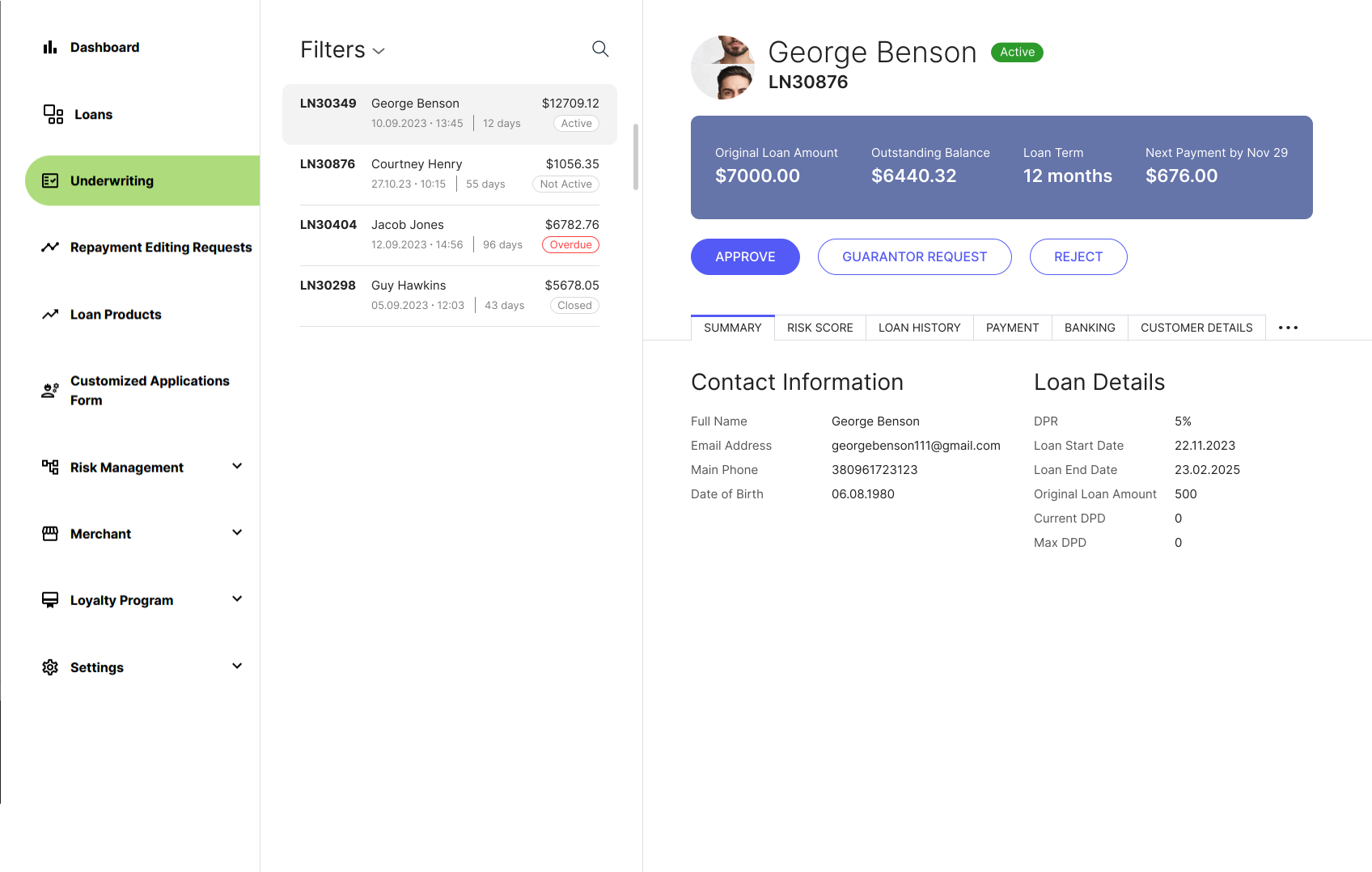


Loan Management Systems: The Backbone of Modern Financial Institutions
A Loan Management System (LMS) is fundamental to the success of any financial institution, serving as the backbone that enables streamlined processes, minimized risks, and enhanced customer experiences. If you’re looking to automate loan processing or maintain real-time tracking of your customers, building a robust loan management software is essential.
In this comprehensive guide, we’ll explore the essential features, benefits, and the complete process of building an effective LMS that meets the unique needs of your lending operations.
What is a Loan Management System (LMS)?
A Loan Management System (LMS) is a digital platform designed to manage the entire loan lifecycle, from application and underwriting to disbursement, repayment, and collection. This software facilitates all lending stages, automating tasks such as customer data collection, credit assessment, approval workflows, payment tracking, and regulatory compliance.
An LMS aims to:
- Boost Operational Efficiency: By automating repetitive tasks, reducing paperwork, and accelerating decision-making, an LMS improves overall productivity.
- Mitigate Risk: Integrated risk management tools help assess creditworthiness and monitor loan performance, reducing defaults and financial losses.
- Reduce Manual Errors: Automation minimizes human errors in data entry, calculations, and compliance checks, ensuring greater accuracy.
- Enhance Borrower Experience: A streamlined and transparent process leads to higher customer satisfaction and retention.
By leveraging a powerful loan management system, banks, mortgage lenders, credit unions, and other financial institutions can efficiently collect, verify, and manage customer data, allowing for a more agile and competitive approach to lending.
Key Characteristics of an Effective LMS:

- End-to-End Loan Processing: Capable of managing the entire loan lifecycle, including origination, underwriting, servicing, collections, and reporting.
- Customizability: Flexible to adapt to the specific needs of the lender, such as unique loan products, workflows, and integration with existing systems.
- Automation and Efficiency: Automated workflows for loan approval, credit decision-making, document management, and payment processing to minimize manual errors and speed up operations.
- Compliance Management: Integrated tools to ensure adherence to regulatory requirements and industry standards.
- Analytics and Reporting: Advanced data analytics and reporting tools for monitoring loan performance, risk assessment, and making data-driven decisions.
- User-Friendly Interface: Intuitive design that simplifies navigation and enhances the user experience for both staff and borrowers.
- Scalability: Ability to grow with the business, accommodating increased volumes and expanding product offerings without compromising performance.
5 Reasons Why Your Institution Needs a Loan Management System
- Streamlined Loan Processes
An LMS automates and simplifies every stage of the loan lifecycle, from origination to closure. This reduces manual workload, minimizes delays, and improves accuracy. Key functionalities include automated document management, credit scoring, and real-time monitoring of loan status, all of which help expedite loan approvals and disbursements. - Enhanced Risk Management
Effective risk management is crucial for any lending institution. An LMS integrates credit scoring models, risk assessment tools, and fraud detection algorithms to evaluate borrower creditworthiness and identify potential risks early. By providing real-time insights into loan performance and borrower behavior, the system allows institutions to take proactive measures to mitigate risks. - Improved Customer Experience
Today’s borrowers expect fast, seamless, and transparent service. An LMS offers a self-service portal where customers can apply for loans, track their application status, make payments, and communicate with lenders—all from the comfort of their own devices. By reducing wait times and improving communication, an LMS significantly enhances customer satisfaction and loyalty. - Regulatory Compliance and Data Security
Compliance with financial regulations and data protection laws is non-negotiable for lending institutions. An LMS ensures adherence to these requirements by automating compliance checks, maintaining detailed records, and providing audit trails for every transaction. Furthermore, it offers robust data security features such as encryption, secure access controls, and regular backups to protect sensitive customer information. - Cost Efficiency and Scalability
Implementing an LMS reduces operational costs by automating labor-intensive tasks, such as data entry, payment processing, and reporting. This not only saves time and money but also allows staff to focus on more strategic activities. Additionally, an LMS is scalable, meaning it can grow with your business, handling an increasing number of loans and customers without compromising performance.
Essential Features of an Effective Loan Management System
- Automated Loan Origination and Underwriting
- Seamlessly capture and process loan applications.
- Automate credit checks, income verification, and document validation.
- Real-Time Payment Processing
- Track and manage recurring payments.
- Automatically generate payment reminders and alerts.
- Risk Assessment and Credit Scoring Tools
- Leverage AI and machine learning to assess borrower risk and predict default probabilities.
- Provide customizable risk assessment models based on lender-specific criteria.
- Compliance Management
- Ensure the system adheres to local and international regulatory standards.
- Automate compliance reporting and maintain audit trails.
- Data Analytics and Reporting
- Generate comprehensive reports on loan performance, customer behavior, and portfolio trends.
- Use data visualization tools to help decision-makers understand complex data easily.
- Customer Self-Service Portal
- Allow borrowers to apply for loans, check their status, make payments, and access loan documents online.
- Provide real-time customer support via chatbots or help desks.
- Seamless Integrations
- Integrate with existing CRM, ERP, accounting, and third-party financial systems to ensure smooth data flow across the organization.
- Security Features
- Protect sensitive data with encryption, secure access protocols, multi-factor authentication, and regular backups.
Types of Lending Servicing Solutions
Diversity of Loan Management Software: Loan Management Systems (LMS) come in various types, each designed to manage different aspects of the lending process. These systems can range from comprehensive platforms that handle the entire lifecycle of a loan—from application and underwriting to servicing and collections—to specialized solutions that focus on particular types of loans or specific business needs. The diversity of LMS options ensures that organizations can choose a solution that aligns with their unique lending practices, regulatory requirements, and customer needs.
LMS Tailored to Different Loan Types: A robust Loan Management System comes equipped with functionalities specifically designed to cater to various loan types, such as personal loans, mortgage loans, auto loans, small business loans, and revolving credit lines. These systems are adaptable to the specific rules, regulations, and requirements associated with each loan type, ensuring compliance and efficient management.
Whether it is handling simple consumer loans or complex commercial financing, a well-designed LMS can streamline the process, reduce errors, and improve customer experience.
Below is an in-depth look at five primary types of lending software:

1. Consumer Lending Software
Consumer lending software is a comprehensive solution that streamlines the entire lending process, from personal loans to credit card management. This software is indispensable for financial institutions looking to optimize their consumer lending operations.
- Comprehensive Lending System: Manages the entire loan lifecycle—from the initial credit request to the final repayment—ensuring a seamless experience for both creditors and borrowers.
- Automated Financial Assessments: Automates the commercial assessment process, minimizing manual errors and expediting approval times. This enables near-instantaneous responses to loan applications, enhancing customer satisfaction.
- Documentation Coordination: This feature simplifies document management by organizing paperwork, tracking requirements, and ensuring compliance with evolving regulations. It’s crucial for financial institutions that need to stay compliant in a rapidly changing regulatory environment.
- Loan Asset Administration: The software includes advanced tools for monitoring and managing loan assets, helping institutions maintain healthy portfolios and effectively manage risk.
- Loan Portfolio Analysis: Provides deep insights into loan performance and borrower behavior, enabling lenders to adjust strategies, identify risks early, and make informed decisions. This functionality is key to improving lending strategies and maximizing returns.
- Line of Credit Management: Facilitates the management of credit lines, offering flexible borrowing options and simplifying the tracking of credit usage, thus helping lenders manage risk exposure more effectively.
2. Commercial Lending Management Software
Designed specifically for managing business loans and credit lines, commercial lending management software provides specialized tools to optimize profitability and efficiency.
- Profitability Optimization: Enhances profitability by automating processes and reducing errors, thereby increasing the efficiency of commercial lending operations.
- Risk Assessment: Automates the evaluation of creditworthiness, allowing for more accurate risk management and better decision-making.
- Efficient Tracking: Manages the performance of loans and tracks customer interactions, providing a clear view of each loan’s status and history.
3. Microfinance Loan Management Software
Microfinance software is tailored for institutions that provide small loans to underserved populations, such as low-income individuals and small businesses.
Key Features:
- Lending Coordination: Simplifies the management of microloans, making it easier to handle the high volume and small size of these loans.
- Impact Measurement: Tracks both the social and financial impact of microloans, providing insights into the effectiveness of lending programs.
- AI-Accelerated Credit Scoring: Utilizes advanced AI algorithms to enhance credit scoring, ensuring that even borrowers with limited credit histories can be accurately assessed.
This software is essential for microfinance institutions seeking to manage their lending operations effectively while also measuring the impact of their financial assistance.
4. Loan Portfolio Management Software
Loan portfolio management software offers powerful tools for analyzing and optimizing loan portfolios, ensuring that financial institutions can maintain a healthy balance between risk and return.
- Portfolio Analysis: Delivers detailed insights into portfolio performance, allowing lenders to identify trends, spot potential risks, and adjust their strategies accordingly.
- Risk Management: Provides tools for monitoring and mitigating risks across the loan portfolio, helping institutions maintain stability and profitability.
- Compliance Monitoring: Ensures that all loans within the portfolio comply with regulatory requirements, reducing the risk of penalties and enhancing overall governance.
5. Enhanced Bridge Lending System Software
Bridge lending software is specifically designed to manage short-term, high-interest loans, addressing the unique challenges these loans present.
- Digital Signature: Facilitates secure and legally binding online agreements, eliminating the need for physical paperwork and speeding up the loan approval process.
- API Integration: Seamlessly integrates with other platforms through robust APIs, allowing for easy data transfer and real-time decision-making.
- Activity Tracking: Provides comprehensive tracking of the entire loan application and processing journey, ensuring transparency and enabling quick intervention when necessary.
Key Takeaways:
How the Right Loan Management System (LMS) Can Enhance Operational Efficiency for Financial Institutions
Selecting the right Loan Management System (LMS) tailored to the unique needs of a financial institution is critical for optimizing operations, increasing customer satisfaction, and driving sustainable growth. The right Loan Management System is a powerful tool for financial institutions, enabling them to automate and optimize lending processes, make data-driven decisions, enhance customer satisfaction, and reduce operational costs. By leveraging cloud-based platforms, integrated analytics, and automated workflows, a modern LMS transforms loan management into a streamlined, efficient, and customer-centric operation, setting the stage for long-term success in the competitive lending market.
Here are the key ways a modern LMS can transform operational efficiency:
1. Leveraging Cloud-Based Platforms for Accessibility and Flexibility
Modern LMS solutions are often cloud-based, enabling financial institutions to access their loan portfolios from anywhere, anytime, as long as an internet connection exists. This level of accessibility represents a significant upgrade from traditional on-premise systems, which require physical presence in the office to manage loans.
2. Data-Driven Decision Making with Integrated Analytics
A robust LMS provides comprehensive data analytics and reporting tools that enable financial institutions to make informed decisions, optimize strategies, and improve overall efficiency. Continuously monitors key performance indicators (KPIs), such as approval rates, loan defaults, and customer satisfaction scores, allowing management to identify areas for improvement and track progress over time. and stay ahead of market changes and minimize potential losses.
3. Automation of Loan Processing for Enhanced Efficiency
Automation in loan processing significantly reduces errors and increases efficiency across key areas such as underwriting, servicing, and collections, freeing employees from repetitive tasks and allowing them to focus on more strategic activities like relationship management and business development.
4. Enhanced Employee Productivity
By automating routine tasks and offering intuitive user interfaces, an LMS helps employees work more efficiently and effectively. Reduces training time for new employees by providing a user-friendly interface and clear workflows, allowing staff to become productive more quickly.
5. Improved Customer Experience and Satisfaction
An LMS greatly enhances the borrower experience by providing a faster, more transparent, and seamless loan application process.
Allowing borrowers to apply for loans, check application status, and make payments online provides convenience and reduces the need for in-person visits or lengthy phone calls.LMS Utilizing data analytics, LMS helps lenders tailor loan products and offers to customers’ specific needs and preferences, increasing satisfaction and loyalty.
6. Cost Savings and Operational Efficiency
Modern LMS platforms decrease the need for extensive back-office staff, significantly cutting down administrative expenses.
By automating labor-intensive tasks, such as loan processing, data entry, and compliance checks.
Conclusion
Selecting the right loan management software is one of the most critical decisions for your lending business. It involves a thorough understanding of your specific business requirements and carefully considering essential features, integration capabilities, data security, and compliance. Additionally, factors like scalability, flexibility, vendor support, costs, and user feedback play a vital role in making the best choice.
Book a demo with Compassway and see how our modern, intuitive loan management solution can help you succeed.
Navigation: