

What Does In-House Financing Mean?

The progression of technology has revolutionized how small businesses cater to their customers’ financing needs. Today, numerous businesses are integrating in-house loan programs into their regular operations to facilitate customers in finalizing their purchases. Offering affordable in-house financing can be a great way to convert potential customers into buyers. By offering the option of in-house financing as a means of payment, businesses can potentially influence the decision-making process of prospective customers and increase the likelihood of sales. The requirements of in-house financing loans may offer greater flexibility than traditional bank loans, particularly in cases where the customer’s credit rating is less than perfect. This approach can efficiently cater to customers’ unique financial needs, enhancing customer satisfaction and loyalty. Integrating financing options into the overall business strategy can be a prudent and viable means of expanding and strengthening the business’s customer base while mitigating potential financial risks. In-house lending has been made more convenient and streamlined by implementing specialized software solutions like CompassWay. The appraisal and application processes are now expedited, saving valuable time and resources. If you’re considering offering such a financing service, it’s crucial to comprehend the process involved. This guide explores the essential aspects of providing financing to your customers. It covers the nuances of in-house financing, discusses its pros and cons, and outlines alternative payment methods you might want to explore.
How Does In-House Financing Work?
In an in-house financing program, the retailer assumes the role of the lender and sets the terms for the loan, including interest rates, repayment conditions, and other requirements. This type of financing can be found in the automotive businesses and customer—industry or for high-ticket purchases in retail. Customers usually complete an application on-site at the business where they purchase to apply for in-house financing. Loans. Applications can also be submitted online.
Customer requirements for in-house financing are often less stringent than those for bank financing. Some sellers offer this option as “bad credit financing” and cater to customers with subprime credit scores. In-house financing, also known as buy-here, pay-here (BHPH), makes it easier for buyers who may have trouble with traditional financing options to qualify. In rare cases, sellers may not perform a credit check at all. However, they will still evaluate other factors like income, residency, and down payment to assess the borrower’s ability to repay the loan they are being given. In exchange for their flexibility, the seller may charge a much higher rate on the loan and require a larger down payment from the buyer. This is why in-house financing is very appealing for those who lack a credit history, have bad credit, or for other reasons, do not meet the requirements of traditional lenders. Once approved, the borrower buys the item with the loan and then repays the loan in regular installments with interest until the balance is paid off. When done correctly, in-house financing is a good service and a win-win scenario for businesses and customers.
Numerous businesses across various industries, from car dealerships to home builders, now offer their customers in-house financing loans. These businesses aim to help their customers overcome financial hurdles and improve their buying experience by providing in-house financing options. This approach benefits the customers, strengthens the businesses’ relationships with their customers, and boosts their sales. With readily available in-house loans, customers can purchase the products or services they need without worrying about the immediate financial burden, thereby promoting a more positive and constructive shopping experience.
Let us explain how in-house financing works when purchasing a used car.
Imagine a customer who wants to buy a used car from a local auto lot that offers in-house car financing. When the customer arrives, they would speak with someone in the financing department and express their interest in purchasing a car they have already checked out. The dealership would then ask the customer to fill out a loan application form and provide documents that verify income and residency. They would also inquire about the down payment and the desired loan amount. After that, the dealership offers an in-house loan which the customer can negotiate. Customers who accept the offer will complete the paperwork and buy a qualifying car. Later, the payments would be made directly to the dealership.
Increase Sales
For businesses, this program can be a game-changer. It can increase sales, leading to higher revenue and profits.
Providing credit options to customers can be an effective way to encourage them to complete a purchase. You can minimize pricing objections and increase overall sales by offering in-house financing alternatives.
Customers can buy high-quality products that may not be affordable for purchase outright at the total price. Additionally, customers who are already buying a product or service from you might be more motivated to purchase more or upgrade their order if in-house financing is available. You can show your customers how a slightly higher monthly payment can help them get the upgrade they want, which can increase the average customer’s sales and improve your bottom line.
Customer Loyalty
In today’s highly competitive marketplace, it’s crucial for businesses to go the extra mile in building solid and lasting relationships with their customers. One effective way to achieve this is by providing in-house financing options. By giving customers a choice between outright purchase or financing, businesses can enhance the customer experience and foster greater loyalty. Retaining clients is a vital part of any business strategy, and building trust is critical to achieving this. Flexible financing options, supported by in-house financing software, demonstrate that a business understands its customers’ needs and is willing to empower them with purchasing power. This translates into repeat business and referrals, which can help drive growth and success. Additionally, offering financing options can help businesses stand out from their competitors and show their customers that they’re committed to providing exceptional service and support—the more positive a customer’s experience, the stronger their loyalty to the business.
Flexibility
Seller financing can be a faster and more convenient option for borrowers, as it eliminates the need to go through the lengthy and often complicated process of applying for a traditional loan. Instead, the borrower can negotiate the terms of the lending agreement directly with the seller, which can include the interest rate, the repayment period, and any other relevant terms. This can result in a more flexible and personalized lending agreement that better meets the borrower’s needs. Seller financing can also be a good option for borrowers who may not qualify for a traditional loan due to a poor credit score or lack of collateral. In many cases, the seller is more willing to take on this risk, as they have a vested interest in the sale’s success. Additionally, seller financing can provide tax benefits for both the buyer and seller, as the interest paid on the loan is tax-deductible.
Simplicity
Clients seek simplicity in the purchase process, which includes transparent financing, an uncomplicated process, and exceptional customer service. Seller financing is an appealing option for borrowers seeking a more personalized and streamlined lending experience. Implementing reliable in-house financing software can enable businesses to optimize their operations and deliver a seamless financing experience to their valued customers.
The Key Differences Between In-House Financing and Traditional Loans
Credit Score Requirements
In-house financing provides an added advantage of notably less stringent qualification requirements than banks and credit unions. As owner-financing establishments prioritize product sales over profit from loans, they are often more willing to collaborate with individuals with credit histories that are less-than-perfect. This can be an excellent alternative for individuals who have faced prior financial setbacks or are starting out with a limited credit history. With such an opportunity, one can effectively leverage the same to materialize their aspirations.
Traditional Financing Getting a loan through bank financing can be difficult, especially if you have a less-than-perfect credit score. Financial institutions have strict requirements for creditworthiness, making it challenging for some borrowers to qualify. If your credit score is below 660, you may be considered a high-risk borrower, and the terms of your loan will be much less favorable if you are approved.
Approval
Compared to traditional financing methods, the in-house financing approval process is characterized by expedited approval and a streamlined paperwork process. This method facilitates a faster approval process, which can be completed within a day or even instantly, owing to the reduced bureaucratic hurdles,
Traditional financing Traditional banks are known for their notoriously slow approval process, which can take several days or even longer. After submitting the initial application, you may be asked to provide additional documentation, and it can feel like your loan application needs to pass through different people’s hands before a decision is made. Additionally, the application process for traditional loans can be lengthy and frustrating, especially for borrowers who need financing quickly. This can be particularly challenging when purchasing a home or car, and time is of the essence to secure the purchase.
Down Payment
In-house financing usually demands a lower down payment as compared to traditional loans. This can be highly beneficial for individuals who do not have a large sum of money to pay upfront.
Traditional financing has rigid rules regarding the sum of the down payment for each lending product, and it can be challenging to negotiate for changing the amount of the down payment.
Personalized service
In-house Financing – When you finance through a house lender, you can expect to receive more personalized service than you would from a bank or credit union. House lenders typically have smaller staffs, which allows you to develop a strong relationship with your loan officer. This helps you feel more confident they have your best interests in mind.
This service not only helps customers build trust in the lending service but also decreases expenses for lenders by reducing the need for customer support. Overall, the client portal software streamlines the loan application process and enables customers to manage their loan accounts easily and conveniently.
Traditional financing usually requires a separate application process, which can be cumbersome.
How to Start Offering Financing to Your Customers with Specialized In-House Lending Software
A practical method of starting the in-house lending process, from pre-qualification to repayments, is to integrate an in-house lending Platform. At CompassWay, we provide intelligent end-to-end automation that allows businesses to sell their products or services in installments with flexible credit product settings and AI-driven credit decisioning. This platform offers streamlined processes that can be customized to meet your unique requirements. Furthermore, it allows the sharing and reusing of loan products across different journeys, ensuring that exceptional experiences are delivered to customers. Adopting the platform model eliminates friction in the lending process, provides the highest loan portfolio quality, boosts revenue, reduces costs, and increases efficiency. We have designed the platform with all the necessary capabilities and journeys to create a superior digital lending experience for customers and members globally. This enables you to focus on customization and differentiation, thereby setting a new standard in the market.
Digital onboarding
The digital onboarding process includes a marketing-focused landing page, automatic KYC procedures, and a real-time loan calculator. The page aims to effectively guide borrowers through your website, communicate with them, and help them apply for a loan. The page is designed with simplicity in mind, allowing your clients to quickly review the terms of various loan options and calculate the total cost of each loan to determine the most cost-effective option.

Borrower Portal
The Borrower Portal offers a personal space for customers to apply for loans, monitor their application status, and keep track of active and repaid loans. The portal is highly flexible and can be customized to fit the lender’s business model. Its purpose is to provide borrowers with detailed loan information and extensive control over loan applications, active loans, and activity history. The platform is completely customizable and can be tailored to any in-house financing business model. Additionally, the Borrower Portal is equipped with robust security features and personal data protection, which helps to improve customer satisfaction and build customer loyalty.

Back office
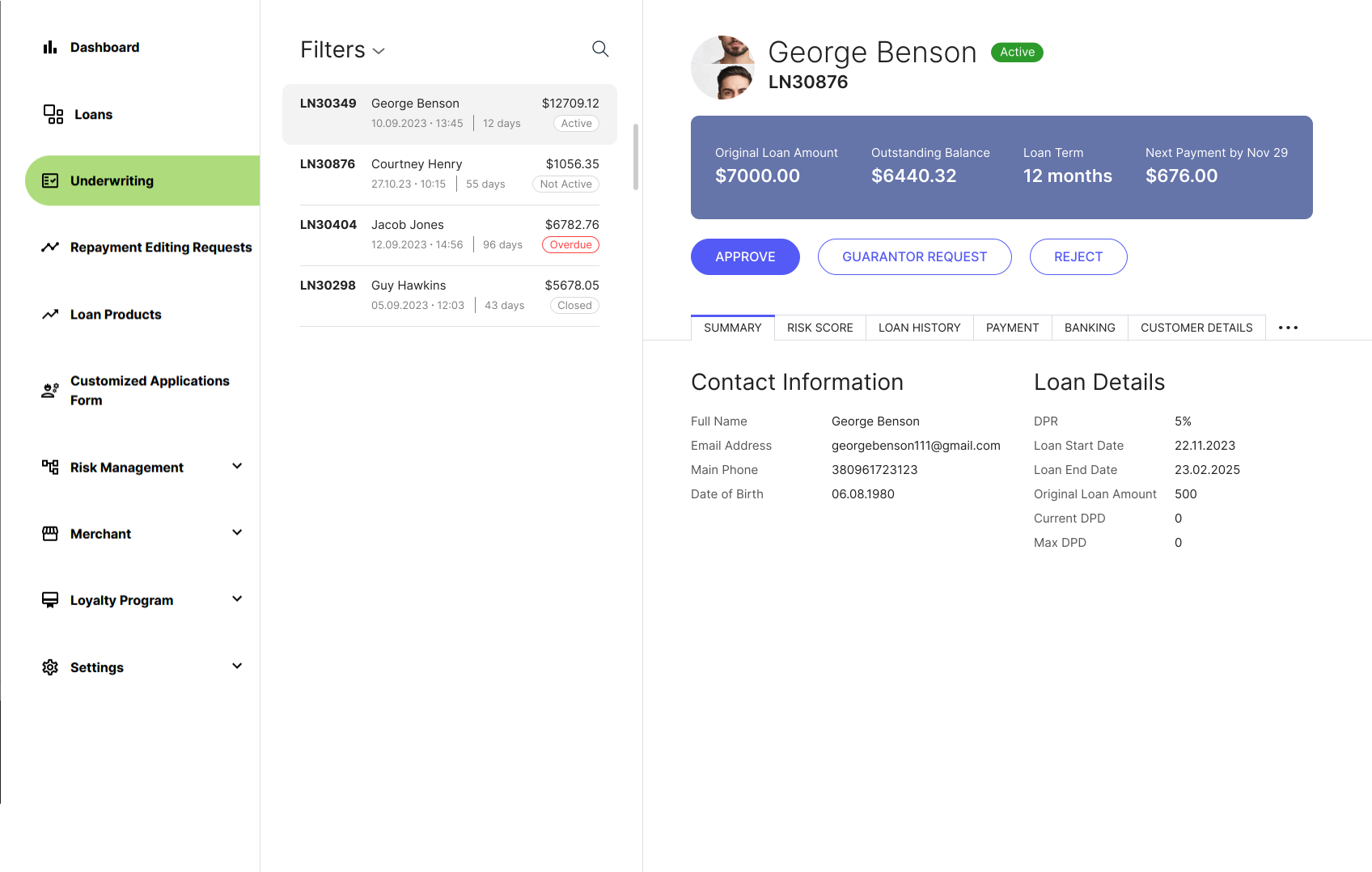
The back office is the core of the lending platform. It provides lenders and retailers with a comprehensive overview of the entire loan process, including loan applications, active loans, underwriting, loan amounts, and lending decisions. The platform is equipped with a decision-making engine that can be tailored to your business processes. Businesses can perform scoring and underwriting with or without manual application screening. Additionally, the system has role management and duties such as segregation, calculation, product engines, statistics, reporting, and more to enhance its functionality.

Model you can use for your in-house financing loans
There are different approaches you can take to offer an in-house bank loan.
You can offer in-house financing at no charge, which can become a powerful marketing tool to attract more customers to your business. However, offering in-house financing comes at a cost since you must cover the expenses of maintaining a platform from your other profits.
Alternatively, you can charge a flat monthly rate for issuing and servicing each loan until the point of repayment. This way, you can still use in-house financing to attract more business while ensuring that you cover your expenses.
You can also charge a one-time setup fee that covers your expenses. Another option is to offer a discount rate lower than a bank’s. This way, you can provide your clients with quick in-house service while also making money to cover your expenses and potentially earn even more depending on the size of your operation. For instance, if a bank usually charges 5% for a loan, you can offer a lower rate to your clients.
How do you offer in-house financing in your bbusiness?
To offer in-house financing, primarily catering to a demographic like millennials who favor point-of-sale financing over traditional credit cards, there are several pathways:
1. Manual Management (Not Recommended)
If your business is very small, you could manually manage borrowers and credit. However, this method is highly unscalable and unreliable. It’s challenging to track payments and doesn’t provide a structured financial management system.
2. Partnership with Point-of-Sale Credit Provider
Partnering with a point-of-sale credit provider and integrating with their platform offers access to their funding. This minimizes your risk of non-payment. However, this approach might limit some opportunities and control over the financing process.
3. In-House Financing with Lending Automation Platform
Opting for in-house financing entails taking responsibility for the process. Using a comprehensive lending automation platform allows you to run your own point-of-sale financing operation. While this offers more control, it involves managing servicing and collections, especially if borrowers are not prompt with payments.
Compassway Free Trial for Hassle-Free In-House Financing
Consider a trial with CompassWay, an all-in-one lending automation platform, to experience streamlined in-house financing. This trial provides insights into how easy managing your financing operation can be without commitments or obligations.
Ultimately, choosing the correct method depends on your business’s size, capabilities, risk tolerance, and desire for control. When executed efficiently with a reliable lending automation platform, in-house financing can offer more control and customization in managing customer financing needs.
Final Thoughts
It’s evident that as technology advances, in-house financing will play a significant role in the future of lending. This is because it benefits both the lender and borrower and eliminates the need for intermediaries. With the technology available today, implementing an in-house financing program is effortless and a great way to gain an advantage over competitors. Therefore, now is the best time to launch an in-house financing program for your business.
Navigation: