

How to Reduce Credit Risk in Microfinance Business through Product Design Features
Microfinance Institutions have experienced rapid growth globally and have become an essential intermediary for the financial sector in developing countries. Its main objective is to provide affordable and high-quality financial services to low-income individuals who are excluded from the banking system, thereby promoting financial inclusion and reducing poverty.
Microfinance is often called a ‘credit factory’ because its primary activity is lending. However, lending poses a significant concern due to credit risk, also known as default risk, which arises when a borrower fails to comply with the terms of a loan agreement.
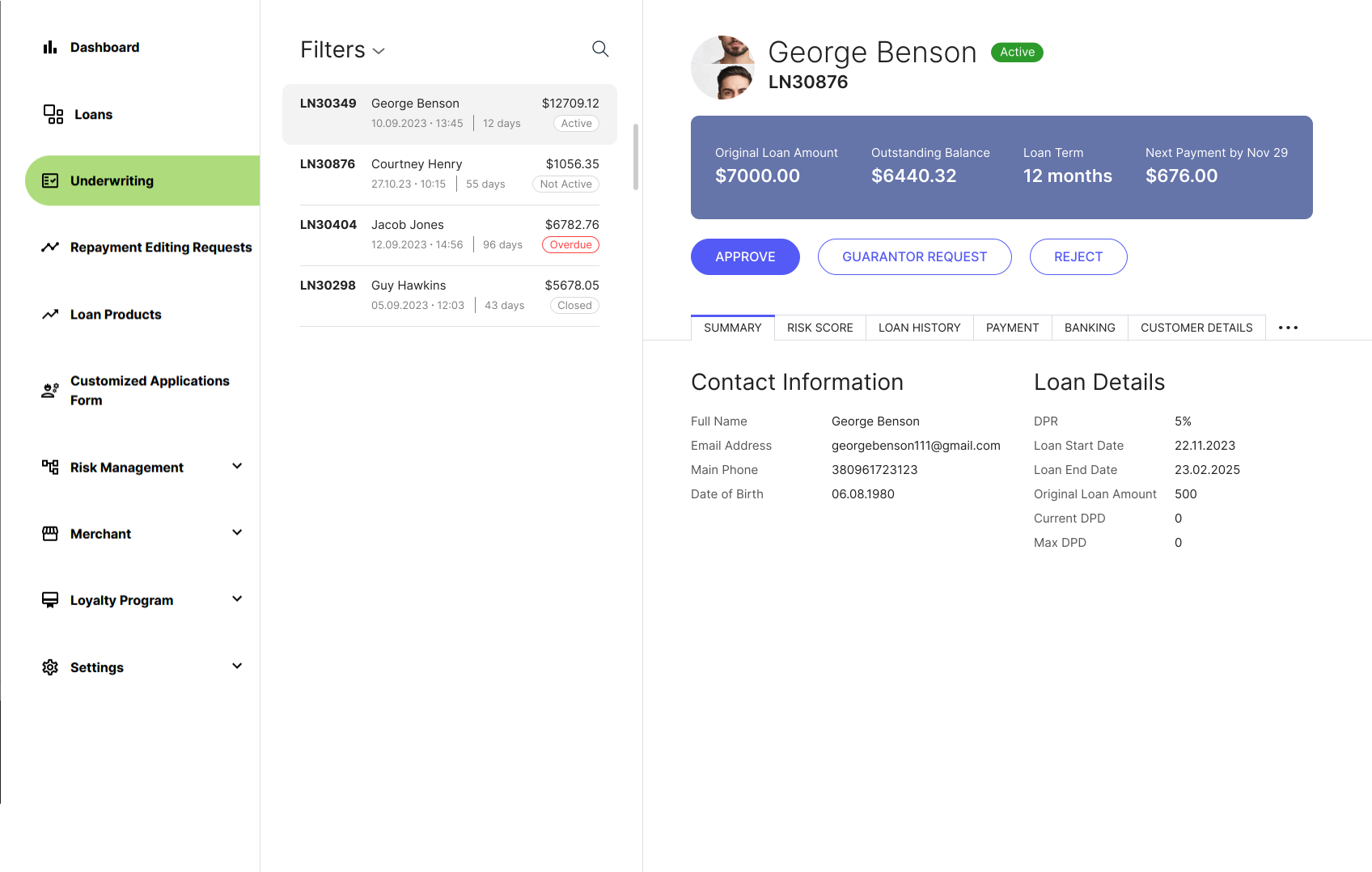
Credit risks in microfinance, stemming from potential declines in loan portfolio quality, pose a considerable challenge. The increased likelihood of loan defaults and rising management costs linked to delinquencies highlight the vulnerability of microfinance portfolios. Despite individual microloans appearing low risk, the absence of collateral renders portfolios susceptible to widespread delinquency. Furthermore, the concentration of microloans within specific business sectors amplifies the repercussions of defaults, magnifying portfolio volatility. To address these challenges, it becomes imperative to focus on controlling credit risks. The effective management of credit risk is crucial to the success of microfinance businesses. One of the most essential practices in this regard is the design of loan products that are structured according to an analysis of the cash flows of the applicant’s business and household. By aligning loan products with the applicant’s cash flow profile, financial institutions can better control credit risk and ensure the long-term sustainability of their microfinance operations. Using microfinance software, such as Compassway, facilitates the management of loan products based on the type of business. This software provides a streamlined approach to managing loan products, ensuring that they are tailored to the specific needs of each business.
This article delves into the critical exploration of how tailored loan products, aligned with the unique needs of microfinance customers, can serve as a pivotal strategy to mitigate a significant portion of default risks. By customizing loan products to borrowers’ specific demands and capabilities within the microfinance landscape, this approach aims to enhance portfolio quality and overall financial stability.
Loan Product Design
It is imperative to note that the loan product’s design plays a crucial role in determining its success. Therefore, ensuring that the loan product is tailored to meet the applicant’s specific needs is essential. This is achieved by analyzing the applicant’s cash flows and structuring the loan accordingly. Furthermore, the loan product’s features and strategies for mitigating delinquency and default must be carefully considered to ensure that the loan is repaid promptly and efficiently.

Image 1. Loan Product Design Structure
Eligibility Requirements
Numerous microfinance institutions (MFIs) necessitate that applicants satisfy specific criteria to mitigate credit risk. For microenterprise loans, prospective borrowers are typically expected to have been in business for at least six months to demonstrate their commitment to their enterprise and experience. Other eligibility requirements include the provision of business documentation, such as bank statements and sales receipts, as well as a comprehensive business plan.
Loan Purpose
The essence of effective microfinance lies in tailoring loan products to precisely match borrowers’ diverse needs and the loans’ intended purposes. Each loan, whether aimed at purchasing inventory for a local grocery store, acquiring machinery, procuring agricultural inputs like seeds and fertilizers for crop cultivation, or addressing non-business needs such as housing, emergencies, education, or consumption smoothing, demands a unique repayment schedule, collateral, and overall structure.
For instance, financing inventory for a local store may necessitate a flexible repayment schedule that aligns with sales cycles. At the same time, a loan for acquiring machinery might require longer-term repayments synced with the equipment’s lifespan and revenue generation capacity. Similarly, agricultural loans intended for crop cultivation could adopt a payment structure timed for a lump sum repayment at harvest, accommodating the seasonal nature of farming.
Non-business loans cater to distinct personal needs, and their structures should reflect this diversity. Housing loans might entail longer tenures and different collateral requirements compared to emergency loans or those for educational purposes.
Microfinance institutions play a crucial role in understanding the intricacies of each client’s business or personal situation. By conducting meticulous assessments, these institutions can propose and implement the most fitting loan structures, disbursal methods, and repayment mechanisms. This tailored approach ensures that borrowers receive financial products aligned precisely with their unique requirements, thereby enhancing the efficacy and impact of microfinance services.
Loan Amounts
In determining the appropriate loan and installment amounts for a client, two primary factors must be considered: the loan amount the client’s enterprise can absorb and the installment amount the household can afford. The maximum loan amount is determined by the applicant’s debt capacity, a critical factor of which is the applicant’s current working capital. It is imperative that the microfinance institution provides capital that the client’s enterprise can effectively utilize and absorb without investing significantly more than the applicant has committed. The first loans for trade and manufacturing businesses must not exceed 150 percent of working capital, while for service businesses, the limit is 200 percent. The benchmark ratio for service businesses is higher due to their typically limited working capital. The MFI must establish specific limits for each type of industry or business.
Please take note of the following when providing loans:
– Do not lend more than the amount requested by the applicant.
– Do not provide a loan that is too small. Suppose the borrower has the capacity to make use of a much larger loan. In that case, they may seek additional loans from other lenders, which can weaken the original provider’s relationship with the borrower and their understanding of their financial condition. This can potentially lead to over-indebtedness. The best measure of the applicant’s capacity to repay is their household surplus.
One of the most common product design flaws in microfinance is automatically increasing loan sizes, which can lead to further financial distress for clients. Another issue, although less frequent, is when clients access loans from multiple sources, resulting in an aggregate installment that exceeds their capacity to repay. The benchmark maximum for the ratio of monthly installment to total monthly household surplus is typically set between 50 and 80 percent.
It is unfair to require applicants to use their entire household surplus to pay for a loan. This is because unexpected fluctuations in income, unforeseen expenses, and the fact that the information provided by the applicant is only an estimation can all affect the amount of surplus available. To ensure that the recommended installment can be repaid over the loan term, the institution must verify that the applicant’s household surplus is sufficient. If it is likely that the household surplus will be insufficient at any point during the loan term, the institution should adjust the maximum installment accordingly.
.
To determine the household surplus ratio, financial institutions typically use a benchmark that increases for each subsequent loan renewal. The specific percentage for this ratio depends on factors such as the number of loans the client has with the microfinance institution and their past repayment history. For example, the institution may set a limit of 60 percent for the first loan, 70 percent for the second loan, and 80 percent for all subsequent loans.
LOAN TERM & REPAYMENT FREQUENCY
Determining the optimal loan term for a business is contingent upon the seasonality of its sales. Ideally, the final installment of a loan should be scheduled to coincide with the month preceding a period of high sales. This period is characterized by an increased demand for goods and services, such as during the Christmas holidays or the start of the academic year. During this critical month, businesses typically require additional funds to purchase more merchandise and meet the heightened demand. Therefore, companies must plan their loan repayment schedules to align with their sales cycles and anticipate funding needs accordingly.
Determining the best repayment frequency for a loan depends on the sales pattern of the applicant’s business during the week and month. Loan officers should assess whether a weekly, fortnightly, or monthly repayment schedule would be most suitable for the applicant’s cash flow. For instance, if the applicant operates on a two-week cycle, it may be challenging to save money for loan repayment until the end of the month. In such cases, fortnightly payments might be more manageable and secure. It is advisable to schedule the loan repayment on a day when the applicant has high cash flow. Applicants may earn most of their income on a specific day of the week, such as Saturdays, or at the end of the month when salaried individuals make their purchases. By doing so, the applicant can ensure that they have sufficient funds to repay the loan without any financial strain.
Encouraging borrower discipline and performance monitoring often hinges on requiring small, regular payments. The frequency of repayments aligns the institution closely with its portfolio quality, enhancing credit risk management. Nevertheless, finding the right repayment frequency necessitates a balance between maintaining borrower discipline and minimizing transaction costs for both clients and the institution.
Tailoring repayment frequency should account for varying client needs, especially those with seasonal income patterns, like farmers or individuals utilizing equipment that yields returns after a specific period. Imposing large bullet or balloon payments could strain clients by requiring substantial lump sums, potentially leading them to seek additional borrowing sources to fulfill obligations, thus jeopardizing their financial stability. It is essential to consider the needs of clients with seasonal cash flows, such as farmers or those who have borrowed to buy equipment that can only be used effectively after a particular investment of time. It is recommended to avoid large bullet and balloon payments as they can put a burden on the client to accumulate a large sum of money, which may lead them to borrow from other sources to pay the loan. Additionally, prepayment penalties are generally discouraged as they can reduce a client’s ability to use loans for productive financial management. It is crucial to consider the needs of clients with seasonal cash flows, such as farmers or those who have borrowed to buy equipment that can only be used effectively after a particular investment of time. It is recommended to avoid large bullet and balloon payments as they can put a burden on the client to accumulate a large sum of money, which may lead them to borrow from other sources to pay the loan. Additionally, prepayment penalties are generally discouraged as they can reduce a client’s ability to use loans for productive financial management.
Collateral Requirements
Collateral is a crucial tool that lenders use to minimize credit risk. However, microfinance clients usually lack traditional collateral, such as property deeds. As a result, MFIs rely on non-traditional collateral, such as personal guarantees, household assets, forced savings, and collateral substitutes, such as peer group lending methods, to mitigate credit risk.
Interest Rates and Fees
The pricing of loans is a reflection of a delicate balance of various factors, including the costs of delivery and the level of risk involved. Generally speaking, loans that are deemed riskier and more costly tend to require higher interest rates. It is worth noting that microfinance institutions that price their products too low will fail to cover their costs and eventually go out of business. Conversely, should they price their products too high, they may struggle to attract a sufficient number of low-risk clients to maintain a healthy portfolio. As such, it is vital for such financial institutions to strike the right balance in terms of pricing to ensure long-term viability and success.
The process of loosening these controls also rewards timely repayment.
Type of Clients
Microfinance institutions (MFIs) tend to be cautious when designing products for new clients. They often offer small loan amounts, short loan terms, and frequent repayment periods. This is especially true if clients do not have any business records to prove their ability to repay the loan or cannot provide collateral. Once the client establishes a good track record with the lender, the MFI may become more flexible with loan terms to better suit the client’s needs. This change reflects a balance between risk and control. New clients are considered high risk, but once they establish a credit history with the MFI, they become lower risk, and the lender can reduce some of its controls.
Final Thoughts
Financial institutions must offer various financial services to the low-income population. To do this effectively, they must operate on a market-led basis that puts the customer at the center of the business. Market-led microfinance means understanding the customer’s needs and circumstances, leading to specific demands. To provide effective financial services that cater to clients’ needs, it is critical to consider credit risk when designing loan products. Microfinance institutions can benefit from utilizing specialized software such as Compassway, which streamlines business operations and enables institutions to offer the best possible services to their clients. By adopting innovative solutions, microfinance institutions can remain competitive in a rapidly evolving market while maintaining a strong focus on client satisfaction.