

Discover the Top Consumer Lending Trends Reshaping the Future of the Lending Industry
The lending industry landscape has undergone a remarkable transformation propelled by technology-driven banking methodologies. The digital loan experience is emerging as a significant trend, which is gaining traction as more individuals embrace digital payments. This, in turn, is fueling growth in digital lending. Consumers' adoption of digital payments is paving the way for a more streamlined, efficient, and convenient loan application process, as lenders are leveraging digital technologies to offer personalized, secure, and faster loan solutions. Digital lending operates through various models like P2P, SME lending, and BNPL (buy now pay later), significantly expanding credit accessibility for individual growth.
Anticipating the cutting-edge developments in AI, machine learning, automation, and cloud technology, the digital lending sector is undergoing a transformative shift. These emerging trends are significantly reshaping the global finance landscape and are poised to redefine the future of digital lending platforms. In doing so, they present an array of fresh opportunities and challenges for both borrowers and lenders alike.
These trends promise to unlock enhanced profitability, operational efficiencies, personalized customer experiences, and higher satisfaction rates across the industry.
Trend #1:Evolution of Digital Lending: Embracing Diverse Financial Solutions and Services
In the realm of digital lending services, the prevailing trend is expected to be a search for diversity and differentiation. During the early stages of the fintech revolution, most players in the market were essentially single-product companies that offered just one solution, such as searching for payday loans or student loans. However, the era of one-trick ponies in fintech is waning. More companies are recognizing the need to offer multiple solutions and services. Recent developments have shown that digital lenders now offer a full suite of financial products and services, either on their digital lending platform or through partnerships with other firms. We may witness a greater integration of lending services with e-commerce platforms and retail websites. The use of "buy now, pay later" options like CompassWay solution and other instant financing solutions may become more widespread. Digital lenders and online platforms are positioning themselves as the sole financial tool that their customers require, thus providing one-stop shopping. In addition, some business lenders collaborate with personal loan providers to ensure that their customers enjoy a seamless experience, regardless of the financial product they seek. Looking ahead, global lending companies can access all the financial products and services they require from a single app.
Trend #2 B2B Digital Lending: Transitioning Towards Embedded Lending
The landscape of lending in the B2B sphere is rapidly evolving, transitioning toward a more dynamic, fast-paced, and control-centric model. The future of lending is expected to be intricately tied to the point of sale, ensuring that embedded lending solutions are seamlessly integrated into customer interactions.
Consider an e-commerce platform as an example, where customers can purchase products using embedded lending, whether it's transaction-based or through BNPL (Buy Now Pay Later) models. This approach not only stimulates increased demand for online shopping credit but also grants a higher level of control over the utilization of funds.
The emerging shift towards embedded lending, specifically at the point of sale, not only streamlines the borrowing process but also empowers digital lenders with greater insights and control over funds, marking a significant departure from conventional lending practices.
Trend #3:Traditional players continue to enter digital lending.
It is noticeable that every company aims to become a fintech while every fintech wants to do lending. This could be attributed to the fact that fintech lending seems to be the most lucrative aspect of the industry. As alternative lenders have already established themselves in the market, banks are gradually joining the digital lending bandwagon by implementing digital loan applications and faster underwriting processes. This will enable them to provide their customers with a modern and convenient service while competing with digital lenders. As the cost of acquiring and retaining customers continues to rise, digital lenders will likely adopt a banking business model where they can continuously offer increasing lines of credit rather than initiating a new loan origination process each time.
Trend #4: AI and machine learning are revolutionizing the lending landscape.
Recently, the world has witnessed a remarkable surge in AI advancements that are reshaping industries at their core. This emergence of AI has disrupted the established norms within traditional financial institutions, paving the way for innovation and new operational paradigms. The pervasive use of Artificial Intelligence (AI) and Machine Learning (ML) are at the forefront of this transformative wave. These technologies are significantly altering the lending industry, unlocking new avenues for growth, and fostering unique value propositions.
Unlocking the potential of AI empowers lending institutions to assess borrower data, offering tailored product recommendations swiftly. AI-driven algorithms enable real-time solvency evaluations, effectively lowering delinquency rates and maximizing profit margins. Conversational AI has revolutionized how banks communicate with customers. With the help of Natural Language Processing (NLP) and machine learning, banks can now interact with their customers in a personalized and efficient manner. Conversational banking enhances the overall customer experience by promptly and precisely responding to customer queries and needs.

Trend #5: Personalization in online lending
We will see a continued evolution of mobile and cloud-based lending solutions targeted to specific groups of people. These digital platforms will compete to offer personalized lending experiences to customers, especially millennials, who highly value this customized attention. The most significant online lending trend is showing more than just simple lending. Successful digital lenders must offer unique benefits tailored to their target borrowers, including credit cards, industry-specific lending structures, integrated lending payment offerings, or any other fundamental need that the lender’s target borrowers share. There is a growing demand for online lenders to develop an ongoing customer relationship that demonstrates incremental value add. Transactional business models will no longer suffice as innovation among lending products evolves beyond standard-term loan offerings to better meet constant borrowing needs. Lenders should seek opportunities to create value for their customers, such as personalized financial suggestions based on data, such as their debt obligations. The future of this industry lies in integrating financial education tools with a focus on responsible lending options. Socially responsible companies will create products that address immediate borrowing and refinancing needs and help customers use credit responsibly in anticipation of future needs.
Trend #6: Multiple payment options.
Following the disbursal of a loan or the installation of leased equipment, the focal point shifts to securing timely and regular payments from borrowers. To enhance flexibility and convenience for borrowers, lenders are diversifying payment options beyond traditional methods like wire transfers and credit cards. They aim to offer a spectrum of choices that cater to varying borrower preferences.
An innovative payment avenue gaining traction involves leveraging applications like Plaid, enabling automatic withdrawal of payments from a borrower's bank account on the scheduled due date. This automated payment method is notably prevalent among lenders operating within the merchant cash advance domain, streamlining the repayment process for both lenders and borrowers alike.
Trend #7: Automated Credit Decisioning in Underwriting
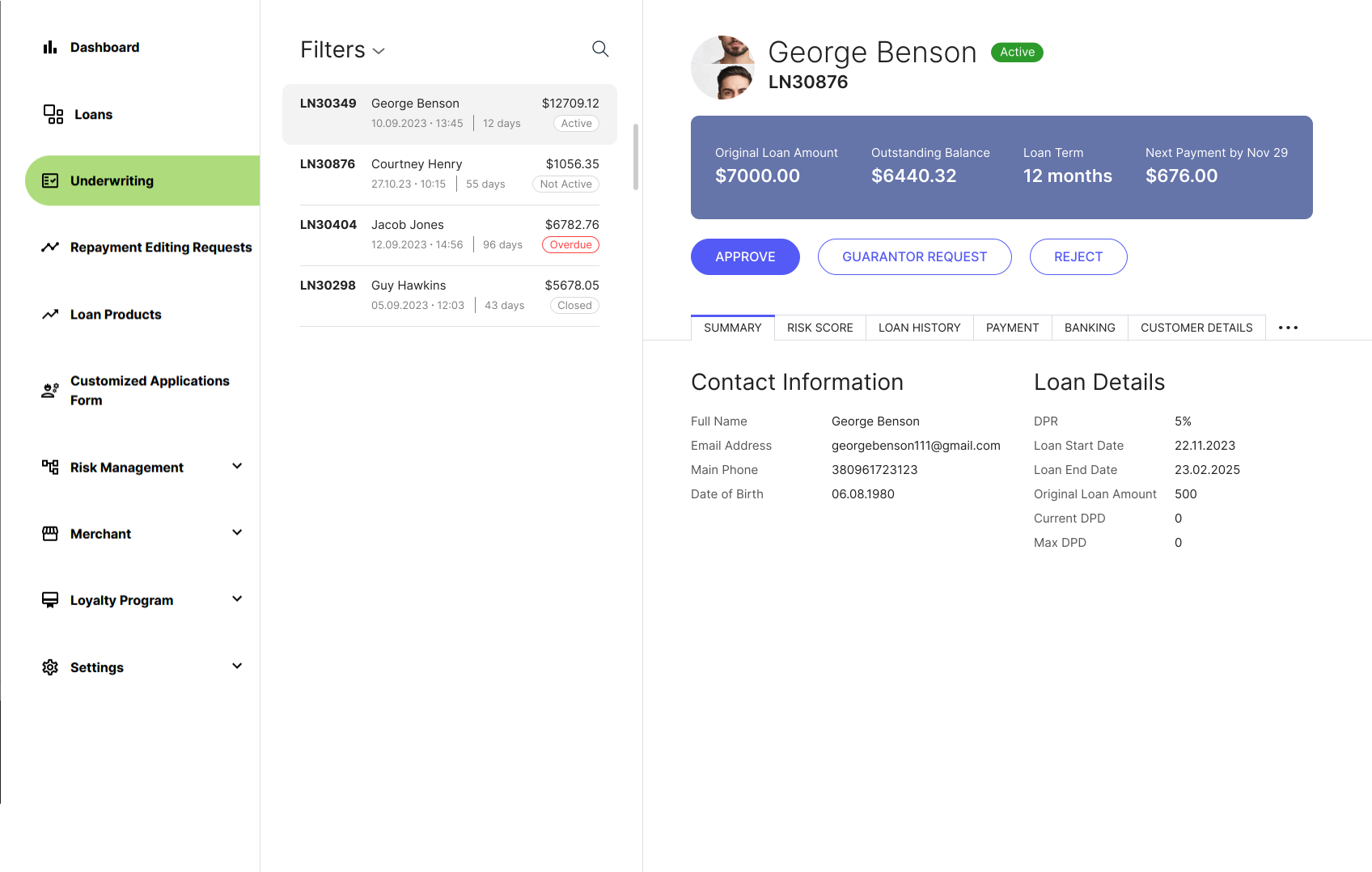
Gone are the days when 24-plus hours for a credit decision was the norm. Nowadays, borrowers want decisions within seconds or at least a few minutes of submitting their application. Digital lenders can make this possible by using end-to-end lending management platforms that have enhanced efficiencies in credit decisioning and the ability to process larger datasets quickly, among other applications by AI.
Automation and AI are set to birth a new era of digital financing. With automated credit decision-making in underwriting, financial institutions can save up to $70 billion by 2025 by eliminating manual and repetitive tasks. To make lending decisions, digital lenders can use AI-powered algorithms to analyze vast amounts of data, such as credit scores, income, and employment history. AI-powered credit decision-making has proven beneficial in automating underwriting processes, especially credit qualification. It can analyze a large segment of consumers and accurately determine whether a particular client qualifies for a loan. AI algorithms help digital lenders determine the maximum borrowing threshold based on the number of proceeds and adjust pricing for individual customers based on real-time risk profiling. These benefits ensure accurate credit decision-making, lower costs, and help banks obtain clients who can repay their loans and are eligible to receive new loans.
Trend #8: Delinquency management.
Moving beyond traditional methods reliant solely on account aging, dynamic queue management stands out as a game-changer. This approach allows collections managers to create specialized queues based on various parameters, empowering them to assign them to individual collectors or teams. This innovation significantly enhances the precision and effectiveness of collections, resulting in improved outcomes. Research has highlighted the remarkable effectiveness of text messaging as a means of borrower engagement compared to traditional phone calls or other communication channels. Text interfaces offer a more comfortable space for borrowers to engage with collectors, shielding them from potential embarrassment while alleviating the discomfort that collectors may feel during discussions concerning challenging financial situations. Staying abreast of these innovations is poised to become indispensable for retail lenders aiming to drive the growth of their portfolios, manage risk more effectively, and sustain profitability. Embracing these advancements in delinquency management strategies will be pivotal in ensuring success in an evolving lending landscape.
Trend#9: Cloud as the Preferred Platform
Adopting cloud computing technology in digital lending has opened up a world of business possibilities. Among the key benefits are increased remote access, a flexible subscription model, decreased data storage costs, and more. Automatic digital lending platforms have replaced the time-consuming and strenuous upgrading processes that have historically put a strain on the IT departments of lenders. By moving their services off-premises, banks have gained the flexibility to allocate most of their capital investment towards improving their product offerings, enhancing customer experiences, and expanding their lending businesses. With the cloud, banks are better equipped to scale up as their companies grow and launch products more quickly, thus enabling them to enter new markets with ease.
Final Thoughts
Technology has emerged as a cornerstone for gaining a strategic advantage in today's competitive landscape. By leveraging AI and advanced data analytics, digital lenders have provided their customers with a digital experience, thereby gaining an edge in areas ranging from process to product innovation. The effective deployment of powerful technology has become a critical factor for the success of banks for various reasons. This is because customers and business clients now demand digital experiences that are simple, convenient, data-rich, and personalized. They can also switch to other providers who offer them the best value. Modern technologies, such as cloud-native digital lending platforms and AI-supported processes, can enable financial institutions to automate complex tasks and provide real-time customer responses at a low cost. This has created a virtuous cycle: lower operating costs, higher investment in efficient and delightful technologies, happier customers, and more revenue and profits to invest.