

How to Start a Lending Business

Are you motivated by the success stories of lending companies and considering launching your own financial venture? Starting a small lending business, particularly one focused on personal loans, can be a highly profitable endeavor and crucial for driving economic growth by supplying vital capital to individuals and entrepreneurs. However, venturing into the startup lending industry requires meticulous planning due to intense competition and strict regulatory environments. Aspiring entrepreneurs looking to start a loan business should understand that establishing a successful startup business lending enterprise goes beyond merely securing initial capital or attracting investors. It demands a strategic, detail-oriented approach underpinned by comprehensive planning and an in-depth understanding of the complex financial market. The objective is to develop a brand that is synonymous with reliability and innovative financial solutions, appealing directly to your target audience. This requires creating a detailed business plan outlining your company’s vision, mission, financial forecasts, and unique value proposition distinguishing your small lending business in a competitive market.
One critical step in establishing a business lending company is conducting a thorough competitor analysis. This essential exercise helps you benchmark against best practices and identify market gaps that your lending business could potentially exploit. Such analysis is crucial for defining your strategic positioning and refining your operational tactics.This guide aims to navigate you through the essential steps for launching your lending business. We’ll discuss the importance of developing a comprehensive business plan that clearly outlines your business objectives, financial models, and a marketing strategy tailored to reach your target audience. We also emphasize the necessity of understanding regulatory requirements, which are just as vital as financial considerations.
Additionally, we will examine various aspects of lending management. This includes deploying effective lending services, crafting customized lending solutions, and executing strategic lending programs and plans that align with your business goals. Finally, we’ll explore operational strategies critical for the success of your lending business. Leveraging advanced technology, such as loan management software, can streamline lending processes and enhance the customer experience. Implementing robust risk management practices is also essential to ensure the sustainability and longevity of your lending business. These elements combined will equip you with the tools needed to navigate the competitive landscape of business lending and position your company for success.
Lastly, we will address the operational aspects, which include leveraging technology for lending operations, such as loan management software, that can streamline lending processes and enhance customer experience, and implementing risk management practices that safeguard your business’s sustainability.
Understanding Lending Models
Delving into the lending industry requires a nuanced comprehension of the various lending models that cater to distinct market segments. Each model presents unique opportunities and challenges that must be considered when determining the direction of your lending business.
Micro-Lending
Target Audience: Micro-lending targets entrepreneurs and individuals in need of small-scale loans, often in developing regions or underserved markets.
Operational Considerations: Starting a micro-lending business requires a deep understanding of the socio-economic profile of your target demographic, as well as the development of a streamlined process for small loan disbursements and repayments. Risk and Impact: While micro-loans are typically associated with higher default risks, they also offer the potential for significant social impact, which can be a compelling value proposition for socially conscious investors.
In-House Financing
Direct Lending: In-house financing refers to the process where a seller extends credit to a buyer directly, without the involvement of third-party financial institutions. This is commonly seen in the automotive industry and retail sectors, where companies offer loans or payment plans to facilitate immediate purchases.
Customer Retention: Offering in-house financing can enhance customer loyalty and increase sales by removing barriers to purchase. It requires a solid understanding of credit management and underwriting to minimize defaults.
Integration and Management: Effective integration of financing operations within the broader sales and service structure of the business is essential. Companies must have systems in place for loan application processing, billing, and collections.
Buy Now, Pay Later (BNPL) Lending Model
Consumer Financing Trend: Buy Now Pay Later is a rapidly growing consumer financing trend that allows consumers to make purchases and spread the cost over a series of payments without interest, provided they pay on time. It’s a modern take on the layaway plan, but the customer gets the product immediately.
E-commerce and Retail Applications: This model is particularly popular in e-commerce and has been adopted by many retail businesses to boost conversion rates and average order values. BNPL solutions require strong partnerships with merchants and seamless integration with online checkout processes.
Risk Assessment: While buy now pay later loans, financial institutions can attract a broader customer base, but they also involve credit risk. Providers need to conduct real-time creditworthiness checks utilizing an advanced credit decision engine and have a plan in place for non-payment scenarios.
Private Lending
Flexibility and Customization: Private lending involves loans offered by individuals or privately held companies, not affiliated with banks or traditional financial institutions. These loans can be tailored to the needs of the borrower, with more flexible terms and conditions than standard bank loans.
Strategic Relationships: As a private lender, building relationships with clients and understanding their unique financial needs is critical. You’ll also need robust legal agreements and a clear framework for interest rates and collateral requirements.
Investor Engagement: Private lending businesses often attract investors looking for opportunities outside of traditional markets, offering the potential for higher returns on investment.
Hard Money Lending
Collateral-Based Loans: Hard money loans are typically secured by real estate assets and are considered short-term bridge loans. Hard money lenders focus on the value of the collateral rather than the borrower’s creditworthiness. This model is prevalent in the real estate sector, where quick access to capital is often needed for auctions or renovation projects.
Investor Relations: As a hard money lender, establishing a network of investors is crucial since these loans can provide higher yields at a faster pace compared to traditional lending. However, the risks are also greater, necessitating experienced risk assessment and management practices.
Regulatory Environment: The regulatory environment for hard money lending can be complex, as it often intersects with real estate law. Compliance with both federal and state regulations is paramount for operating a hard money lending business.
Peer-to-peer (P2P) Lending
Planning Your Business Structure in the Payday Loan Industry
Before launching a payday loan business, it’s crucial to carefully consider your business structure. In this industry, capital is essential—not just for operations, but as part of your initial financial planning. Developing a comprehensive business plan is an indispensable first step. It allows you to address all the intricate details and ensure a clear path forward.
For beginners in the loan business, starting full-scale immediately might not be necessary. If you’re new to this field, one viable option is to collaborate with established payday loan companies. Many such companies offer affiliate programs where you can earn a commission for referring customers. This approach requires significantly less capital since you won’t be handling the loans directly. It provides a stepping stone to learn the ropes of the business without the substantial initial investment typically required for launching and managing a full payday loan operation.
While this method can simplify starting out, it’s important to note that the potential earnings may be limited compared to running a full payday loan service. Therefore, while affiliate programs can serve as a useful entry point, they should be viewed as part of a longer-term strategy towards establishing a more comprehensive payday lending business.
Structure: In peer-to-peer lending, individuals borrow and lend money without the use of a traditional financial institution as an intermediary. This model has been facilitated by the advent of digital platforms that connect borrowers with potential investors.
Market Positioning: P2P lending is often characterized by its accessibility for borrowers who might not qualify for traditional bank loans. As a P2P lender, you would need to establish a digital platform that ensures reliable risk assessment, legal compliance, and efficient transaction processing.
Revenue Model: The revenue for a P2P lending business typically comes from fees charged for matchmaking between lenders and borrowers, as well as payment processing.
Business Objectives and Niche Identification
To successfully establish a standout presence in the lending industry, it’s critical to define your business objectives clearly and identify a niche that not only aligns with your expertise but also meets market demand. This requires a detailed approach to market segmentation, where you pinpoint specific demographics or industry sectors that your lending business will target.Crafting a robust business plan is an essential step in this process. Consider consulting with an accountant or utilizing a business plan template to structure your approach effectively. When developing your business plan, ensure you address the following key components to align with your strategic objectives:
To successfully establish a standout presence in the lending industry, it’s critical to define your business objectives clearly and identify a niche that not only aligns with your expertise but also meets market demand. This requires a detailed approach to market segmentation, where you pinpoint specific demographics or industry sectors that your lending business will target.Crafting a robust business plan is an essential step in this process. Consider consulting with an accountant or utilizing a business plan template to structure your approach effectively. When developing your business plan, ensure you address the following key components to align with your strategic objectives:
Consumer Financial Demographics: This might include focusing on millennials for BNPL lending services due to their comfort with digital purchases and propensity for manageable payment plans. Alternatively, targeting real estate investors for hard money loans could be lucrative, given their need for quick, short-term financing for property investments.
Business Sector Specialization: Consider specializing in sectors such as small businesses for micro-loans, which can fuel local economies, or concentrate on offering merchant cash advances to the retail sector, which often requires short-term funding to manage cash flow during seasonal demand spikes.
Geographic Focus: Your lending services could be tailored to specific geographic locations, recognizing the varying financial climates and regulatory landscapes. For instance, in-house financing might be particularly appealing in rural areas where traditional banking services are less accessible.
Short-Term vs Long-Term Financing: Decide if your lending business will focus on short-term lending, such as payday loans with quick turnovers, or long-term financing solutions, such as installment loans for significant personal investments, such as home renovations or education.
Risk Appetite and Credit Profiles: Determine the level of risk you are willing to take on by identifying the credit profiles of your target borrowers. This may range from prime borrowers, who are attractive for low-risk personal lending business models, to subprime borrowers, who could be the focus of lending institutions specializing in higher-risk, higher-interest loans.
Product Differentiation: Offer unique lending solutions that set your services apart. For example, a hard money lending business might differentiate itself by providing exceptionally fast loan approvals or by offering loan-to-value ratios that are more favorable than competitors.
Financial Education and Advisory: Position your company not just as a lender but also as a financial advisor, particularly if you’re targeting first-time borrowers or startups. Providing educational resources and advisory services can foster trust and loyalty in your customer base.
By aligning your business objectives with a well-defined market segment, your lending business can craft a targeted value proposition that resonates with your chosen demographic. For instance, if you aim to start a peer-to-peer lending platform, showcasing success stories of peer-funded ventures might appeal to entrepreneurially-minded borrowers. Similarly, for a micro-lending business, highlighting the social impact and empowerment of underserved communities can be a powerful marketing tool.
Implementing a strategic approach to market segmentation and clearly defining your business objectives will not only guide your operational tactics but also ensure your lending solutions are effectively tailored to the needs of your target market, enhancing your competitive edge in the lending industry.
Loan Origination Software
An effective Loan Origination System (LOS) serves as the technological heart of a lending business, automating and streamlining the complex processes from a borrower’s application to the final decision on their loan.
Comprehensive Loan Application Processing
Digital Application Interface: Your LOS should offer a user-friendly online application portal that can accommodate various loan types, from personal loans and BNPL applications to more complex commercial and hard money loan applications. Designed with simplicity in mind it automatically assists clients in determining the optimal loan size and repayment period without the hassle of complex calculations or concerns interest rates.

Image 1. Personal Loan Calculator Compassway LOS System
Automated Document Intake: Integrate tools for electronic document submission and verification, such as income proof, collateral documents, or business financial statements, using secure upload features and automated document recognition technologies.
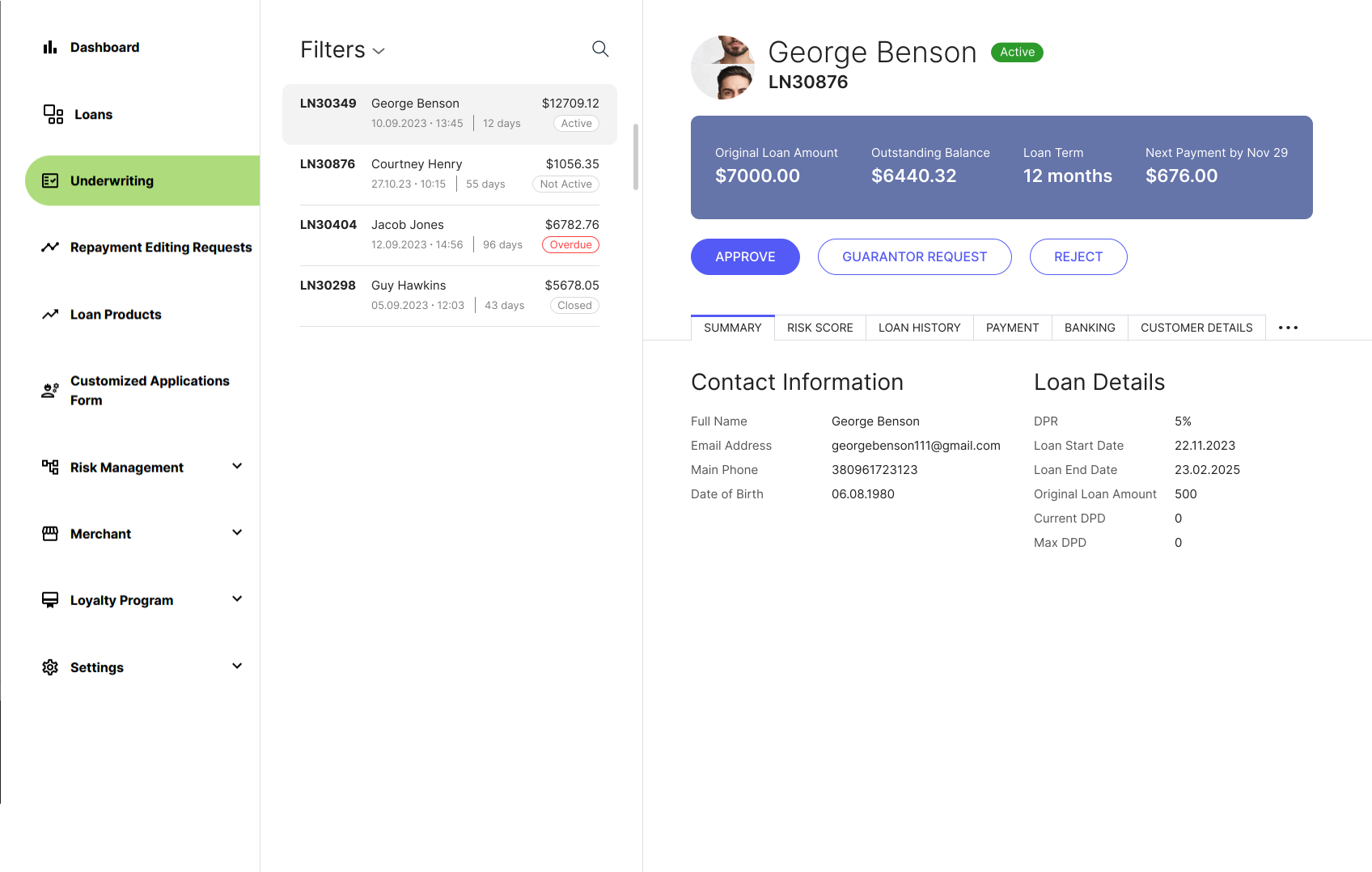
Advanced Underwriting Capabilities
Credit Scoring Models: Utilize sophisticated credit scoring algorithms that can process traditional credit data as well as alternative data points, like utility bill payments or rental history, to evaluate the creditworthiness of applicants, particularly useful for micro-lending or subprime lending.
Customizable Decision Rules: The LOS should allow you to set and adjust underwriting criteria and decision rules based on your lending policies and risk appetite, enabling a balance between automated and manual underwriting processes.

Image 2.Underwriting Workspace CompassWay LOS System
Dynamic Credit Decisioning
Real-time Decision Making: Implement decision engines capable of rendering real-time lending decisions based on pre-set criteria, which is particularly crucial for consumer-facing products like BNPL services or payday loans.
Adaptive Risk Assessment: Incorporate machine learning to refine credit decisioning over time, improving the accuracy of risk assessments and potentially opening up new customer segments.
Efficient Document Management
Secure Storage and Retrieval: Ensure that the LOS provides secure document storage with easy retrieval for loan processing, compliance, and audits, adhering to data protection standards.
E-Signature Integration: Integrate e-signature capabilities to allow for legally binding electronic signatures, expediting the loan closing process, a feature that’s especially important for online and mobile lending platforms.
Example of an LOS in Action
Imagine a potential borrower applying for a home renovation loan through your lending platform. They enter the online application portal and are guided through a series of steps to enter personal information, income details, and the specifics of their renovation project. They upload their proof of income and a contractor’s quote directly into the portal.
Behind the scenes, your LOS automatically extracts relevant information from the uploaded documents and performs an initial risk assessment using its credit decisioning engine. It then cross-references the applicant’s details with credit bureaus and fraud databases, employing complex decision rules that you’ve customized for home renovation loans.The loan application process within a Loan Origination System (LOS) operates on a series of automated and manual checks that ensure each application is assessed accurately and efficiently.
Automated Application Approval
Scoring Model: When an application is submitted, the LOS immediately applies a scoring model. This model is a complex algorithm that takes into account various factors such as credit history, income, employment status, existing debts, and potentially other non-traditional data points for credit assessment.
Criteria Thresholds: The scoring model produces a score that reflects the perceived risk of the loan. The LOS is configured with predefined thresholds or criteria that determine the level of risk acceptable for automatic approval.
Automatic Approval: If an application’s score exceeds the set threshold, indicating a low-risk borrower, the LOS can automatically approve the application without the need for manual underwriting review. This streamlines the process for applicants who clearly meet the lending criteria, allowing for rapid loan approval and disbursement.
Manual Review by Underwriting Team
Scoring Below Threshold: If the application’s score falls below the automatic approval threshold, it does not mean an outright rejection. Instead, the LOS flags the application for further review, recognizing that the scoring model may not capture the full context of the borrower’s situation.
Underwriting Review: The underwriting team receives the flagged applications and begins a manual review process. They may look at aspects of the application that the automated system can’t evaluate, such as the quality of the collateral, the stability of the borrower’s industry, or additional information that may mitigate the perceived risk.
Additional Documentation: The underwriting team may request additional documentation or clarification from the applicant to better understand the risk profile. This could include more detailed financial statements, proof of additional income, or a business plan in the case of commercial loans.
Final Decision: After the review, the underwriters make a final decision. They may approve the loan on modified terms (like a lower amount or higher interest rate), suggest a co-signer, or in some cases, deny the loan if the risk is deemed too high.
Notification and Disbursement: Upon approval, the applicant is notified, and the loan agreement is prepared for signing. If the loan is denied, the applicant receives a notice explaining the reasons for the decision, which is often a regulatory requirement.
Financial Projections and Capital Accumulation
The cornerstone of launching a lending business is the establishment of robust financial projections and securing the capital necessary to fund your operations. This stage requires a multifaceted approach, blending strategic forecasting with targeted capital-raising efforts. Developing Financial Projections.
Revenue Modeling: Create detailed revenue projections based on your lending model, whether it’s interest from personal loans, fees from P2P transactions, or from micro-loans. Use industry benchmarks and realistic market penetration rates to forecast your income
Cost Analysis:Break down expected costs, including operational expenses, marketing, technology infrastructure, staff salaries, compliance costs, and the cost of capital itself. Tailor your analysis overheads to your specific lending business model.
Cash Flow Projections: Map out cash flow projections considering the lending cycles, loan repayment schedules, and default rates. For peer-to-peer lending businesses or BNPL models, factor in the timing of cash inflows and outflows.
Break-Even Analysis: Determine the point at which your business will become profitable. This involves calculating the loan volume and interest rates required to cover all operating expenses.
Risk Assessment: Incorporate risk assessments into your financial models to account for potential loan defaults and market fluctuations. Use stress testing to understand how adverse conditions could affect your business.
Capital Accumulation Strategies
Equity Financing
Debt Financing
Bank Loans: Explore traditional bank loans or lines of credit. You’ll need solid business plans and personal guarantees, especially if you’re in the initial stages of starting your lending institution.
SBA Loans: In the United States, Small Business Administration (SBA) loans can be an option for startups. These loans often come with more favorable terms due to government backing.
Personal Capital: Utilize personal savings to fund the early stages of your business. This can be a quick way to get started, but be mindful of the risks to personal finances.
Peer Networks: Leverage your professional networks to find potential investors who may be interested in the lending space. Funding for Growth: Reinvestment of Profits: Once profitable, reinvesting earnings back into the business can be a powerful way to fuel growth. Strategic Partnerships: Form partnerships with established financial institutions or fintech companies that might offer funding in exchange for access to your customer base or technology. Incorporating these detailed financial planning and capital accumulation steps into your business plan is critical. It’s not enough to simply have a vision for a lending business; you need to back it up with concrete numbers and a strategic approach to raising the funds required to get your operation off the ground. Ensure that your financial projections are as accurate as possible and that your capital-raising strategies are diverse and tailored to your lending model’s specific needs and scale. This level of detail and preparation will not only help secure the necessary capital but also lay a strong foundation for your lending enterprise’s financial health and viability.
Regulatory Compliance and Licensing
Navigating the regulatory environment is a critical step in establishing a lending business. Compliance with legal and financial regulations is not only mandatory but also serves to build credibility and trust with your customers. Here’s a detailed breakdown of how to approach this stage:
Understanding the Legal Framework
Research Applicable Regulations: Different lending models are subject to varying regulations. For instance, hard money lending is primarily regulated by state laws concerning mortgage lending, while BNPL services might fall under consumer credit regulations. In many states across America, operating a payday loan business requires formal incorporation. Forming a Limited Liability Company (LLC) is a strategic move that offers protection for both your personal and business interests. This structure limits your liability in the event of any legal issues or financial troubles.Conduct thorough research or consult with legal experts to understand the specific regulations that apply to your chosen lending model.
Obtaining Necessary Licenses
Local and National Licensing
Most lending businesses require a license to operate legally. This could be a state license, a national charter, or both, depending on your business model and geographic scope. For example, if you’re providing consumer loans, you’ll likely need to obtain a license from the state banking regulator.
Specialized Licenses
Adherence to State Laws
Ensuring Compliance
Documentation and Record-Keeping: Maintain meticulous records of all lending activities, including loan applications, credit checks, loan agreements, and payment histories. These records are crucial for regulatory audits and defending against potential legal disputes.
Final Thoughts
Embarking on a lending business can indeed be a pathway to significant profits, but it comes with its fair share of challenges. The key to success lies in detailed planning, understanding the market, offering tailored solutions, and maintaining strict operational and risk management protocols. By meticulously following these foundational steps and keeping a keen eye on the dynamics of the lending industry, you can establish a successful lending company that stands the test of time and fluctuating economic tides. With the right approach, your lending business can flourish, contributing positively to the economy and fulfilling the financial needs of individuals and businesses alike.
About Compassway
CompassWay is an all-in-one lending platform that automates the loan origination process from application to funding, delivering a best-in-class experience for your clients and team – for any loan product. With a wide range of services, Compassway offers technology options that help financial organizations, credit unions, and mortgage originators of any size reduce costs, generate revenue, stay competitive, and maximize return on technology investments.
Navigation: