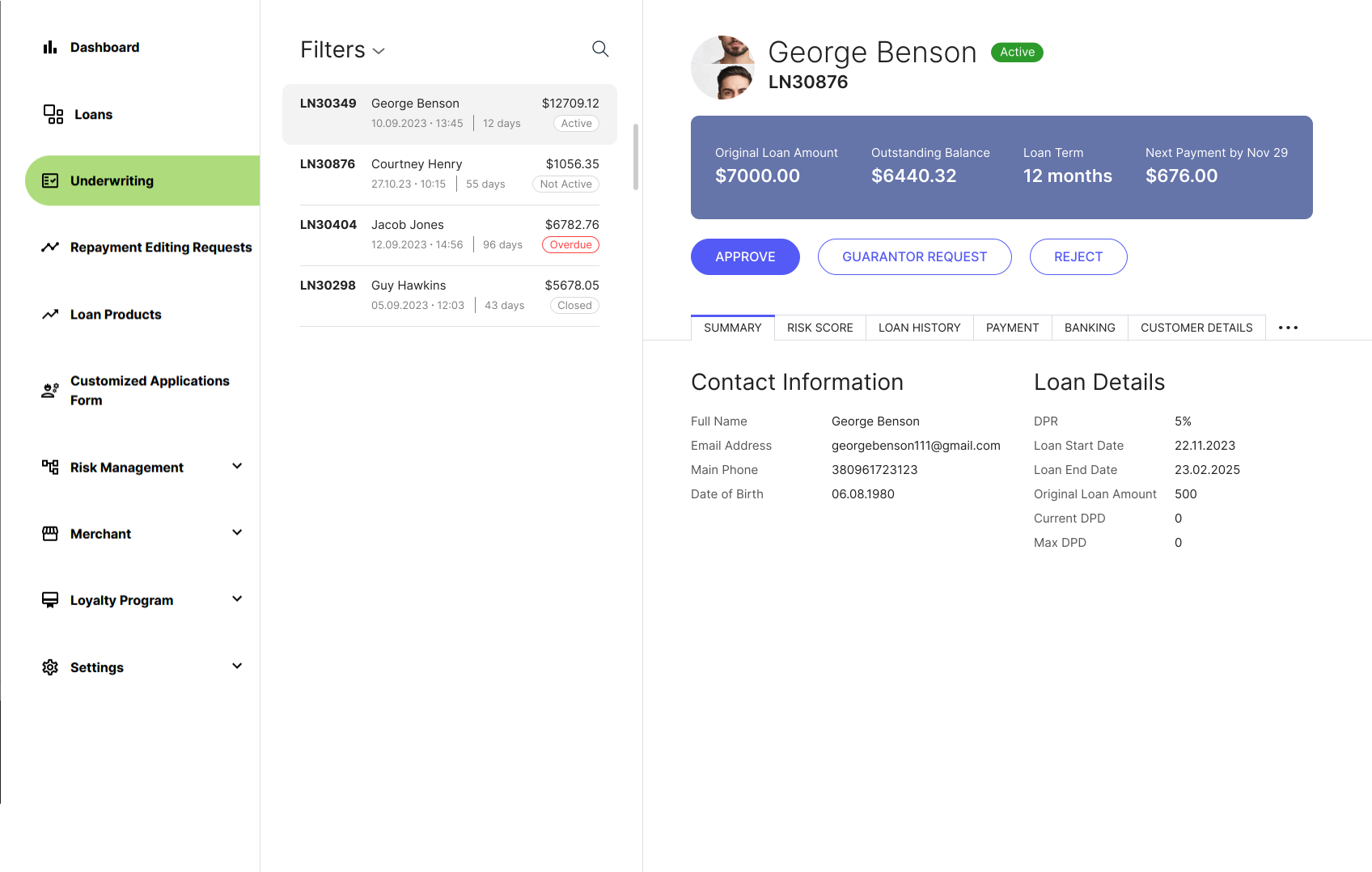


What is an Automated Underwriting System?
Streamlining the Lending Process: Harnessing Automation to Overcome Inefficiencies
The lending industry has long grappled with inefficiencies stemming from manual, error-prone workflows, paper-based loan approval procedures, subpar data quality, and sluggish decision-making processes.
Historically, manual underwriting was the sole method for disbursing loans. And one of the critical areas where bottlenecks traditionally occur is during the underwriting process. The need for expediting loan applications and approval has consistently ranked high on the agenda for both loan applicants and lenders alike.
The advent of automation has ushered in a new era of opportunities for companies needing financial support, as well as for fintech firms aiming to transform the lending landscape.
This guide provides insights into the functioning of automated underwriting systems, elucidates their advantages, and offers guidance on integrating one within your organization.
How does an automated underwriting system work?
An Automated Underwriting System (AUS) is a sophisticated computer program designed to rapidly evaluate loan applications by analyzing the information provided by borrowers, ultimately determining loan approval. This technology-driven approach has revolutionized the lending industry by expediting the underwriting process.
In contrast to human underwriters who painstakingly review extensive paperwork and data, an Automated Underwriting System is capable of swiftly assessing each application against a lender's specific underwriting criteria. Within mere minutes, it can decisively approve or decline a loan application. The process begins with lenders inputting the applicant's information into the system, supplemented by data obtained from credit reporting agencies. The AUS then carefully weighs this data to predict the likelihood of the loan being repaid as agreed, drawing from the performance of similar loans with comparable borrower profiles, property characteristics, and loan details from the past. Automated underwriting systems provide a comprehensive evaluation of the loan's riskiness, enabling lenders to make quicker and more precise loan decisions. Importantly, they maintain consistent and unbiased standards of creditworthiness for all borrowers.
Credit scoring constitutes a pivotal element within automated underwriting systems, offering a methodical approach to quantify the potential risk that a borrower represents to lenders or investors. A credit score assigns a numerical value to gauge the likelihood of an individual repaying a loan. The Automated Underwriting System (AUS) evaluates data provided by the borrower and cross-references it with publicly accessible information to assess:
- Creditworthiness or eligibility for the loan.
- Capacity to meet repayment obligations.
- Collateral or assets at their disposal.
Based on this thorough assessment, the AUS generates a risk-based score for each application, which assists lenders in making timely and informed loan decisions.
Understanding the Mechanics of an Automated Underwriting System
An automated underwriting system (AUS) is a remarkable tool designed to streamline the credit risk assessment process for loans, expediting approval for borrowers. This innovative system relies on predefined rules and a scorecard to autonomously grant or decline loan applications during the underwriting stage.
Specifically, an Automated Underwriting System (AUS) assesses each loan application, considering a spectrum of essential factors, which encompass:
- Income
- Debt-to-income ratio
- Employment History
- Credit history or credit score
- Public records (including citizenship/legal status)
- Cash reserves and liquid assets:
When a borrower submits their application, the loan officer inputs the provided details into the AUS, supplemented by additional information obtained from credit reporting agencies. The AUS then meticulously analyzes this data to gauge the borrower's likelihood of repaying the loan, drawing insights from their credit history and past financial behavior. This rigorous loan risk assessment process adheres to comprehensive criteria established by the lender, ensuring uniform standards of creditworthiness are applied across all applications.
An AUS employs a systematic scoring methodology to quantify the relative risk associated with each borrower, offering every applicant equal and objective treatment. This serves several essential purposes for lenders:
- Time-saving: Streamlining the underwriting process accelerates loan approvals.
- Standardization: Uniform standards are enforced consistently.
- Non-discrimination: Bias is minimized, promoting fairness.
- Enhanced loan quality: AUS aids in selecting better-quality loans.
- Increased business opportunities: Faster decision-making attracts more borrowers.
- Efficient risk assessments: Complex credit risk evaluations are handled efficiently.
- Reduced manual underwriting costs: Quality control expenses are minimized.
Exceptions to automated underwriting occur when borrowers present unique situations that are challenging for the system to evaluate, prompting lenders to engage manual underwriters to assess such cases.
How an Automated Underwriting System Evaluates Loan Applications
When a prospective borrower submits a loan application, the initial step involves the loan officer inputting the application into the Automated Underwriting System (AUS). The AUS then meticulously scrutinizes the application's details and often retrieves additional information, such as the applicant's credit report, to conduct a comprehensive assessment.
Following the AUS's review, a human underwriter may also evaluate the application to guide their decision-making process or simply endorse the system's verdict. In some cases, there might be no human intervention, making the AUS's decision the final word.
The AUS delivers one of the distinct recommendations based on its evaluation of the applicant's risk profile and underwriting potential:
Approve /Eligible: This recommendation signifies that the borrower's credit risk is deemed "acceptable" and aligns with all regulatory mandates and the lender's specific criteria for loan qualification.
Refer/Refer with Caution: In situations where the AUS identifies certain issues or multiple risk factors, it raises a cautionary flag. This recommendation necessitates further scrutiny by a human underwriter to delve deeper into the loan file or to proceed with caution.
Ineligible: This recommendation signifies that the loan application has failed to meet one or more essential requirements for loan eligibility. Consequently, the applicant will not advance in the loan approval process.
Unable to Determine: In cases where the application presents unresolved issues or discrepancies, the AUS cannot provide official recommendations until these issues are resolved or clarified.
It's crucial to recognize that the recommendations generated by Automated Underwriting Systems (AUS) rely heavily on the accuracy and comprehensiveness of the data entered into the system. Consequently, these outcomes are not set in stone. Experienced loan officers possess the knowledge and skill to tactically modify a borrower's application, taking into account the unique circumstances involved.
For instance, if the AUS renders an "ineligible" recommendation, the loan officer can analyze the situation and potentially modify elements such as the down payment amount, add the request for a guarantor, or even switch between different AUS systems to increase the likelihood of approval.

The Imperative of Embracing Automated Loan Underwriting
Swift Lending Cycle Times:
Adopting automated loan underwriting in the digital era is imperative for lenders seeking to expedite their operations. By leveraging these continuously evolving advancements, lenders can conduct real-time assessments of applicant data, resulting in rapid application approval or rejection decisions. This accelerated process allows quicker loan approvals and disbursements, enhancing customer engagement. Moreover, automated systems enable continuous monitoring of borrowers' creditworthiness, ensuring ongoing risk assessment and management.
Enhancing the Customer Experience
As digital tools continue to evolve, customer-facing web portals and application program interfaces (APIs) seamlessly facilitate the digital onboarding of both prospective and existing customer data directly into the lender's loan origination platform. Once this data is received, predefined lender-specific workflows and business processes kick in, automating subsequent steps in the process. This automation effectively distinguishes between loan applications ready for approval and those requiring additional documentation, ensuring smoother and more customer-centric lending.
Automated Credit Assessment
The proliferation of automation has empowered lenders to embed their creditworthiness criteria and risk parameters within automated lending solutions. This strategic shift away from manual assessment, notorious for its time-consuming nature and susceptibility to errors, has been a game-changer. Automated mechanisms enable even less experienced personnel to efficiently review and screen loan applications, resulting in an accelerated and error-free process. This, in turn, bolsters customer service by delivering swift responses to loan applications, enhancing the overall customer experience.
Fraud Prevention and Error Reduction
Manual loan underwriting and processing present significant challenges when it comes to fraud detection. In fact, a Mortgage Fraud report revealed that 0.76% (1 in 131) of loan applications in Q2 of 2022 were tainted by fraudulent elements. To counter this risk, lenders increasingly rely on automated underwriting systems, which analyze customer data using various financial metrics to detect and flag inconsistencies, thereby mitigating the risk of fraud. Moreover, automation eliminates concerns about overlooking pertinent information or making transposition errors that could otherwise disrupt the decision-making process.
Enhanced Employee Productivity
A study conducted by Oxford Economics highlights the profound impact of adopting a flexible and scalable platform in the lending industry. This shift can drive loan volumes upwards by 15% to 20%, simultaneously reducing operational costs by a substantial 20%. Embracing digital lending platforms leads to remarkable improvements, with loan volumes soaring by as much as 20% and loan processing accelerating by 25-40%. This boost in efficiency extends to the sales channel, which becomes significantly more productive as digital networks attract additional leads and business opportunities. Furthermore, fintech firms can strategically allocate their employees to value-added tasks that require human intelligence, thereby augmenting overall performance and organizational productivity.
In Conclusion
As the global lending industry continues to evolve towards digital platforms, lenders who resist automation may find it challenging to keep up with the competition. To remain relevant and sustain their operations in this changing landscape, lenders must adopt automation to stay in the game. The shift from traditional lending to digital lending is not just a trend but a fundamental transformation in the lending industry. Lenders who embrace automation gain a competitive edge by offering faster and more efficient services, attracting tech-savvy borrowers, and staying ahead in the evolving financial landscape.
Automated underwriting systems play a pivotal role in the financial industry, offering numerous benefits to loan providers. One of the most significant advantages is the substantial reduction in operational costs associated with manual underwriting, which directly contributes to improved profit margins. Additionally, these systems enhance customer satisfaction by streamlining the loan process and enabling digital verification procedures.
Automated Loan Underwriting goes beyond mere cost savings; it revolutionizes the entire loan lifecycle. By automating processing, underwriting, and document generation, it expedites the loan origination process. Furthermore, it facilitates seamless digital delivery, ensuring efficiency and convenience for both lenders and borrowers. The system also promotes real-time integration among all stakeholders involved in the loan origination process, enabling swift data exchange between applications. Moreover, it introduces modern features like e-closing, recording, and vaulting options, further enhancing the overall efficiency and security of the lending process.
For companies seeking to embrace Automated Loan Underwriting, these compelling advantages validate their decision to adopt this technology-driven approach.