

What are the Key Challenges to Starting a Lending Business?
Market Understanding and Customer Acquisition
Customer Engagement and Retention
Short-term Gains vs. Long-term Viability
Deep Industry Knowledge across Credit and Collections
The Importance of a Balanced Approach
Strategies for Risk Mitigation
Starting a digital lending business involves navigating a complex ecosystem of financial, technological, and regulatory challenges. Each of these critical areas plays a significant role in shaping the business's trajectory, influencing its ability to grow, compete, and sustain operations in the dynamic financial services landscape. Addressing these areas from securing capital to deploying advanced technological solutions, with strategic focus and operational excellence, is paramount for success in the digital lending arena.
Below, we delve into each of these areas in more detail, understanding why these areas are essential and recognizing their potential impact on the growth and sustainability of a digital lending operation.
Capital as Raw Material
Importance: Capital is the lifeblood of any lending business. For digital lenders, securing adequate funding is crucial to provide loans and grow the portfolio. The cost of capital directly influences interest rates offered to customers and, by extension, the competitiveness and profitability of the business.
Challenges: Raising capital at competitive rates requires a strong business model, a solid track record, and the trust of investors. Managing capital efficiently while balancing growth and risk, especially under varying economic conditions, adds another layer of complexity.
Market Understanding and Customer Acquisition
Challenges:
High Customer Acquisition Costs (CAC): Digital lending platforms often face high CAC, with expenses spanning marketing, technology development, and customer onboarding processes. When acquisition costs run very high per customer, achieving profitability within a single loan cycle becomes challenging.
Misaligned Product Offerings: Without deep market insights, lenders may offer products that do not align well with customer needs or expectations, leading to low uptake and customer retention rates.
Strategies for Overcoming Challenges:
Targeted Marketing: Utilize data analytics and customer segmentation to identify and target specific customer demographics more likely to need lending services. Tailored marketing reduces wastage of resources and improves conversion rates.
Partnerships and Collaborations: Collaborating with fintech companies, e-commerce platforms, and other businesses can provide a cost-effective channel for customer acquisition. Such partnerships can offer mutual benefits and access to a broader customer base.
Product Diversification and Customization: Offering a range of products tailored to different segments of the market can increase relevance and attractiveness to potential customers. Flexibility in loan terms, interest rates, and repayment options can cater to a broader audience.
Customer Engagement and Retention
Challenges:
Low Post-Disbursement Engagement: After loan disbursement, customers often have little incentive to engage with the lender unless there's a need for additional services. This lack of engagement makes it difficult to build a lasting relationship or encourage repeat business.
Ineffective Use of Apps and Services: Although many lenders attempt to increase engagement through mobile apps and complementary services, few have been successful in making these tools compelling for customers.
Strategies for Overcoming Challenges:
Value-Added Services: Beyond lending, offer services that provide ongoing value to customers, such as financial education, budgeting tools, and personalized financial advice. This can create more touchpoints and reasons for customers to engage.
Loyalty and Rewards Programs: Implement programs that reward customers for timely repayments, repeat business, or using the app for various services. Rewards could include lower interest rates on future loans, cashback offers, or discounts on partner services.
Customer Feedback and Personalization: Actively seek customer feedback to improve services and personalize the customer experience. Personalization can make customers feel valued and increase their likelihood of engaging with the lender.
Effective Communication: Maintain regular, meaningful communication with customers through newsletters, updates, and educational content. This helps keep the lender top of mind and fosters a sense of community.
Short-term Gains vs. Long-term Viability
Initial Focus: Many digital lenders prioritize building a user-friendly onboarding process and ensuring quick disbursements to attract customers. This strategy can lead to rapid growth and a significant market share in the short term.
Overlooked Aspects: In the rush to market and the desire to disrupt traditional lending, critical functions such as credit risk assessment and collections are often underdeveloped. The absence of experienced leadership in these areas can exacerbate the problem, leading to inadequate risk management frameworks.
Deep Industry Knowledge across Credit and Collections
Credit Expertise: Understanding credit risk is fundamental. This includes developing sophisticated credit scoring models that accurately assess borrower risk using traditional and alternative data. Knowledge of industry-specific risk factors and regulatory compliance is also crucial.
Collections Proficiency: Effective collections strategies are vital for managing defaults and maintaining profitability. This requires a deep understanding of collections best practices, regulatory constraints, and ethical considerations to recover debts while preserving customer relationships.
Challenges: The rapid evolution of credit markets, consumer behavior, and regulatory environments necessitates continuous learning and adaptation. Additionally, balancing aggressive growth with prudent credit and collections practices can be difficult.
The Importance of a Balanced Approach
Integrating Credit and Collections from the Start: Successful digital lending operations balance the focus between customer onboarding, loan disbursement, and robust credit and collections practices. Integrating experienced professionals in these areas into senior leadership ensures that risk management receives the attention it deserves.
Building Sustainable Growth: By prioritizing credit and collections equally with customer acquisition and loan disbursement, lenders can achieve sustainable growth. This approach helps maintain a healthy loan portfolio, reduces the risk of financial instability, and builds a reputation for responsible lending.
Strategies for Risk Mitigation
Early Investment in Risk Management: Investing in advanced analytics, AI, and machine learning for credit scoring can help identify potential defaults before they occur, allowing for proactive risk management.
Developing a Collections Framework: Establishing a comprehensive collections strategy that is regulatory compliant and customer-centric can improve recovery rates while maintaining customer relationships.
Continuous Improvement: Regularly reviewing and updating credit and collections practices in line with evolving market conditions and portfolio performance ensures that lenders can adapt to challenges proactively.
Technology Platforms
The technological backbone of the online lending business comprises the Loan Origination System (LOS), Underwriting Platform, and Loan Management System (LMS), which plays a pivotal role in determining the efficiency, flexibility, and ultimately, the success of the operation. Each component must not only perform its core functions effectively but also seamlessly integrate with the others to provide a streamlined lending process. Let's explore these systems in more detail, highlighting the complexities and the critical need for innovation and flexibility.

Loan Origination System (LOS)
Detailed Insights:
Core Functionality: The LOS serves as the initial touchpoint for potential borrowers, handling everything from application intake, pre-qualification, and processing to the final loan approval and disbursement. It's the front-end system that customers interact with, making its usability and efficiency crucial for customer satisfaction and conversion rates.
Challenges with Legacy Systems: Traditional LOS platforms often suffer from a lack of integration capabilities, limited to basic functionalities without the support for extensive APIs. This limitation hinders the system's ability to communicate with third-party services, analytics tools, and even other internal systems, creating bottlenecks and friction in the customer journey. The absence of flexibility can reduce operational efficiencies by as much as 50%, as manual interventions become necessary to bridge the gaps that digital processes should seamlessly cover.
Impact of Leaky LOS Platforms: Inefficiencies in the LOS not only slow down the origination process but can also lead to higher drop-off rates among potential borrowers. The friction in customer experience can significantly impact the lender's ability to scale, as it directly affects conversion rates and operational costs.
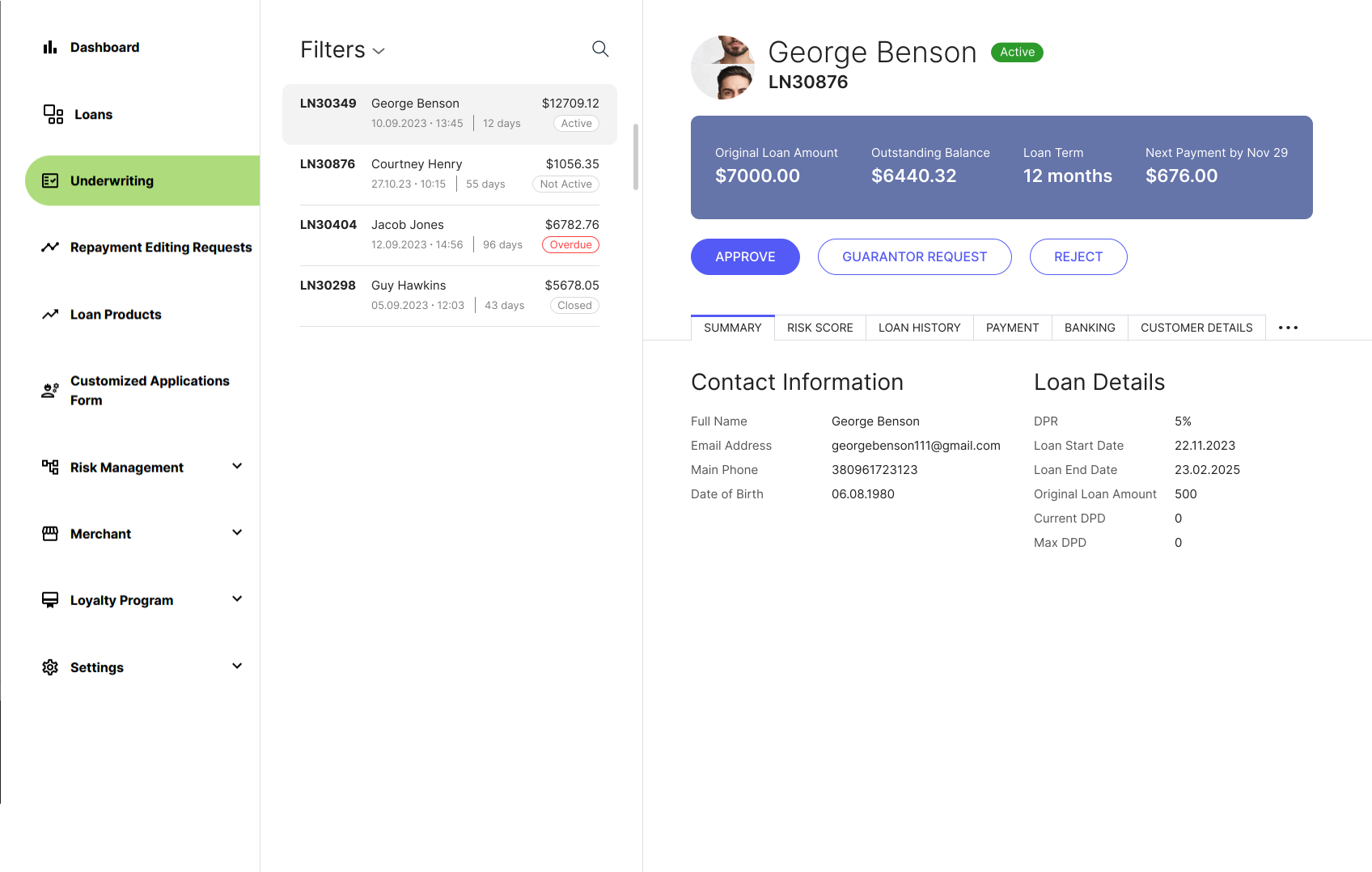
Underwriting Platform
Detailed Insights:
Central Importance: At the core of the lending business, the underwriting platform determines the risk associated with each loan application. Initially, lenders may rely on rule-based engines that follow predefined criteria for decision-making. However, this approach often lacks the sophistication needed to accurately assess risk in complex scenarios.
Evolution to AI-based Decision Engines: To enhance decision-making accuracy and efficiency, integrating AI and machine learning into the underwriting process is becoming a necessity. AI-based platforms can analyze vast amounts of data, including non-traditional data points, to make more nuanced risk assessments. This shift not only improves the accuracy of credit decisions but also enables the development of more personalized lending products.
Building vs. Partnering: Lenders face the choice of developing their AI-driven underwriting platforms or partnering with fintech companies that specialize in advanced analytics. Both approaches have their merits, but the decision often hinges on factors such as cost, expertise, and strategic goals. The key is to prioritize this platform disproportionately due to its critical role in the lending ecosystem.
Loan Management System (LMS)
Detailed Insights:
Comprehensive Management: Post-disbursement, the LMS takes over, managing all aspects of the loan lifecycle, including repayments, customer service, and collections. This system needs to be robust and flexible, accommodating a variety of loan products, services, and repayment methods. It also handles crucial operational aspects like accounting and non-performing asset (NPA) management.
Legacy System Limitations: Similar to LOS platforms, many existing LMS platforms struggle to support the integration of new financial products and innovative repayment schedules. Their lack of support for flexible APIs further compounds the issue, making it difficult to achieve seamless integration with LOS platforms or adapt to evolving market demands.
Need for Flexibility and Integration: The ability of the LMS to integrate smoothly with one or multiple LOS platforms is essential for a seamless flow of information across the lending process. This integration capability enables lenders to offer a wider range of products and adapt to market changes more swiftly, directly influencing their competitive edge and operational efficiency.
Operational Scalability and Efficiency
Essential for Supporting growth without compromising service quality or operational integrity. Scalability involves both technological and organizational readiness to handle increased volumes of business.
Impact: Efficient, scalable operations can accommodate growth, enhance customer satisfaction, and maintain competitive service levels. Operational bottlenecks or scalability issues can lead to customer dissatisfaction, increased costs, and missed opportunities.
Regulatory Compliance and Legal Challenges
Digital lenders must comply with a myriad of financial regulations that vary by country and region, including licensing requirements, consumer protection laws, data protection regulations (such as GDPR in Europe), anti-money laundering (AML), and know-your-customer (KYC) rules.
Staying compliant requires significant legal expertise and operational adjustments, which can be particularly challenging for startups and new entrants.
Final Thoughts
The journey of building a digital lending operation is not without its hurdles, yet these challenges underscore the importance of innovation, adaptability, and strategic planning. The digital lending space, characterized by rapid technological advancement and evolving regulatory landscapes, offers a dynamic arena for entrepreneurs and businesses poised to disrupt traditional financial services. Success in this domain is not merely about overcoming obstacles but about leveraging these challenges as opportunities to build a more resilient, customer-centric, and efficient operation.
A strategic approach to digital lending involves a comprehensive understanding of the market, a commitment to leveraging cutting-edge technology, and a focus on creating a seamless customer experience. By prioritizing robust systems for loan origination, underwriting, and management, businesses can not only streamline operations but also offer personalized, competitive lending products that meet the diverse needs of today’s consumers. The ability to overcome these challenges and a commitment to operational excellence and customer service distinguishes leaders successfully navigating the digital lending space.