
Five Essential Strategies for Transform the Loan Origination Process

Despite the widespread call for digital transformation within the financial sector, lenders continue to grapple with the challenge of speeding up loan application processes. This is largely due to the piecemeal and inconsistent implementation of automation technologies. The dependence on manual processes for document management and data entry not only amplifies the potential for errors and inefficiencies but also inflates operational expenses. Lenders who successfully streamline their procedures, enabling quicker decision-making and faster loan disbursements, will not only meet the changing demands of borrowers but also carve out a significant competitive edge in the dynamic financial marketplace. Enhancing the efficiency, accuracy, and speed of the loan origination workflow ensures that each phase of the process synergistically leads to the timely approval and disbursement of loans.
In this blog post, we unravel the complexities of the loan origination process, identifying the primary obstacles lenders encounter and illustrating how leveraging cutting-edge technologies like the CompassWay loan management platform with comprehensive automation strategies can significantly shorten the loan origination timeline.
What Is the Loan Origination Process Flow?
The loan origination process flow is a structured sequence of actions that lenders and financial institutions undertake from the moment a potential borrower initiates a loan application to the final decision of loan approval or rejection. This process is critical in assessing the financial health and creditworthiness of applicants to determine their eligibility for a loan. Here’s a more detailed breakdown of each step in the loan origination process:
The loan origination process flow is a structured sequence of actions that lenders and financial institutions undertake from the moment a potential borrower initiates a loan application to the final decision of loan approval or rejection. This process is critical in assessing the financial health and creditworthiness of applicants to determine their eligibility for a loan. Here’s a more detailed breakdown of each step in the loan origination process:
1. Loan Application Submission: The process begins when a potential borrower applies for a loan. This application can be submitted through various channels, such as online platforms, in-person visits to a bank or lending institution, or over the phone. The application typically requires personal, financial, and employment information, along with the amount and purpose of the loan.
2. Initial Credit Assessment: Upon receiving the loan application, the lender conducts an initial review to assess the borrower’s credit history and current financial status. This preliminary check is crucial for determining if the borrower meets the basic lending criteria before proceeding with a more in-depth analysis.
3. Detailed Risk Assessment: At this stage, the lender performs a comprehensive risk assessment. This involves analyzing the borrower’s credit scores, determining the borrower’s ability to repay the loan, examining financial statements, and assessing other relevant data such as revenue statements, debt-to-income ratio, and past repayment history.
4. Loan Decisioning: Armed with a detailed analysis of the borrower’s financial health, the lender makes a decision on the loan application. This decision can result in the approval of the loan, a request for additional information, an add co-signer, or the rejection of the application.
5. Funding: Once the loan agreement is signed, the lender disburses the loan funds to the borrower. The method of disbursement can vary, including direct transfer to the borrower’s account or payment to third parties if the loan is for a specific purpose, like a mortgage or auto loan.
6. Loan Servicing and Repayment: After the loan is disbursed, the loan servicing phase begins. This includes managing the repayment process, collecting monthly payments, and maintaining records of the loan’s status until the loan is fully repaid.
What Is the Loan Origination Process Flow?
Manual document processing/handling
A customer applying for a loan visits a bank branch with all the necessary documents for the application, such as tax returns, pay stubs, employment verification, and photo ID. The loan officer at the branch begins the bank’s loan application process, inputting data into their computer and gathering the customer’s paperwork to compile the loan package. In a setting where the institution hasn’t fully embraced end-to-end automation, the loan officer is required to scan all pertinent documents. However, this step merely creates digital images of the documents, and the crucial step of manually inputting the customer’s information into the Loan Origination System still remains.
Fragmented Data Silos Complicate Lending Decisions
Data inconsistency resulting from disparate systems becomes a significant bottleneck. When each piece of the lending puzzle—be it credit scoring, document management, or customer relationship management—operates in its own silo, crucial information becomes trapped within the confines of specific applications. This fragmentation obstructs a unified view of a borrower’s profile, thereby complicating the decision-making process for loan approvals.
Manual Credit Decision
For loan officers and underwriters, this lack of integration translates to a cumbersome journey through multiple applications to piece together a borrower’s financial health and creditworthiness. Each step, from verifying income to assessing risk, becomes a time-intensive task, fraught with the potential for errors and misjudgments. This not only slows down the loan origination process but also amplifies the stress and frustration experienced by employees. They face the daunting task of manually bridging the gaps between these disparate systems, striving to provide timely and accurate lending decisions—a crucial factor in maintaining competitive edge and customer satisfaction in the fast-paced financial landscape.
Six Strategies to Strengthen Loan Origination
The Power of Loan Application Automation
Loan application processing stands as a pivotal stage in lending, enabling financial institutions to validate the accuracy and timeliness of submitted documents. Leveraging a loan origination system, lenders can automate the verification process to ensure that documents are not only complete but also align with predefined criteria and adhere to regulatory standards. The automation of the loan application process significantly reduces the manual effort involved in document review.
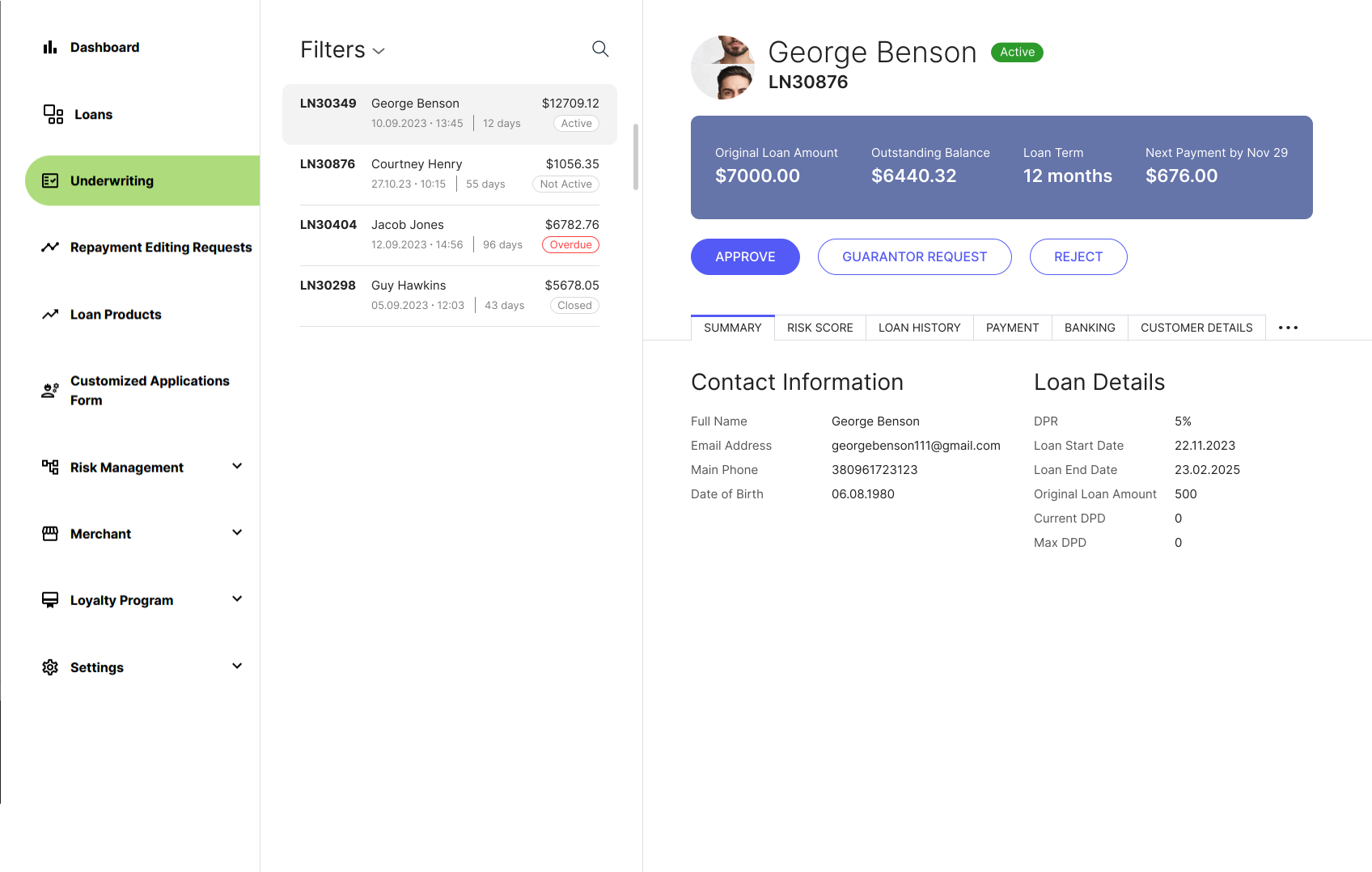
Compassway’s advanced low-code automation lending platform streamlines the loan origination workflow by introducing automated functionalities for address verification, credit assessments, approval processes, and document verification. The immediacy and transparency of the automated decisioning process are key differentiators that can elevate a lender’s service offering, ensuring that borrowers have a positive and engaging experience from application to approval.
The Power of Underwriting Automation
Automating the underwriting process transforms how lenders assess applicant risk, creditworthiness, and loan viability. By harnessing the power of big data, predictive analytics, and machine learning, automation enables the analysis of vast datasets to uncover patterns and predict outcomes based on customer profiles. This streamlined approach allows for the efficient scanning of financial documents, gathering crucial information, and generating data-driven insights for more accurate decision-making. Automated systems can trigger the next steps in the loan process immediately after a decision is made, such as preparing loan agreements or disbursing funds
The Power of Credit Decision Automation
Automated credit decision-making ensures consistency in how loan applications are evaluated, applying the same criteria and rules to every application. Automation allows for the immediate analysis of applicant data, including credit history, income, employment verification, and other relevant financial information. Machine learning algorithms and artificial intelligence assess this data in real time, drastically reducing the time required to evaluate a borrower’s creditworthiness compared to manual processes.
The Power of Loan Disbursement Automation
Automating loan disbursement is a critical innovation in the lending process. Automation dramatically speeds up the process, allowing funds to be transferred to borrowers’ accounts almost instantly once loans are approved. Customers can now receive funds directly into their bank accounts, eCommerce accounts, or mobile wallets, eliminating the need for physical transactions. These cashless digital channels not only heighten operational efficiency but also play a crucial role in reducing fraud risks. The immediate access to funds, often within seconds, through these digital avenues is a testament to the profound transformation technology has brought to the financial sector, and it offers significant benefits to both lenders and borrowers.
The Power of End -to End Loan Management System
An optimal loan management system enhances efficiency by consolidating various stages of lending —onboarding, credit assessment, underwriting, and funding functions into a single, cohesive platform. Such a centralized approach simplifies the workflow, which is particularly beneficial for facilitating repeat lending processes and substantially diminishes the costs and complexities tied to operating disparate systems. A key benefit of such unification is the establishment of a consolidated database for borrower information storage and retrieval, elevating the lending management practice.
The Power of Low-Code Automation
The advent of low-code automation marks a significant leap forward in the loan origination landscape, offering streamlined, efficient approaches to application development and deployment. Innovative technology minimizes the need for extensive hand-coding, enabling rapid launch and adaptation of applications. Financial institutions now have the agility to tailor and expand their loan origination processes with unparalleled ease.
Low-code automation refines the loan origination journey from start to finish, ensuring a seamless transition from application intake to fund disbursement. By automating workflows, the platform drastically reduces manual interventions, cuts down on errors, and maintains a consistent flow throughout the process. Efficiency is further enhanced by the platform’s capacity for swift market response, adaptability through customizable decision-making rules, and scalability via custom components.
Moreover, low-code platforms support extensive integrations and empower citizen developers, democratizing application development and allowing for a broader range of innovations. The result is faster time to market for new loan products and updates, ensuring that financial institutions remain competitive and responsive to market demands.
Explore how Compassway’s comprehensive low-code platform can transform digital lending operations. Embrace the future of loan origination with our solution, designed to automate and optimize every step of the process, delivering speed, accuracy, and scalability to meet the evolving needs of lenders and borrowers a like.
Navigation: