

How Advanced Loan Origination Software Shapes the Future of Lending

At its core, a Loan Origination System is a sophisticated loan software integral to the lending platform that facilitates and simplifies the lending experience for both lenders and borrowers. This system plays a crucial role in the loan processing system, handling tasks from the initial loan application to the final loan disbursal stage. For lenders, robust loan origination software is invaluable, enabling the processing of loan applications at higher volumes while significantly reducing the risk of manual errors.
Thus, a Loan Origination System serves as a dynamic consumer loan origination system, automating and managing the entire array of processes associated with the loan application and disbursal, ensuring efficiency and accuracy in the lending system.
A loan origination system (LOS) is a multifaceted lending software application that serves as the backbone for financial institutions in the lending domain. It is a crucial component of the broader loan processing system, designed to enhance and streamline the operations of digital lending platforms. The concept of loan origination refers to the process where a borrower applies for a loan, and a lender either disburses or rejects the application. This process encompasses every step from the application submission to the final decision, whether funding disbursement or application rejection.
The loan origination system begins with the loan application process, where the borrower applies for a loan. The system then collects and verifies the borrower’s information, including credit history, income, and employment status. The system then performs a credit analysis and underwriting process to determine the borrower’s creditworthiness and the risk associated with the loan.
Once the loan is approved, the system generates loan documentation, loan agreements, loan repayment schedules, and other documents required. The system then facilitates the loan funding process, ensuring that the funds are disbursed to the borrower promptly and efficiently. In the contemporary financial marketplace, financial institutions leverage best loan origination software for several vital functions.
Utilizing advanced algorithms and a vast repository of lending criteria, the loan origination system software dynamically adjusts loan pricing and determines eligibility, ensuring tailored financial solutions for each applicant.
The commercial loan origination software can automatically gather customer information with heightened accuracy and minimal labor, thus expediting the loan application phase.
With an LOS, the authenticity of documents can be verified digitally, which enhances the security and speed of the loan origination process.
Consumer loan origination software can apply predefined criteria to automate the underwriting proces, accelerating credit decisions and improving accuracy.
The most popular loan origination software enables financial institutions to integrate with third-party services for credit checks, fraud detection, and other essential services, all within the loan origination workflow.
By enabling automated workflow models, consumer loan origination software ensures that all steps in the loan origination process are followed consistently and efficiently, which can significantly reduce operational costs and processing times.
In the past, the loan origination process was marked by a series of complex steps. Financial institutions used to face a challenging loan origination process that involved several manual steps. They had to perform extensive risk assessments, identify the best channels for credit distribution, evaluate debt-to-income ratios in detail, prepare documents using paper-based methods or spreadsheets, disburse loans, and consider various factors such as relationship-based pricing rates. However, digitalization is revolutionizing this landscape. It shifts the commercial loan origination process towards automation, reserving human involvement primarily for tasks requiring cognitive decision-making. This technology enables financial institutions to leverage mobile devices, offering consumers the convenience to submit data remotely.
Digital loan origination systems can now integrate with other platforms, such as CRM systems, historical records, and underwriting platforms. These integrations facilitate data extraction, credit decision-making based on established decision business rules, and the tracking of financial trends over time, thus transforming the traditional loan origination process into a more streamlined and efficient practice. This remarkable transformation is undergoing thanks to various technological innovations. Tools like Artificial Intelligence (AI), Machine Learning (ML), Natural Language Processing (NLP), and Optical Character Recognition (OCR) are at the forefront of this revolution. These technologies are not just incremental improvements but represent a fundamental shift in how loan origination and processing are conducted globally. Below, we will delve into more detail regarding the most prominent changes.
The borrower onboarding and pre-qualification stages are critical initial touchpoints in the loan origination process. During these stages, prospective borrowers are required to furnish a plethora of information, including personal identification details, employment history, financial status, and specific loan requirements. The strategic implementation of a prequalification process acting as the gatekeeper to manage the volume of loan inquiries not only streamlines the process but also significantly reduces the potential for costly investment in high-risk or non-qualified candidates. In the most popu;ar loan origination software through the prequalification stage financial organizations can swiftly segregate applicants into those likely to be approved and those who will not proceed further, allowing for a more focused allocation of attention and resources to viable candidates. This not only streamlines the process but also substantially mitigates financial risk and administrative burdens.
Modern loan origination systems (LOS) like Compassway facilitate these stages through intuitive online interfaces—user-friendly forms and interactive web portals that applicants can easily navigate. These digital platforms are equipped with real-time validation algorithms that ensure the information entered is complete and accurate, thereby mitigating the risk of application errors and omissions.
Through the use of advanced software, the pre-qualification phase has become significantly more efficient. The system employs predefined lending criteria to swiftly evaluate the provided information. The result is an almost instantaneous pre-qualification response informing the applicant of their eligibility status, potential loan amounts they could receive, and the applicable interest rates. This prompt feedback loop is invaluable for applicants as it provides a clear and immediate understanding of their borrowing capacity.
The loan origination process, characterized by its numerous touchpoints and approval stages, presents a significant challenge in achieving streamlined operations and maintaining clear oversight throughout the process.
Digital lending platforms are instrumental in addressing these challenges. They offer real-time updates and tracking capabilities, enabling various stakeholders involved in the loan origination process—such as account managers and underwriters—to monitor the progress of loan applications effectively. This visibility is crucial in preventing delays and assists users in prioritizing their tasks efficiently.
Moreover, maintaining visibility throughout the loan origination process is not just beneficial for current operations but also aids in continuous improvement. By creating and automating a well-defined workflow, financial institutions can gain a comprehensive overview of the entire process. This setup allows for timely adjustments to the workflow, ensuring that the process remains efficient and compliant with evolving regulations.
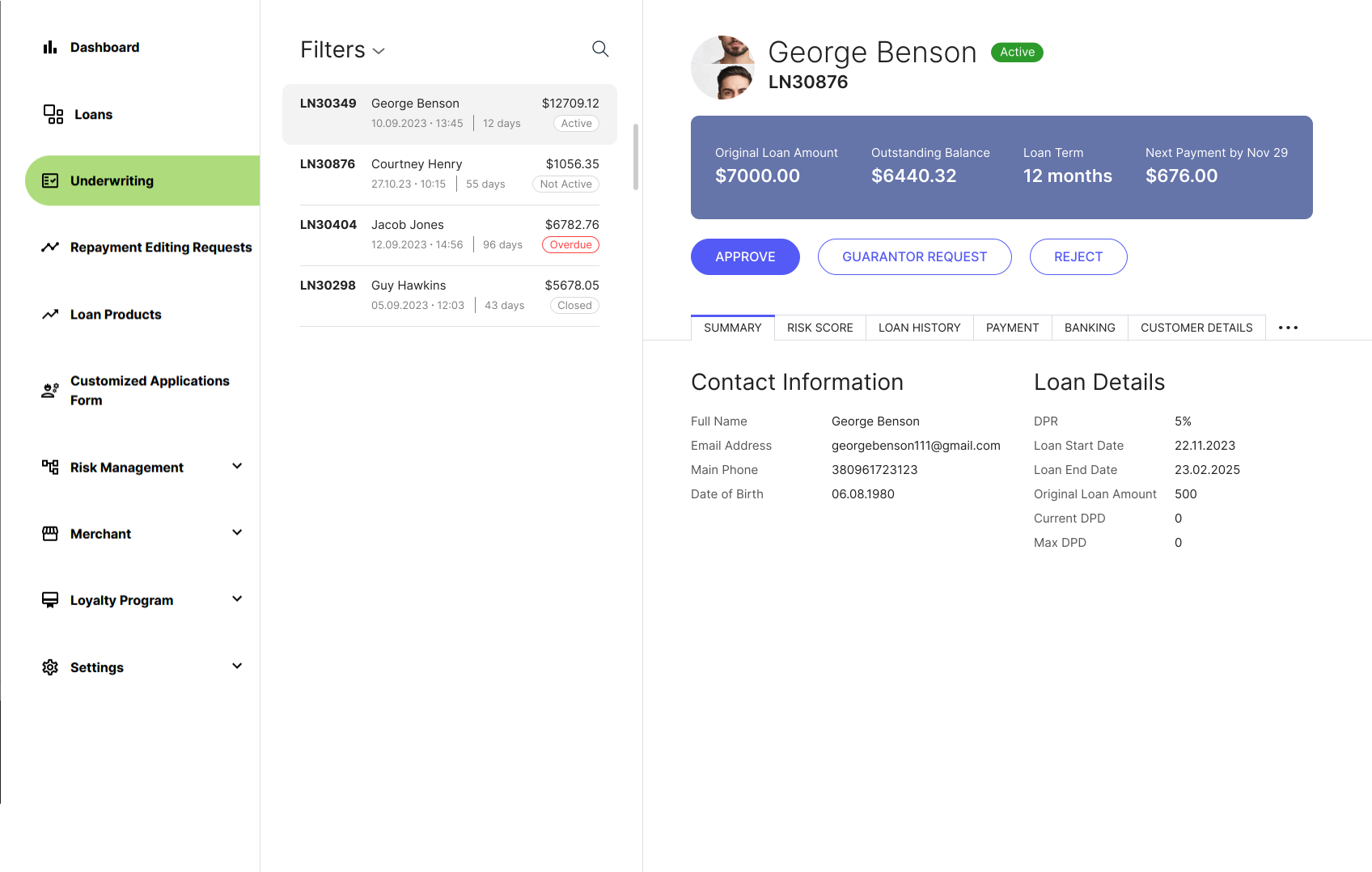
Additionally, an advanced digital lending platform like Compassway can provide robust dashboards and analytics tools. These features are essential for displaying key performance indicators (KPIs) and process metrics, offering valuable insights into the process. By analyzing these metrics, financial institutions can further enhance the efficiency and effectiveness of the loan origination process.
Integrating automation and analytics into the loan origination workflow marks a significant step forward in optimizing financial operations, ensuring that the process is not only faster and more efficient but also more transparent and adaptable to change.
Automated systems employing advanced technologies such as Artificial Intelligence (AI) and Machine Learning (ML) have significantly enhanced the efficiency and effectiveness of Anti-Money Laundering (AML) and Know Your Customer (KYC) processes. These systems can interface with various external databases and information sources, including government records and financial institutions’ databases, to conduct comprehensive customer identity verifications and transaction analyses.
One of the key technologies used in this context is Optical Character Recognition (OCR). OCR technology has a crucial role in automating the KYC process, especially in document verification. It enables the extraction of text from scanned documents, such as government-issued IDs or financial statements, converting them into machine-readable formats. This capability is vital for verifying the authenticity of customer-provided documents quickly and accurately.
In conjunction with OCR, AI and ML algorithms can analyze patterns in transaction data and customer behavior to identify potential risks and anomalies. These systems can perform real-time analyses and screenings to flag suspicious activities. For example, they can detect unusual transaction patterns that may indicate money laundering or other financial crimes.
Moreover, these automated systems can be configured to adhere to the latest regulatory compliance standards. They continuously update their screening criteria and algorithms based on evolving regulations and compliance requirements. By doing so, they ensure that financial institutions remain compliant with AML and KYC regulations, reducing the risk of legal and financial repercussions.
The real-time processing capabilities of these systems mean that they can instantly flag potential risks and issue alerts for further investigation by compliance officers. This not only accelerates the AML and KYC verification processes but also enhances their accuracy, significantly reducing the chances of false positives and negatives.
Overall, integrating OCR with AI and ML in AML and KYC processes represents a leap forward in regulatory compliance and risk management for financial institutions. These technologies offer a more efficient, accurate, and reliable approach to customer verification and monitoring, which is crucial for maintaining the integrity and security of the financial system.
The advent of automation in the lending sector has revolutionized the way financial institutions assess creditworthiness and manage risk. Lenders now have the capacity to encode their risk assessment criteria directly into automated lending solutions, shifting away from the labor-intensive and fallible manual evaluation methods. This automation of the credit decision process not only streamlines the assessment process but also empowers less experienced staff to review loan applications efficiently. The result is an enhanced customer experience with rapid responses to loan inquiries and applications.
Furthermore, by automating the approval of straightforward loan applications, institutions can allocate their underwriting resources more effectively. Underwriters can focus their expertise on complex cases that require a deeper level of scrutiny rather than on routine loan evaluations that the system can handle via its programmed algorithms. Incorporating Artificial Intelligence (AI) within these systems further augments their capabilities, utilizing predictive analytics to assess borrowers’ creditworthiness with greater precision and to anticipate potential loan defaults more effectively.
The integration of digital technology in the lending process has dramatically condensed the time frame for disbursing loans, offering an unprecedented level of convenience and speed.
Loan disbursal has been revolutionized by the ability to conduct transactions remotely via various digital channels. Customers can now receive funds directly into their bank accounts, eCommerce accounts, or mobile wallets, eliminating the need for physical transactions. These cashless digital channels not only heighten operational efficiency but also play a crucial role in reducing fraud risks. The immediate access to funds, often within seconds, through these digital avenues is a testament to the profound transformation technology has brought to the financial sector. It underscores the shift towards a more agile, secure, and customer-centric approach to financial services, where the emphasis is on delivering a seamless and expedient lending experience.
The traditional manual underwriting process is often characterized by inefficiency, predominantly due to the necessity of multiple branch visits and extensive paperwork, which inevitably leads to prolonged waiting periods for loan approval. In this conventional method, applicants must provide substantial financial documentation, such as pay stubs and tax returns. These documents undergo meticulous scrutiny and verification by underwriters, who often need to cross-check information with third-party sources like employers and banks.
Contrastingly, progressive lending companies that have adopted advanced loan origination software demonstrate a significant shift in this paradigm. These modern systems enable a drastic reduction in loan processing times. One of the key advantages of such software is eliminating the need for physical presence at branch offices for loan processes, including disbursal. The entire procedure is streamlined and transferred online, offering a seamless experience for both the lender and the borrower.
This digital approach not only expedites the loan approval process but also liberates lenders from the time-consuming tasks inherent in manual underwriting. As a result, they can redirect their focus and resources towards more strategic, value-added functions. This shift towards digital underwriting represents a crucial evolution in the lending industry, enhancing efficiency, reducing operational burdens, and improving customer satisfaction.
The integration of technology into lending processes has revolutionized the way lenders assess consumer profiles. With the advent of tools like geotagging and electronic Know Your Customer (KYC) methods, lenders can now verify consumer information regardless of their geographical location. These online verification processes run round-the-clock and offer instant support without sacrificing accuracy and precision, enabling lenders to tap into previously inaccessible credit markets, thus significantly expanding their operational reach. By leveraging these digital tools and processes, lenders are positioned to enhance their market presence, offering faster, more secure, and accessible financial services to a diverse customer base.
Digitalization of the loan origination process significantly enhances the customer experience by offering speed, convenience, and efficiency – qualities highly valued by today’s consumers. Enhanced digital tools, including customer-centric web portals and Application Programming Interfaces (APIs), streamline the onboarding of customer data directly into the lender’s loan origination platform. This digital integration allows for seamless data transfer, ensuring that both prospective and existing customers can input their details quickly and securely. The reduction in paperwork and the increase in process efficiency not only meet the customers’ expectations for a swift and hassle-free loan application process but also position the lenders as modern, customer-oriented entities in an increasingly competitive market.
One of the critical features in enhancing data security is the use of cloud storage systems. Cloud-based top loan origination software offers advanced security protocols and encryption methods, which are essential in protecting against unauthorized access and data breaches. The inherent security features of cloud computing, such as secure data centers, regular security updates, and advanced threat detection mechanisms, contribute significantly to the overall safety of the loan origination process. Digital advanced lending systems have robust and sophisticated security infrastructures, safeguarding sensitive data against potential fraud and security breaches.
In the current landscape of financial services, where customer experience is a significant differentiator, digital transformation stands out as a critical strategic investment, and loan origination systems (LOS) are central to this evolution.
The future of lending is.commercial r loan origination software provides a more seamless and convenient experience for customers. Online applications, faster processing times, and real-time updates increase customer satisfaction and position a lending institution as a customer-first organization. Automating the loan origination process can significantly reduce operational costs. By cutting down on manual labor and paper-based processes, lending institutions can save on resources and time, directly impacting their bottom line. Investing in a digital loan origination system is not just about upgrading a single aspect of the lending process; it’s about embracing a digital-first approach that can transform the entire business model of lending institutions. By doing so, they can stay ahead in a rapidly evolving market, meet the increasing digital demands of customers, and achieve sustainable growth.
Compassway’s Loan Origination Solution (LOS) is an end-to-end digital consumer lending software specifically designed to meet the operational needs of NBFCs and MFIs in their day-to-day activities. This comprehensive Credit Automation Platform encompasses both B2B and B2C Markets.
This platform simplifies the automation of all lending processes, offering you seamless end-to-end automation with the quickest time-to-market and intelligent automation capabilities. Compassway is constantly developing innovations to keep pace with the latest digital lending trends and offers a lending software solution designed to meet the needs of lenders while simultaneously addressing the most common challenges faced by the industry. To learn more about our software, write us at [email protected] for a free loan origination 15-day trial.
Navigation: