
B2B BNPL Different Financing for Small and Medium Enterprises
Table of Contents
In today’s rapidly evolving financial technology landscape, individual consumers are experiencing unprecedented ease and satisfaction in their payment processes, both offline and online. These transactions are characterized by shameless. frictionless and often enjoyable experiences.
However, this advanced state of consumer payment solutions starkly contrasts with the current state of B2B payments, which appear to be stagnating in a mode that hasn't significantly evolved over the past three decades. In an interesting turn, the success of the buy-now-pay-later (BNPL) model, which has significantly reformed credit options for the millennial consumer market, is now being eyed as a transformative approach for business payments.
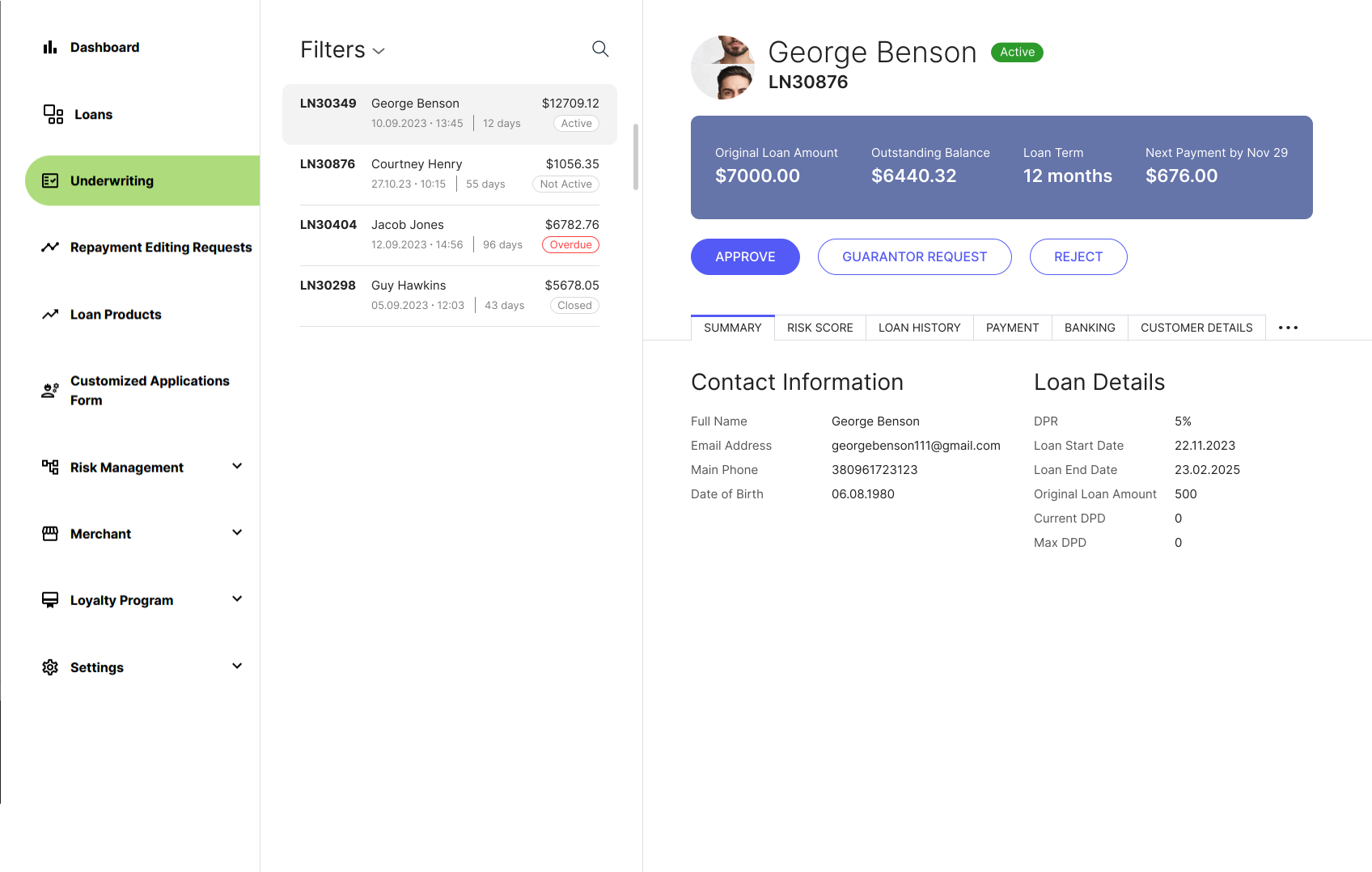
This focus on B2B payments is particularly relevant and timely, considering the financial challenges SMEs face, which is where fintech companies are stepping in, revolutionizing the arena by digitalizing the SME loan procedure and seamlessly integrating it into e-commerce platforms. This innovative approach that can be integrated utilizing advanced digital lending platforms like Compassway is commonly referred to as "Buy Now, Pay Later" (BNPL) for B2B, with some firms also labeling it as embedded net terms or contemporary invoice financing.
Fintech's role in streamlining SME loans is pivotal, as it adds substantial value at each phase of the loan process- from customer onboarding and credit underwriting to the disbursement and repayment stages.
In this article, we will examine how the synergy between shifting macroeconomic landscapes, evolving customer expectations, and technological advancements catalyze a new wave of innovation streamlining the facilitation of business transactions, making them smoother, quicker, and more efficient.
B2B BNPL: Addressing the Challenges Faced by Small and Medium Businesses in Accessing Finance
Small and medium enterprises (SMEs) face many challenges in s financing, largely due to the traditional solutions offered by incumbent financial institutions like banks. These challenges are not just operational but are also influenced by broader macroeconomic factors.
Rising Interest Rates
In the current macroeconomic climate, interest rates are on an upward trend, which directly impacts the cost of credit. As borrowing becomes more expensive, SMEs, which are already operating on thinner margins, find it increasingly difficult to afford loans. The ability to absorb these higher costs is limited for SMEs, unlike larger corporations, leading to reduced profit margins.
Imbalance of Power in Financial Relationships
SMEs often find themselves in a weaker position in their relationships with financial institutions. This power imbalance means that SMEs may be unable to negotiate favorable terms, further exacerbating the impact of rising credit costs.
Complex and Lengthy Financing Processes
Traditional financing options like bank credit lines and factoring require SMEs to provide extensive data. The processes involved are typically long, manual, and costly. This not only delays access to much-needed funds but also adds to the operational burden of SMEs.
Inefficiencies in Accessing Quick Financing
The need for quick and easy access to finance is a critical challenge for SMEs. The slow and complex nature of traditional financing methods often fails to meet the immediate financial needs of these businesses, hindering their ability to respond to market opportunities promptly.
Increased Risk Aversion from Banks: In the current economic environment, banks are becoming more cautious and are reluctant to take on additional risks. This tendency results in stricter lending criteria, making it increasingly challenging for SMEs to qualify for loans. As banks tighten their lending standards, SMEs, particularly those without a strong credit history or substantial collateral, are often left with limited or no access to traditional financing sources.
What Is Buy Now Pay Later (BNPL) for B2B transactions?
Buy Now, Pay Later (BNPL) can be described as a type of short-term financing. BNPL is a payment option available to business buyers at the point of sale (POS). so practically, it is a point-of-sale installment loan. A buyer pays off the cost of the purchase at regular intervals, typically monthly. In SaaS, it is usually implemented by a vendor to provide customers with the opportunity to pay monthly for annual plans.
Advantages of the B2B BNPL Model for SME business
In essence, the B2B BNPL model is not just a financing mechanism; it's a comprehensive solution that supports the entire ecosystem of business operations, from improving cash flow to fostering growth and solidifying business relationships. Its growing popularity and adoption in the B2B sector underscore
its effectiveness in meeting the complex financial needs of modern businesses.
Improved Cash Flow and Flexible Financing
The BNPL model significantly enhances cash flow management for businesses, which is especially beneficial when they face large purchases but lack immediate funds. This approach provides much-needed payment flexibility, allowing businesses to spread the cost. over time in manageable installments. Unlike traditional financing methods, which often have high interest rates, BNPL emerges as a cost-effective solution, particularly for small and medium-sized enterprises (SMEs).This affordability and flexibility make BNPL an attractive alternative for businesses looking to manage their cash flow more effectively.
Quick Credit Approvals and Merchant Benefits
One of the standout features of the BNPL model is its ability to expedite business credit approvals. This speed in processing reduces waiting periods and uncertainty, enabling businesses to respond quickly to market opportunities. Additionally, this model benefits merchants by ensuring upfront payments, significantly improving their cash flow and minimizing the risk associated with delayed or deferred payments. This immediate liquidity is crucial for merchants to maintain steady operations and financial stability.
Enhanced Business Growth and Relationships
The BNPL model facilitates faster onboarding of new clients, offering businesses a pathway to growth and expansion. By providing greater certainty in financial transactions, companies can plan and execute business strategies more confidently. Moreover, the BNPL model helps in meeting immediate business needs, allowing companies to capitalize on market opportunities without the constraint of cash availability. This financial flexibility not only helps in reducing the overall financial strain but also strengthens business relationships. Suppliers and buyers benefit from a reliable and consistent payment method, fostering trust and long-term partnerships.
Adaptability and Encouraging Business Development
Lastly, BNPL models are highly adaptable to varying business cycles and cash flow needs, catering to businesses with seasonal or cyclical demands. This adaptability is crucial for businesses to maintain operational efficiency throughout different market conditions.
Furthermore, by alleviating financial bottlenecks, the BNPL model opens doors for businesses to invest in growth and development initiatives, paving the way for sustained business success and innovation.

Different Types of Business Loans for Enhanced B2B BNPL Financing Solutions
In the dynamic world of B2B Buy Now Pay Later (BNPL) financing, there exists a range of models tailored to different business needs and transaction types. These models include Point-of-Sale (POS) financing, open-end credit lines, and net terms, each offering unique benefits and catering to specific financial scenarios. Let's delve deeper into each type to understand their functionalities and applications.
Point-of-Sale (POS) or Embedded Financing
This model is integrated directly into the merchant's checkout process, allowing customers to pay for their purchases in interest-free, easy installments over time. It’s a seamless option for off-card payments, allowing customers to bypass the lengthy approval processes typical of traditional lenders. The POS financing model is especially advantageous for immediate purchases, with the loan typically being repaid over a short period, often within a few months. This model is ideal for businesses that need quick, straightforward financing for smaller-scale purchases
.
Open-End Credit Line
Designed for more substantial purchases, the open-end credit line offers a flexible financing solution. Customers can buy now and pay later, adhering to an agreed-upon payment schedule and interest rate. This model often requires more comprehensive upfront information from the customer, reflecting its suitability for more significant investments such as business technology or services. The key feature of this type of BNPL is its revolving nature; borrowers can repay and reborrow funds within their credit limit, providing continuous financial support for ongoing business needs.
Net Terms (Net 30/60/90)
Offering net terms has become a crucial aspect of business transactions, particularly in today’s competitive and complex market environment. Factors like supply chain disruptions and price competition make it imperative for companies to extend credit facilities to their customers. Providing options for payment terms such as 30, 60, or 90 days allows customers to manage their finances more effectively and aligns payment schedules with their cash flow. This flexibility can significantly enhance customer relations, bolstering business reputation and fostering long-term loyalty. Companies that fail to offer such terms risk creating dissatisfaction, damaging their brand image, and potentially losing business. By accommodating the financial health of their customers, businesses can indirectly support their own sustainability and growth.
Here Is How BNPL Works:
A Seamless Integration for self-serve website
The process of B2B BNPL is very similar to B2C BNPL.
When a customer chooses your product and begins the checkout process, they are presented with various payment options, including BNPL (Buy Now, Pay Later) along with credit/debit card options. If the customer selects the BNPL option, they will be asked to fill out a short application directly on the checkout screen. The BNPL provider will require business, financial, and ownership information from the customer to determine if they qualify for the loan. Once the customer is approved and chooses the BNPL option, they can pay off the balance over time to the BNPL provider. Vendors receive the full sum upfront from the provid
er in a matter of hours or days.
The Process of B2B BNPL Purchase Through a Generated Link
As a vendor, you begin by finalizing the purchase details with your business customer. This discussion will cover the price of the product or service and the BNPL payment schedule as determined by the provider's terms. Once these details are ironed out, you will create a payment link using the BNPL provider's platform and forward this link to your customer.
Upon receiving the link, the customer will be directed to the application page upon clicking. Here, they are required to confirm their email address, select the appropriate subscription plan for their needs, and establish a connection to their financial. account. This step also involves entering their card details to facilitate the initial installment.
The BNPL provider then remits the total payment amount to a vendor after deducting their service fee. With the financial side settled, the vendor proceeds to deliver the agreed-upon services or products to the customer. Subsequently, the customer will adhere to the agreed payment schedule, settling their dues directly with the BNPL provider.
Comparatively, the offline B2B BNPL process mirrors its online counterpart, with the notable difference being a reduced dependency on digital procedures and documentation. This alternative may involve more direct, personal communication and physical paperwork, but the fundamental principles of the transaction remain consistent.
Final Thoughts
In the global economic theatre, B2B payments represent a colossal market, dwarfing B2C transactions with a valuation that is more than double. The figures are staggering, with B2B payments constituting a $125 trillion opportunity, overshadowing. the $52 trillion circulating in consumer payments.
The surge in the digital transition of B2B trade is catalyzing a profound shift in payment preferences. BNPL products, with their inherent ability to provide immediate relief in liquidity constraints, are becoming an increasingly popular choice. Consequently, the adoption of B2B BNPL financing options is set to escalate as they align perfectly with the needs of an economy grappling with high inflation.
Looking ahead, the trajectory for B2B transactions is clear – the future envisions a landscape where business buyers can experience the same level of seamless, frictionless, and delightful payment experiences currently enjoyed by consumers. This progression towards a harmonized payment experience across B2B and B2C sectors is not just a forecast but a mandate for the evolving digital economy. As these trends continue to gain momentum, the integration of consumer-like payment experiences in the B2B realm will no longer be a luxury but a standard, shaping the future of how businesses transact.