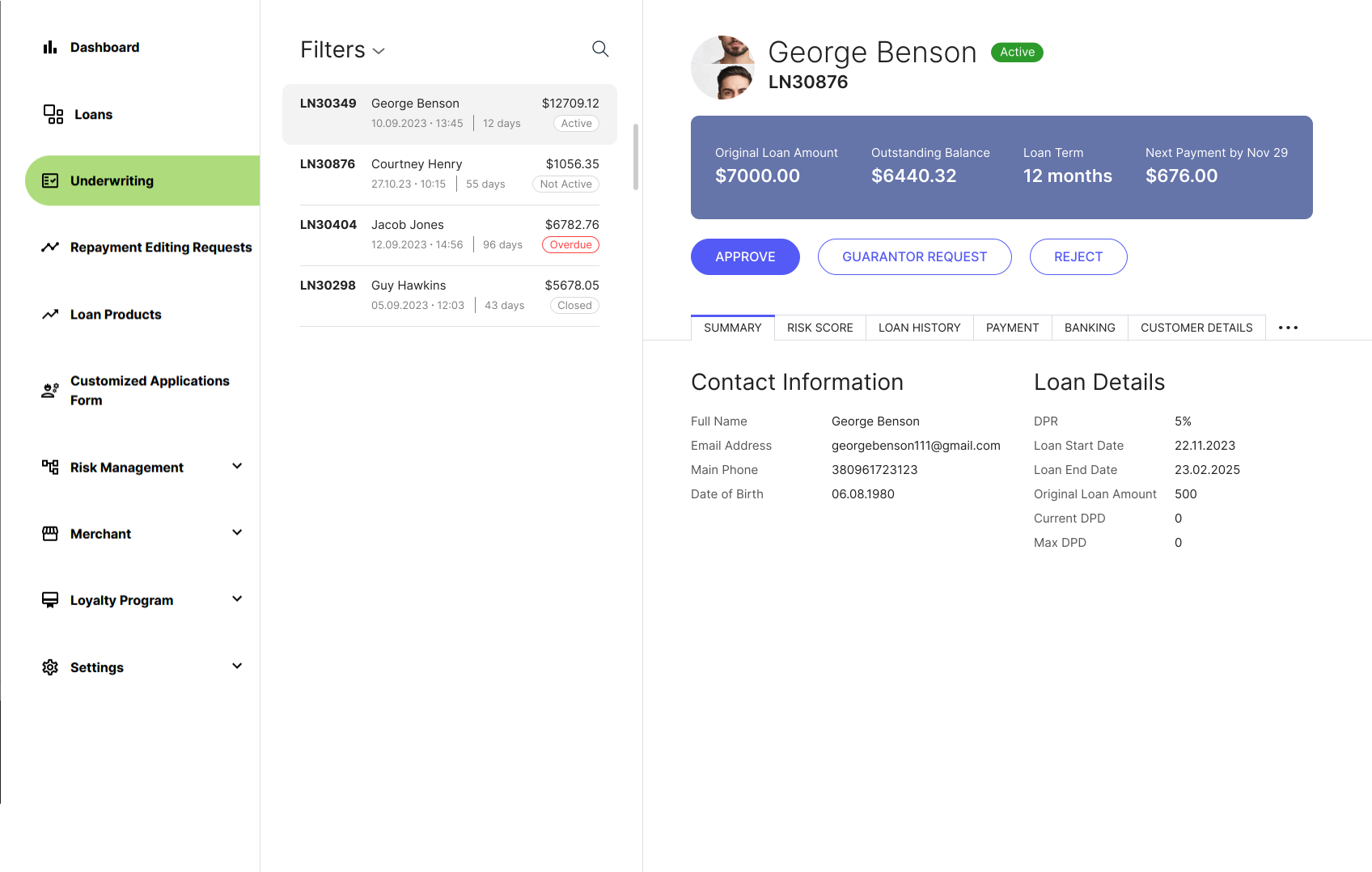


Private student loans arise as a solution to specific financial needs in higher education that are not fully addressed by federal financial aid programs. These needs can stem from various factors, including increasing costs of education, limitations on federal aid amounts, and the diverse educational paths students may choose that do not always align with federal funding criteria. Students represent a distinct and varied customer segment with specialized requirements. Financial institutions serving this demographic require loan management software specifically for the unique aspects of student lending.
This article aims to shed light on the significant role of private student loans and the technological requirements essential for streamlining student loan origination and management, ultimately contributing to the broader goal of making higher education more accessible and affordable.
Flexibility for Different Educational PathsUser-Friendly Digital Platform
Streamlined Application Workflow
Personalized Communication and Support
Borrower Self-Service CapabilitiesStreamlined Loan Disbursement
Comprehensive Loan Servicing Module
Benefits of an Integrated Approach
Collection Management
Bridging the Financial Gap
The cost of higher education has been rising steadily, often outpacing inflation and family incomes. While federal financial aid, including loans, grants, and work-study programs, can cover a significant portion of these costs, they often come with caps that do not meet the full needs of every student. For example, the maximum annual amount for Federal Direct Subsidized Loans for undergraduate students can vary based on their year in school and dependency status, but it may not be enough to cover the total cost of attendance.
Example: Consider an undergraduate student attending a private university with a total annual cost of attendance (including tuition, room and board, and other fees) of $50,000. After exhausting available federal grants, scholarships, and a maximum federal loan amount of $5,500 for a first-year dependent undergraduate student, the student still faces a significant gap. If the total federal and scholarship aid amounts to $30,000, the student has a $20,000 gap. A private student loan can provide the funds to cover this remaining balance, enabling the student to attend the university.
Flexibility for Different Educational Paths
Federal financial aid is primarily designed for students pursuing degrees at accredited institutions. However, students pursuing non-degree programs, such as coding boot camps, trade schools, or certain certificate programs, may find that these educational paths do not qualify for federal aid. Private lenders have more flexibility in funding diverse educational pursuits.
Example: A student enrolls in a coding boot camp that does not participate in federal financial aid programs. The cost of the boot camp is $15,000, a significant investment that the student cannot afford out-of-pocket. Some private lenders offer loan products specifically designed for such non-traditional educational programs, providing the necessary funds to pursue this career-enhancing education.
User-Friendly Customer Onboarding
- Multi-Channel Customer Engagement: The digital lending platform should be easily accessible from both desktop and mobile devices, offering a responsive design that adapts to various screen sizes and device types.The aim is to offer seamless, consistent support and engagement across all touchpoints, meeting students where they are most comfortable and active. This ensures students can start or manage their loan applications whenever and wherever they prefer.
- Simplicity: Navigation should be intuitive, with a clean and straightforward user interface that guides students through each step of the loan application process. Complex financial terms and procedures should be explained in simple language, with tooltips or help icons providing additional information as needed.
- Automated Updates: Throughout the loan application process, automated updates via email, SMS, or in-app notifications can keep students informed about their application status, next steps, and any required actions.
- Dedicated Support: Offer multiple channels for support, including live chat, phone support, and email, ensuring students can easily reach out with any questions or concerns. Support staff should be trained to understand the unique aspects of student loans, providing accurate and empathetic assistance.
Borrower Self-Service Capabilities
- Accessible Loan Management Tools:A user-friendly platform should be provided to students to manage their loans with ease. Borrow portals, as a personal space for students, should allow borrowers to make payments, view transaction histories, check balances, and update personal information easily.
- Engagement and Responsibility: Empowering students with the tools to actively manage their loans encourages a sense of responsibility towards timely repayment.
Streamlined Application Workflow
- Efficient Process: The loan application workflow should be streamlined to minimize the number of steps and required information, making it as quick and easy as possible for students to complete their applications. This could involve pre-filling application fields with available data and using conditional logic to skip irrelevant sections based on previous responses.
- Document Upload and Verification: By utilizing advanced document management tools, our application process reduces stress and ensures accurate data for loan processing.Students should be able to upload necessary documents easily and directly through the platform. Real-time verification can significantly speed up the approval process, reducing wait times and improving the overall experience.