

Scaling Your B2B Lending Business: Expansion Strategies and Best Practices
Right now, the B2B financing market is undergoing changes that are opening up new opportunities for lending institutions to expand and grow. Traditional banks still prevail in this industry, with about 79% of companies using their lending services (according to Forbes). At the same time, a trend has been emerging over the past few years: more and more organizations are choosing non-bank options. The increasing demand for alternative lenders has in turn, sparked the growth of next-generation B2B financing companies. Why is this happening, why is now the right time to start or actively scale your B2B lending business, and what is the strategy for growth? The answers to these questions can be found below.
Legacy banking VS fintech
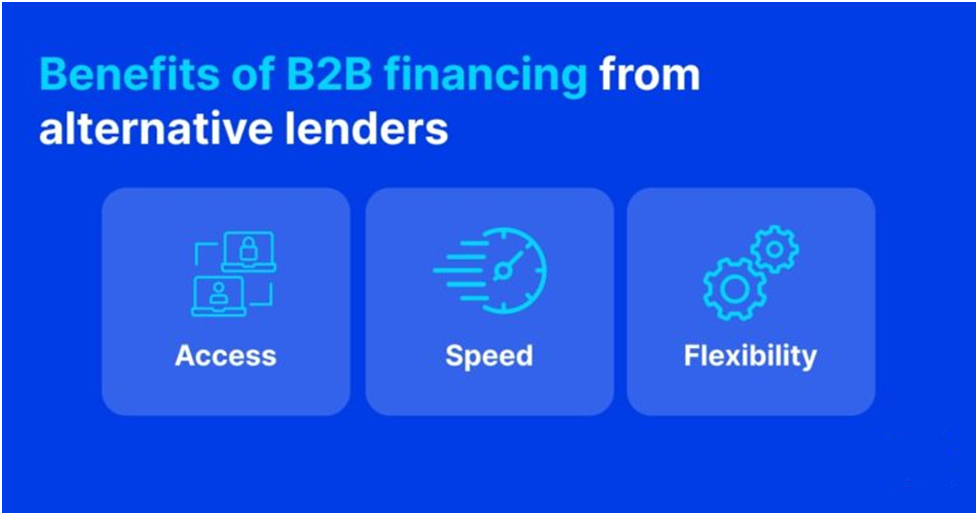
The mentioned trend is explained by the fact that traditional bank lending has significant disadvantages. On the other hand, non-bank lenders typically utilize innovative commercial lending technologies that effectively eliminate the flaws of outdated approaches. What are these drawbacks, and how do fintech startups address them?
Inconvenient application process
The processes are often slow and bureaucratic, involving extensive paperwork and lengthy approval times. This rigidity can make it difficult for customers to find customized loan options. Additionally, the operational costs of maintaining physical branches and large staff result in higher fees for customers. Legacy banks are often slow to adopt new technologies, leading to inefficiencies and potential security vulnerabilities. Furthermore, their stricter credit requirements can exclude many potential borrowers, making them less accessible to underbanked or unbanked populations.
Typically, applying for a loan from a bank requires an office visit and face-to-face interaction. At the same time, high-tech services offer the option of applying online, which saves a lot of effort and time for the borrower.
Lengthy client assessment process
The outdated approach that is generally practiced by banks requires a lot of manual work and involvement of human resources. Checking the creditworthiness of a company takes a lot of time, especially since credit scoring in B2B is much more complicated than in business to consumer financing even when it comes to upscale personal loans. Innovative solutions, such as CompassWay’s loan origination system, automate loan processing – from credit scoring to decision-making and application approval. As a result, the funds are disbursed many times faster.
Low approval rate
Banks tend to have a fairly low approval rate for B2B loans. About a third of applications are rejected due to problems related to the processing of company data. The fact is that legacy credit scoring methods do not provide an opportunity to assess the real creditworthiness of an organization. This means that many companies, having all the grounds for obtaining a loan, are deprived of financial support. This happens only because banks are simply unable to conduct a relevant analysis of the applicant’s data due to outdated approaches. According to World Bank, the unmet demand for B2B loans is measured at 5.2 trillion dollars a year.
This situation presents a significant opportunity for alternative lenders using more flexible approaches made possible by AI-based analytics algorithms. High-end business to business financing systems enable fine-tuning of scoring factors and decision rules. In this way, every decision is tailored to the specifics of each individual business. As a result, approval rates in fintech institutions are on average twice as high as in banks. Alternative lenders can effectively serve those customers that banks have lost.
Worse loan terms
The approaches that banking institutions have traditionally used not only make the commercial lending process less efficient and prolonged. Without automation systems, banks also have to maintain large staffs and generally use more resources. As a result, they have higher operating costs. This, in turn, leads to higher interest rates. On the other hand, the operating costs of high-tech financial startups are much lower due to automation. Accordingly, they can afford to offer their customers lower interest rates.
Limited range of loan types
Banks that are stuck in outdated processes are unable to offer their customers a wide range of loan products. At the same time, customizable and flexible modern fintech solutions such as CompassWay’s loan origination software allow to expand the range of services by supporting different types of loans, including direct lending, revolving credit lines, invoice finance, venture debt, merchant cash advance and many others. Thus, a B2B client can choose the product that best suits its specific business case.
How to scale B2B lending business?
The previous section provides clear clues. Traditional banks and credit unions have obvious weaknesses. Because of this, B2B customers are already starting to migrate to alternative lenders. This shift is still small, but it is indicative. Now is a good time to actively develop and scale your B2Business lending business. While most banks have not yet fully embraced innovative technologies, a window of opportunity is open for alternative lenders. By offering B2B clients better service and terms, you can quickly add companies that have become disillusioned with traditional banking to your customer base.
Implement unified lending software.
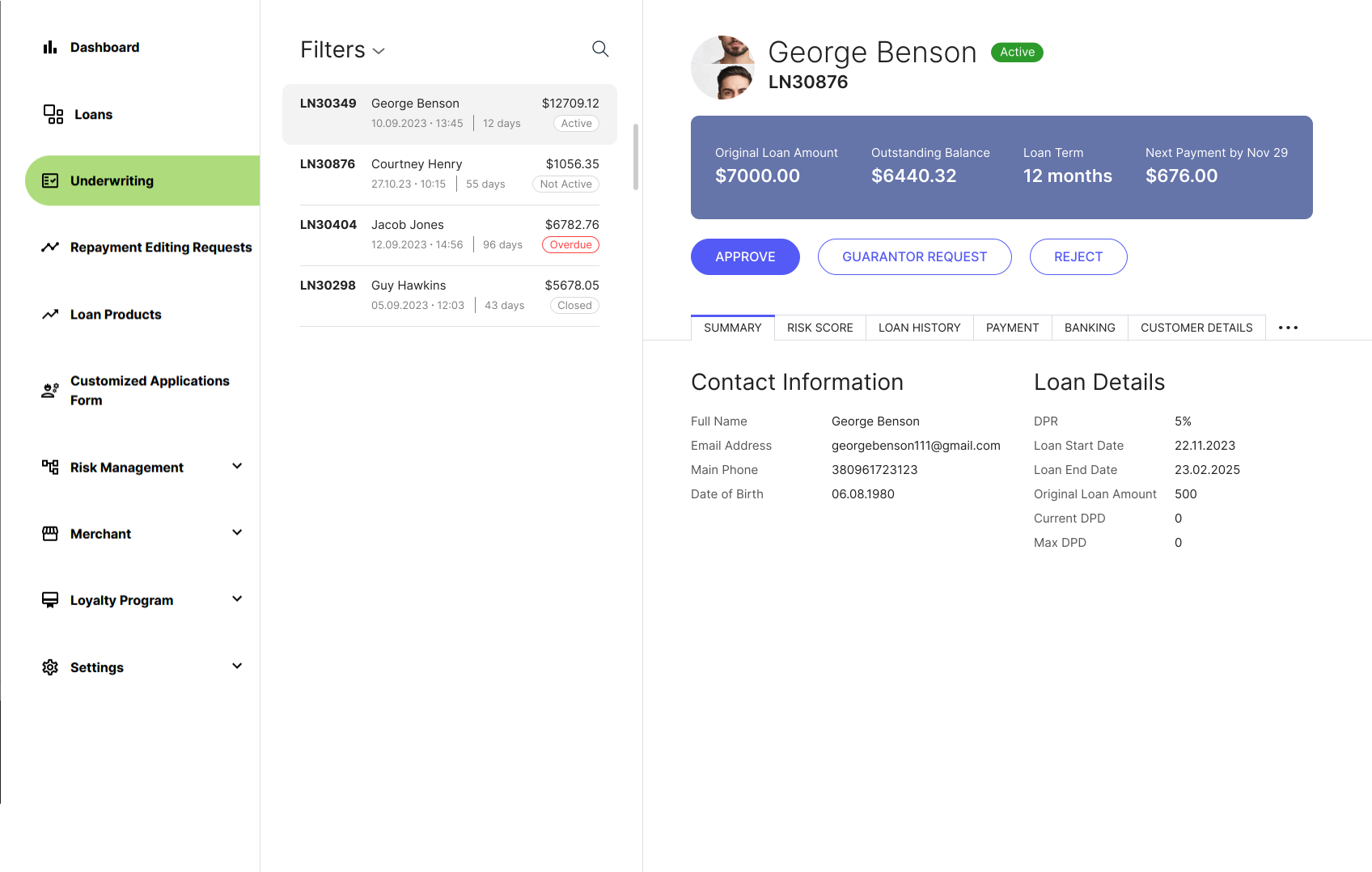
Suppose you have just recently started a company and do not yet have loan software, or you are using disparate tools. In that case, the first thing you need to do is to implement a strong, unified loan management software that would allow you to automate and optimize all key processes related to lending – from pre-qualification and application processing to credit decision-making, underwriting, and disbursement of funds. At the same time, it minimizes human error, which can cost your company dearly, especially when it comes to B2B financing. At CompassWay, we are ready to offer you both a unified platform for loan automation and a Management Solution that allows you to oversee and administer the entire lifecycle of the loan, B2B credit management system helps perform tasks such as payment processing, on-time payment tracking, balance tracking, customer support, etc.
Loan software is vital for B2B finance, as it is much more difficult to evaluate businesses than it is to evaluate ordinary consumers. Therefore, more sophisticated scoring and risk management algorithms are needed here. A loan origination system is not only capable of accurately analyzing customer data, but will do so many times faster than a staff of analysts. In addition, with flexible scoring and decision rules, you will be able to increase your approval rate, consequently reach out to more clients, and grow your customer base faster. You will also be able to offer businesses a lower interest rate as your overhead costs will be much lower than those of banks. In addition, customers can choose from a wide range of loan products. Because CompassWay specializes in SaaS platform development, our cloud-based solutions support your company’s virtually unlimited expansion and scaling in terms of number of clients and loan product portfolio.
Expand your product portfolio
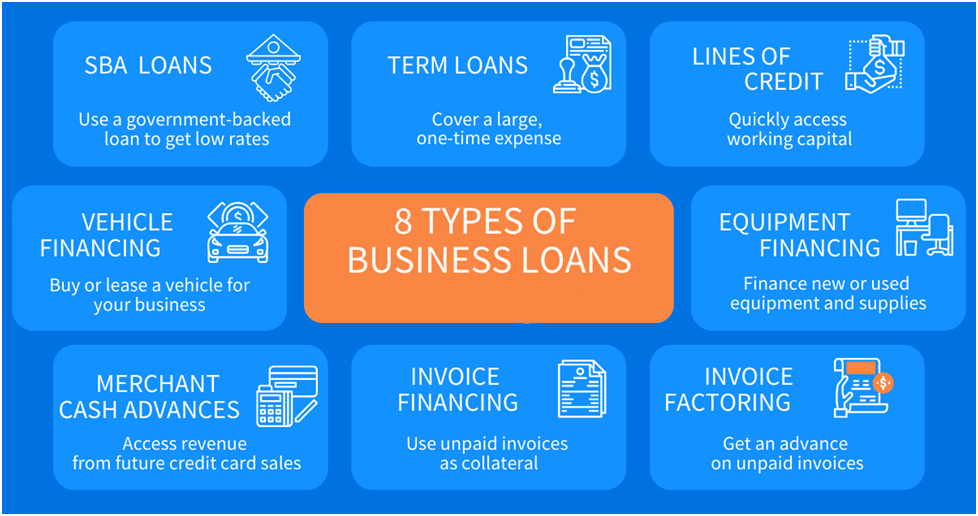
Deversifying your lending portfolio is an important step in scaling B2B finance companies. This way, you can reach more companies that need a particular type of loan. So, let’s take a closer look at the most demanded loan types for B2B clients.
Direct lending
Direct lending is very similar to a regular bank loan. Companies use it for a wide variety of purposes – from the purchase of equipment to scaling up a business. It involves receiving a lump sum from a lending institution followed by monthly repayments on an agreed-upon date. Given the increasing number of applications rejected by banks, you will have many potential customers seeking this traditional type of loan.
Structured equity products
This type of loan involves the investor purchasing a portion of a company’s assets without owning it entirely. This allows the investor to spread their funds between different businesses in various industries. Such distribution protects them from large losses if any acquisitions do not yield the expected results.
Mezzanine loan
This hybrid type of credit is also popular in B2B lending. In this model, the debt is tied to another debt obligation the company already has with the same lender. Issuing such a loan is complex in terms of business process. However, a customizable loan origination platform can automate this specific process.
Revolving credit lines
Unlike other types of loans, in this case the borrower is not given a specific amount of money, but is provided with access to money when the need arises. The main advantage of this loan is its flexibility, it allows financing for clients who do not know the exact amount they will need. Like Mezzanine debt, it is very specific and requires advanced software for its implementation.
Venture debt
This type of loan is especially desired by fast-growing startups that have received venture b2b capital funding. The lender considers the amount of the most recent investment to determine the terms of the loan. The introduction of venture debt has its own specifics and requires additional features for debt collection that will incentivize borrowers to repay the debt.
Invoice discounting
Invoice discounting involves borrowing a portion of the unpaid invoice cost from a third party. In this model of business-to-business lending, the invoice serves as collateral. Small and medium-sized enterprises willingly use this type of credit to optimize their cash flow.
Invoice factoring
This type of alternative financing is similar to the previous one. Also, unpaid invoices are sold to a third party, and the invoice itself is collateral. The main difference is that the money is paid directly by the client. The implementation of invoice factoring implies additional services, such as document management acceleration, debt collection functions, automated notifications, etc.
Equipment financing
This type of loan is especially actively used by small and medium-sized enterprises. It allows them to avoid large lump sum payments for equipment purchase. It is particularly useful in the case of cash flow constraints.
Payroll financing
Sometimes it can be challenging for companies to pay their employees’ salaries on time. In such cases, a payroll loan from B2B lenders can be a good solution.
Asset loan
Companies with valuable assets can take advantage of this type of loan. It is generally in demand among fast-growing organizations that experience temporary financial difficulties.
Inventory loan
The name speaks for itself. In this type of B2B loan, the organization’s inventory serves as collateral.
The list of all possible types of loans is much longer. The most popular ones are listed here. We recommend introducing them gradually, starting with those that seem most promising to you, taking into account the wishes of existing clients. It may be worthwhile to conduct a survey among those companies that already use your services, as well as among applicants.
Customize your offers
In addition to offering your customers a variety of loan types, you can customize your lending offerings by utilizing top-of-the-line software. For example, CompassWay solutions include a loan product builder that allows a b2b lender to quickly create new credit products that best fit the needs of a particular business. This option is unavailable in traditional banking, where outdated approaches and standardized solutions are used. Flexible customization will allow you to engage more customers and increase their loyalty.
Final thoughts
Now, financial startups have a unique opportunity to capture their slice of the B2B lending market and scale their organization quickly. Businesses are increasingly looking for an alternative to traditional banking that uses outdated lending methods in B2B financial services. Such an alternative is lending institutions that rely on innovative technologies. Advanced loan origination systems allow them to offer B2B customers much better credit terms, significantly faster loan disbursement and much higher approval rates. And importantly, these solutions provide a wide range of loan products, allowing customers to choose the most appropriate type of loan. Moreover, these systems enable flexible customization, allowing loan products to be configured to better fit each particular business’s specific needs. With all of these capabilities, lending institutions can scale rapidly, expanding their product portfolio and growing their customer base.
About CompassWay
CompassWay is an all-in-one lending platform that automates the loan origination process from funding application to delivering a best-in-class experience for your clients and team – for any loan product. With advanced algorithms and analytics, small lenders can quickly score clients and automatically make credit decisions. By reducing time and costs during the origination and loan portfolio management stages, financial institutions become more productive and have more room to develop new businesses.
Navigation: