

Background
Groshi 247 is a microfinance lending institution that specializes in offering payday loans to individuals who are unbanked or underserved. Considering the evolving market changes, the Company has expanded its range of new financial products to include Loans for Group (Solidarity group), which involves microfinance lending to individuals who mutually guarantee each other’s loans. And are designed to accommodate the needs of individuals who require financial assistance in a group setting. Solidarity Group Loans enable microfinance institutions to reach a broader client base, including individuals who might not qualify for individual loans due to their limited credit history or collateral. This inclusivity can result in increased market penetration and business growth.
Challenge
The Company’s primary objectives were to digitize the loan origination process workflow, enabling the pre-set parameters for loans offered, such as Loans for Group (Solidarity Group) and Pure Group. The Product Engine had to be flexible and highly customizable, with templates for creating the conditions for providing these loans. Financing had to provide both Flat and Decline Balance Interest calculation methods, with the flexibility to charge both principal and interest for a certain period, as well as the flexibility to charge various administrative and late payment fees.
Requirements
Loans for Group (Solidarity Group)
Setting Up Loans for Group: different loan accounts with unique ID and repayment schedules will be created for a single Solidarity Loan Account, as each member will have distinct amounts to repay. This allows the Lender ( Groshi247) to monitor the individual transactions of everyone in a group. When a lender disburses a loan, they can distribute varying amounts to each member involved in the transaction. This allocation process allows for a more personalized and efficient lending experience for all parties involved.
Pure Group
Setting up the Pure Group Product makes it possible to manage group loans as a unit, with a single disbursement and consistent repayment schedule for the whole group.
The Interest Calculation Method for loans is based on daily accrual, enabling the lender to charge clients only for the days they utilize the loan amount. Using both the Flat and Decline Balance Interest Calculation Methods.
Solution
- Fully Digital Loan Origination: A streamlined loan origination workflow process.
- Omnichannel Customer Onboarding: Seamless digital onboarding across various channels
- Real-time Verification: Instant ID verification, KYC, and credit history checks.
- Product Engine – Efficient management of customer-tailored loan products.
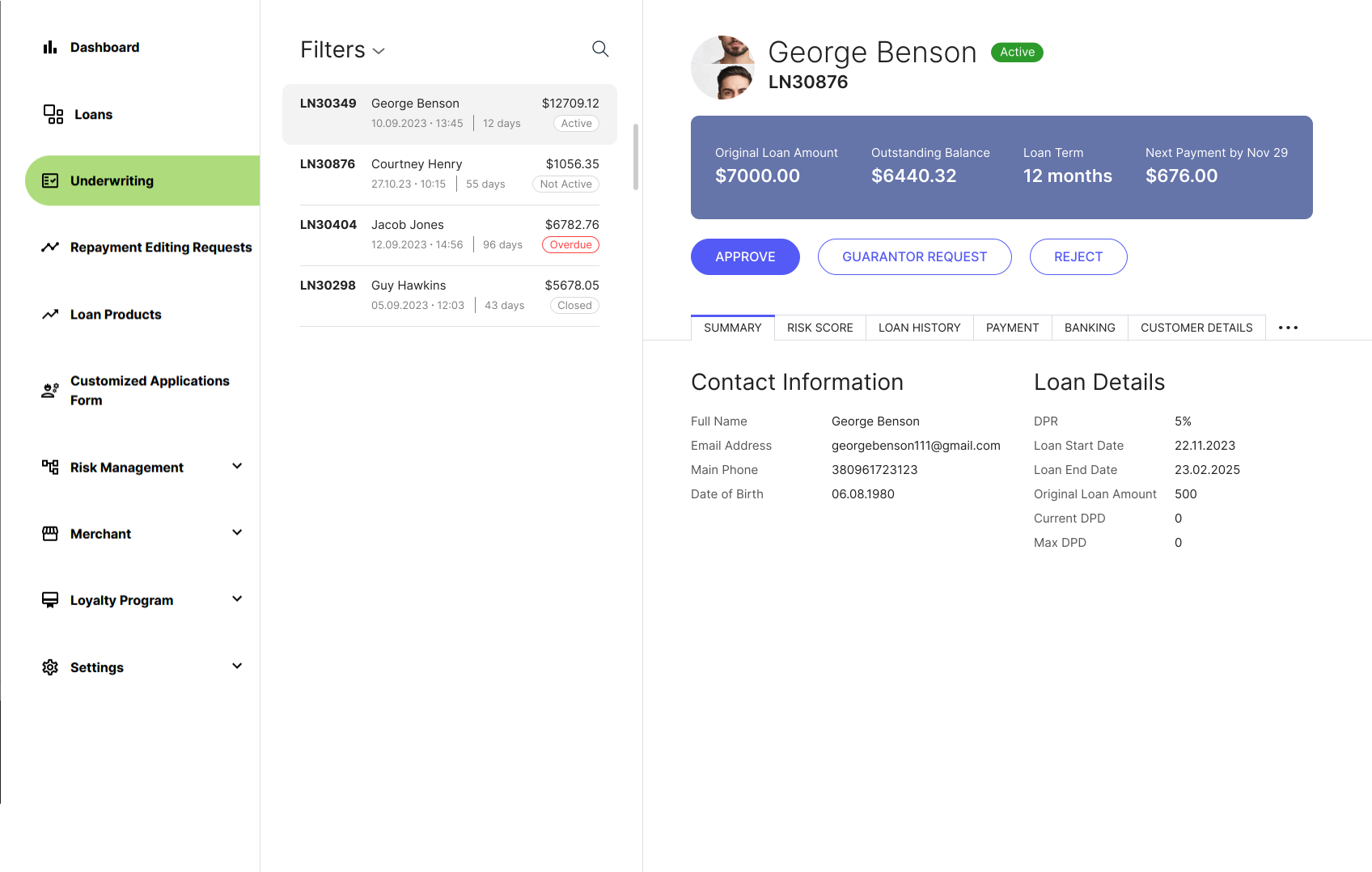
- Credit Decision Engine: Efficiently develop customizable credit scoring models and decision rules using the flexible editor. Seamlessly test, deploy, and operationalize strategies in real time for optimal results. Use different methods of making loan approval – automated credit decision, manual or credit committee.
- Fraud Detection: Built-in rules to combat cybercrime and ensure compliance with AML and KYC regulations.
- Self-Service Repayment: Empower borrowers with easy account management, payment schedules, and personalized plans.
- Loan Servicing: A comprehensive system managing all loan lifecycle events, from early repayment to termination.
- Borrower Management: Automated communications and borrower interactions via email, SMS, and phone calls
- Integration: Seamless integration with external data sources, payment gateways, and electronic signatures.
- Real-time Reporting: Dynamic reporting capabilities ensuring efficient portfolio management.
- User Management Ability to assign users to specific roles and user groups, which the institution can define, and where each role/user group can be assigned particular access to parts of the system to browse, create, update, or delete as required; having the ability to give loan approval & disbursement loan limits.
- Reporting & Analysis: Tailored reports offering insights into loan origination, servicing, and risk management.
Results
In conclusion, providing Solidarity Group Loans can create a win-win scenario for microfinance company Groshi 247. It can enhance portfolio quality, expand outreach, lower transaction costs, build community, and align with social and regulatory objectives. However, like any financial product, it requires careful planning and effective execution to maximize the benefits while mitigating potential challenges. Real-time credit decisions and swift fund disbursement slashed the “time to yes” to mere minutes, eliminating paperwork and in-person interactions. This not only enhanced customer satisfaction but also significantly reduced processing costs. Automation allowed staff to focus on value-added tasks, contributing to increased operational efficiency.