

Implementing Payday Loan Software: A Comprehensive Examination
The adoption of payday loan software is a transformative step for lending businesses. Such systems offer advanced functionality, security, and regulatory compliance. Let’s embark on a detailed walkthrough of this process.
Needs Assessment
Understanding Client Demographics:
To start, a deep dive into your client’s demographics is essential. You need to ask:
Age Group: Is your primary clientele younger individuals, perhaps millennials or Gen Z, who are more tech-savvy and expect sleek, mobile-friendly interfaces? Or do they span various age groups, requiring more diverse functionalities?
Location and Culture: Do your clients hail from urban settings where internet connectivity and technological awareness might be higher? Or do they represent a mix, including those from rural or less technologically developed areas? Understanding geographical distribution can also assist in assessing language and cultural preferences.
Business Model Examination
Next, dissect your business model:
Loan Types and Terms: Are your loan offerings short-term, necessitating quick turnover and approvals, or are they longer-term, requiring extensive background checks and risk assessments?
Channels of Interaction: How do your clients interact with you? Primarily via mobile apps, online portals, or physical branches? This can influence the kind of interface and functionalities you’d want.
Tailoring Software Functionalities
With these insights, you can better tailor your software:
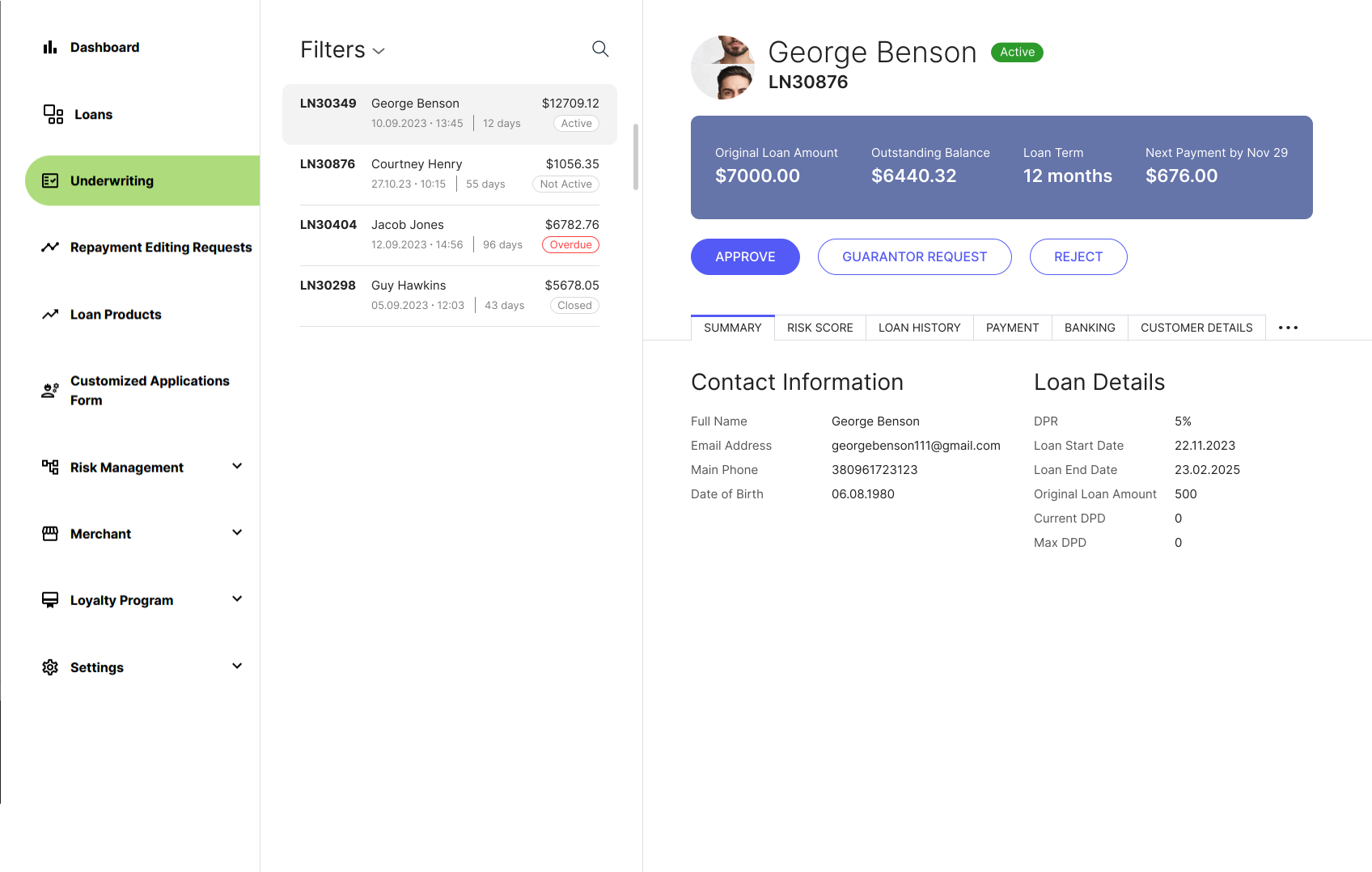
Interactive Dashboards: If your clientele is more tech-oriented, they might appreciate a dynamic, visually rich dashboard that provides real-time updates on their loan status, repayment schedules, and more.
AI-Driven Risk Assessment: In today’s digital age, a manual assessment of loan applications is not just time-consuming but also prone to errors. Utilizing AI can speed up this process while also making it more accurate. It can analyze vast amounts of data to predict a client’s ability to repay, taking into account factors that might be overlooked by a human.
Language and Cultural Support: If your client base is diverse, your software should be too. Multi-language support ensures accessibility, while cultural nuances (like local holidays affecting repayment dates) can be incorporated to make the user experience more intuitive.
Repayment Flexibility: Different people have different financial rhythms. Some might prefer weekly repayments, others monthly. An automated system that allows clients to choose (within set parameters) their repayment schedule can enhance client satisfaction.
Vendor Selection
Choosing a Long-Term Partner
The selection of a payday loan software vendor isn’t a mere transactional decision. Given the long-term implications and the intimate integration of the software into your core business processes, this choice resembles selecting a business partner.
In-Depth Analysis of Past Projects
This is a pivotal starting point.
- Portfolio Diversity:Examine the range and scale of projects the vendor has undertaken. Has the vendor only catered to smaller businesses or have they successfully deployed solutions for large-scale enterprises? This can give you an idea of the vendor’s capabilities.
- Success Stories & Failures: While it’s essential to understand the success stories, knowing where a vendor failed and how they rectified their mistakes (or didn’t) can offer a more rounded view of their reliability.
Understanding Client Feedback
Dive into client testimonials and independent reviews.
- Consistency in Feedback: Occasional negative feedback might be a product of various factors, but consistent criticism or praise in certain areas can be telling.
- Post-Sale Support: Look for feedback regarding the vendor’s responsiveness and support after the sale is completed. This aspect often separates the good vendors from the great ones.
CybersecuritCommitment
Given the sensitive nature of financial data, this is non-negotiable.
- Encryption Standards: Ensure the vendor employs industry-best encryption standards like SSL to safeguard data transmissions.
- Firewall and Intrusion Detection: Beyond encryption, the vendor’s software should have robust firewall protections and active intrusion detection systems. This dual-layered security ensures threats are not just kept out but are actively monitored for and flagged.
- Regular Security Audits: A vendor committed to security will periodically conduct thorough security audits, identifying potential vulnerabilities and rectifying them proactively.
Assessing Vendor Longevity and Adaptability
The tech landscape, especially in the financial sector, evolves rapidly.
- Track Record: A vendor that has been in the industry for a considerable duration indicates resilience and adaptability. It also suggests they’ve weathered market fluctuations and technological shifts.
- Adaptation to Trends: Review the vendor’s product evolution. Have they incorporated emerging technologies like AI, blockchain, or big data analytics in recent years? This demonstrates their commitment to staying updated.
Seamless Integration
Symbiosis with Current Infrastructure:
Integration isn’t merely about installing new software; it’s about ensuring that this software functions harmoniously with your existing systems. Ideally, the new payday loan software should feel like a natural extension of your current infrastructure, enhancing it rather than complicating it.
Compatibility Features Examination:
API Integrations: At the core of seamless integration is the ability of the new software to communicate effectively with your legacy systems. API (Application Programming Interface) integrations play a pivotal role here. They allow different software solutions to “talk” to each other, ensuring data consistency and workflow continuity. So, if your current systems have specific functions that you’d like to retain, the software’s API capabilities will be instrumental in preserving those functionalities.
Modular Structure: Software designed with a modular structure can be particularly beneficial. This means you can choose to implement only certain components or features of the software that best align with your needs, without overhauling your entire system.
Scalability Amidst Growth:
Dynamic Load Handling: As your business grows, so will the volume of loan applications, client queries, data storage needs, and more. The software should be equipped to handle these increasing demands. This doesn’t just mean being able to operate under a heavy load, but doing so efficiently and swiftly.
Minimal Downtime: In the financial sector, time equates to both money and reputation. Extended system downtimes can be detrimental, leading to client dissatisfaction and potential revenue loss. The software should be designed with robust backup and failover systems to ensure continuous operation.
Performance Metrics: Beyond just functioning under increased load, it’s crucial to monitor how the software performs. Does it take longer to process loan applications as the volume increases? Do clients experience lags in accessing their dashboards during peak times? Having in-built performance metrics can help in monitoring and optimizing the system’s efficiency.
Future-Proofing Your Operations: Integration isn’t a one-time process. As technologies advance and business models pivot, there will be a need for subsequent integrations. The software you choose should not just meet your current needs but should be flexible enough to accommodate future technological advancements and business strategies.
Rigorous Testing
Importance of Beta Testing: Prior to a full-scale launch, a beta testing phase offers a crucial preview into how the software will perform in the real world. It provides a window into potential issues and helps identify areas of improvement.
Designing Real-Life Scenarios:
Peak Loads: Especially in the payday loan business, there can be specific times of the month or even certain days when loan application influx is significantly higher. Testing how the software handles these sudden surges without performance drops is essential. This ensures that during high-demand periods, the application doesn’t crash or slow down, which can severely affect customer satisfaction and operational efficiency.
Diverse User Profiles: A holistic testing approach should simulate users with varied profiles and roles. From a first-time loan applicant to a backend admin, ensuring smooth user experiences across different profiles is crucial.
Assessing Software Resilience
Error Simulations: Intentionally inducing errors can provide valuable insights. For example, what happens if a user tries to submit an incomplete loan application? Or what if there’s a sudden network disconnection during a critical data transfer? The software should be robust enough to handle these errors gracefully without causing data loss or system crashes.
Diagnosis and Rectification: It’s not just about identifying when something goes wrong, but the system should also provide diagnostic feedback. This helps IT teams pinpoint issues faster. Additionally, automated rectification mechanisms, where the software tries to resolve minor issues on its own, can significantly enhance efficiency.
Contingency Planning
Backup Systems: In the digital realm, data is invaluable. Ensure the software has automated backup systems. Regularly backing up data ensures that in the event of any major system failure, data recovery is swift and comprehensive.
Failover Mechanisms: These are systems that seamlessly take over if the primary system fails. For instance, if a primary server crashes, a secondary one should be ready to take its place, ensuring minimal service disruption.
Disaster Recovery Protocols: Beyond short-term disruptions, having a well-laid-out disaster recovery plan ensures that even in the face of significant challenges like cyberattacks or data center failures, the business can resume operations with minimal delay.
Rigorous Testing:
Importance of Beta Testing: Prior to a full-scale launch, a beta testing phase offers a crucial preview into how the software will perform in the real world. It provides a window into potential issues and helps identify areas of improvement.
Designing Real-Life Scenarios:
Peak Loads: Especially in the payday loan business, there can be specific times of the month or even certain days when loan application influx is significantly higher. Testing how the software handles these sudden surges without performance drops is essential. This ensures that during high-demand periods, the application doesn’t crash or slow down, which can severely affect customer satisfaction and operational efficiency.
Diverse User Profiles: A holistic testing approach should simulate users with varied profiles and roles. From a first-time loan applicant to a backend admin, ensuring smooth user experiences across different profiles is crucial.
Assessing Software Resilience:
Error Simulations: Intentionally inducing errors can provide valuable insights. For example, what happens if a user tries to submit an incomplete loan application? Or what if there’s a sudden network disconnection during a critical data transfer? The software should be robust enough to handle these errors gracefully without causing data loss or system crashes.
Diagnosis and Rectification: It’s not just about identifying when something goes wrong, but the system should also provide diagnostic feedback. This helps IT teams pinpoint issues faster. Additionally, automated rectification mechanisms, where the software tries to resolve minor issues on its own, can significantly enhance efficiency.
Contingency Planning:
Backup Systems: In the digital realm, data is invaluable. Ensure the software has automated backup systems. Regularly backing up data ensures that in the event of any major system failure, data recovery is swift and comprehensive.
Failover Mechanisms: These are systems that seamlessly take over if the primary system fails. For instance, if a primary server crashes, a secondary one should be ready to take its place, ensuring minimal service disruption.
Disaster Recovery Protocols: Beyond short-term disruptions, having a well-laid-out disaster recovery plan ensures that even in the face of significant challenges like cyberattacks or data center failures, the business can resume operations with minimal delay.
In a nutshell, rigorous testing isn’t just a phase; it’s an essential strategy. By simulating real-world challenges, assessing the software’s ability to cope, and ensuring robust backup mechanisms, businesses can ensure they’re not just launching a new tool, but are deploying a reliable, resilient, and efficient solution optimized for the rigors of the payday loan industry.
Comprehensive Training
The Foundation of Software Efficiency: The effectiveness of even the most advanced software is largely contingent upon the proficiency of its users. Proper training ensures that the software’s potential is fully realized and minimizes operational hiccups stemming from user errors.
Specialized Modules for Distinct Roles
Role-based Tailoring: Every department and role within your organization will interact with the software differently. Loan officers, customer service reps, and backend admins, for instance, have different software needs. Tailored training ensures each group extracts maximum utility from the software relevant to their tasks.
Scenario-driven Training: Using real-life examples and scenarios during training can significantly improve retention and applicability. For instance, teaching a loan officer how to use the software to assess a complicated loan application using a real-life example can be more effective than a purely theoretical approach.
Incremental Training Approach
Foundational Knowledge: Begin with the basics. Users should first be comfortable with the software’s interface, basic navigation, and primary features. This establishes a solid foundation upon which more complex functionalities can be introduced.
Advanced Functionalities: Once the basics are mastered, delve into the more intricate functionalities of the software. This could encompass advanced analytics, detailed reporting features, or specialized tools unique to the software.
Keeping Skills Updated
Refresher Courses: Over time, some of the lesser-used functionalities might be forgotten, or bad habits might creep into daily usage. Periodic refresher courses can help in ironing out these kinks and ensuring all users are operating at peak efficiency.
Updates and New Features Training: Software isn’t static. As it receives updates or as new features are added, it’s essential that your team is abreast of these changes. Training sessions focused on these updates ensure that the team is always using the software to its fullest potential.
Support and Feedback Mechanisms
Continuous Support: Post-training, there should be a support mechanism in place. Whether it’s a dedicated internal helpdesk or support from the software vendor, users should have a go-to for any queries or challenges.
Feedback Loops: Encourage feedback from the users. This can provide insights into areas where further training might be needed or highlight functionalities that are particularly challenging for users, paving the way for improvements.
In essence, comprehensive training is the bridge between acquiring new software and realizing its operational benefits. By ensuring each team member is equipped with the knowledge and skills tailored to their role, businesses can ensure smooth, efficient, and optimized software utilization.
Regulatory Adherence
The Criticality of Compliance in Lending: Navigating the labyrinth of regulations is non-negotiable for lenders. Non-compliance can result in hefty fines, loss of license, legal repercussions, and significant reputational damage. It’s imperative that the payday loan software not only aligns with these regulations but is proactive in adapting to changes.
Understanding the Current Regulatory Landscape
Jurisdictional Nuances: Depending on the geographic regions of operation, regulations can vary significantly. It’s not just about understanding national regulations, but often, regional or state-specific norms can come into play. The software should be customizable to reflect these specific jurisdictional requirements.
Financial Protocols: Beyond just lending rules, lenders must also adhere to financial regulations pertaining to money laundering, fraud detection, and consumer protection. Integrated modules in the software that cater to these can enhance compliance robustness.
In-built Mechanisms for Regulatory Updates
Dynamic Compliance Framework: Regulations aren’t static; they evolve in response to economic conditions, technological advancements, and societal changes. The software should possess a dynamic framework that can be updated easily and swiftly as regulations change.
Automated Alerts: Proactivity is key in regulatory adherence. Features that can automatically alert compliance teams of impending regulatory changes or areas of potential non-compliance can be invaluable.
Real-time Monitoring and Compliance Tools
Embedded Compliance Checklist: An integrated checklist that aligns with regulatory requirements can streamline the loan approval process. Before any loan is approved, this checklist ensures all regulatory mandates are met, reducing the risk of inadvertent non-compliance.
Monitoring Dashboards: Real-time monitoring dashboards can provide an at-a-glance view of compliance metrics. This can include metrics like the number of loans approved, those in violation of certain criteria, or even real-time tracking of financial transactions to flag potential money laundering or fraudulent activities.
Audit Trails: From a regulatory perspective, having a clear, immutable audit trail can be crucial during inspections or reviews. Ensuring that all actions, decisions, and changes within the software are logged and time-stamped can provide clarity during any regulatory scrutiny.
Continual Training on Regulatory Changes: It’s not enough for just the software to be updated. Your team should be continually educated on any regulatory changes. Integration of e-learning modules or alerts within the software can ensure that your staff is always aware of and trained on the latest compliance mandates. In summary, in the intricate world of lending, regulatory adherence isn’t just a legal mandate but a cornerstone of trust with clients. By ensuring that your payday loan software is not just compliant but is an active ally in navigating regulatory changes, lenders can operate with confidence and integrity.
Support & Maintenance
The Backbone of Sustainable Software Utilization: While the initial deployment of payday loan software is a significant milestone, its journey has merely begun. Like any sophisticated tool, continual maintenance and adept support are paramount for its optimal and uninterrupted performance over time.
24/7 Support – The Gold Standard
Immediate Issue Resolution: In the lending business, where transactions happen round the clock, any software glitch can result in financial implications and customer dissatisfaction. Having 24/7 support ensures that any issue, regardless of when it arises, is addressed promptly.
Multichannel Support: A robust support mechanism goes beyond traditional call centers. Look for vendors that offer multiple channels – be it chatbots for immediate queries, email support for detailed troubleshooting, or a dedicated portal for raising and tracking support tickets.
Regular Software Updates – Keeping Pace with Evolution
Functional Enhancements: The tech landscape, particularly in finance, is ever-evolving. Regular software updates ensure that your system is equipped with the latest features, tools, and interfaces to stay competitive and efficient.
Regulatory Adjustments: As discussed earlier, the regulatory environment is fluid. Software updates should integrate any changes in lending norms, financial regulations, or jurisdiction-specific requirements.
Prioritizing Cybersecurity with Maintenance
Security Patches: Cyber threats are a grim reality of the digital world. Regularly updated security patches address any vulnerabilities in the software, ensuring that data integrity and system safety are uncompromised.
Proactive Threat Monitoring: Beyond reactive patches, forward-looking vendors often integrate tools that proactively monitor for potential threats. This real-time surveillance can identify and thwart cyberattacks even before they materialize.
Scheduled Maintenance – Ensuring Peak Performance
Downtime Management: While software updates and maintenance are necessary, they can result in operational downtimes. Engaging with vendors who can schedule these during off-peak hours or provide alternative solutions during maintenance can mitigate potential disruptions.
Performance Optimizations: Over time, software can become sluggish due to data accumulation, fragmented databases, or redundant processes. Regular maintenance should also focus on optimizing performance, ensuring swift operations and improved user experiences.
Feedback Mechanisms for Continuous Improvement
User Feedback Integration: Users are the best judges of software utility. Incorporate mechanisms where users can provide feedback on software performance, features, or challenges. Vendors should prioritize this feedback during subsequent updates.
Iterative Improvements: Instead of waiting for major annual updates, opt for vendors who believe in the philosophy of iterative improvements, releasing smaller, more frequent updates based on real-time feedback and technological advancements.
To sum it up, the journey of software in the payday loan business isn’t confined to its deployment. Its real test lies in its sustained performance, adaptability to changes, and resilience against threats. With robust support and meticulous maintenance, lenders can ensure that their software remains an asset, facilitating smooth operations and fostering growth.
In Summation: The Strategic Implication of Payday Loan Software Integration
Bridging Business and Technology
The decision to integrate payday loan software into an existing financial ecosystem is not just about updating technology; it’s a profound reflection of a lender’s vision for future growth, adaptability, and commitment to customer service.
Business Acumen in Decision Making
Understanding Customer Needs: At the heart of the lending business lies the customer. By integrating advanced software, lenders can offer more personalized services, faster loan approvals, and more transparent processes, all of which are in tune with the expectations of today’s savvy borrowers.
Operational Efficiency and Cost Savings: Beyond customer service, the right software can streamline internal processes, reduce manual errors, and automate routine tasks. This operational efficiency can lead to significant cost savings in the long run, boosting the bottom line.
Staying Ahead of the Competition: In a saturated lending market, differentiation is key. Lenders who embrace technological advancements not only set themselves apart but also position themselves as industry leaders, attracting both customers and potential investors.
Technological Proficiency
Harnessing Data for Better Decisions: Modern payday loan software is often equipped with advanced analytics and artificial intelligence. By leveraging these tools, lenders can derive actionable insights, fine-tune their loan products, and make informed decisions based on real-time data.
Security in the Digital Age: With cyber threats looming large, technological proficiency also means having a deep understanding of digital security. A state-of-the-art software solution not only fortifies data protection but also ensures that lenders are shielded from potential cyber-attacks, preserving both their assets and reputation.
Scalability for Future Growth: Technological foresight involves anticipating future growth. As a lending business expands, its software should seamlessly scale, catering to an increasing number of customers, products, and regulatory challenges.
Ensuring Regulatory Harmony
Proactive Compliance Management: Regulations in the financial sector are intricate and ever-evolving. Advanced software solutions are designed to automatically update in line with changing regulatory frameworks, ensuring lenders always remain on the right side of the law.
Building Trust with Stakeholders: Regulatory compliance isn’t just a legal obligation. By consistently adhering to regulations, lenders build trust with their customers, stakeholders, and regulatory bodies, establishing themselves as reliable and credible entities in the financial landscape.
To encapsulate, the journey of integrating payday loan software is as much a journey of business transformation as it is of technological upgrade. By approaching this integration with a holistic perspective, balancing both business goals and technological imperatives, lenders can carve a path that leads to heightened service excellence, security robustness, and regulatory congruence.